Book Appointment Now

9 Fishing Accuracy Tips: Hit Target Zones Precisely

Targeted casting boosts catch rates dramatically-anglers who practice it land far more fish. Tighten your stance, align shoulders with the cast line, and focus on grip, wrist and elbow control for smoother delivery. Set up gear and pick the right lure, then tweak arc and loop to clear obstacles while aiming slightly upwind to counter drift. Practice dot and pause drills to build muscle memory and make pitching into tight pockets a routine.
Quick-Start: 7 Steps to Cast Accurately
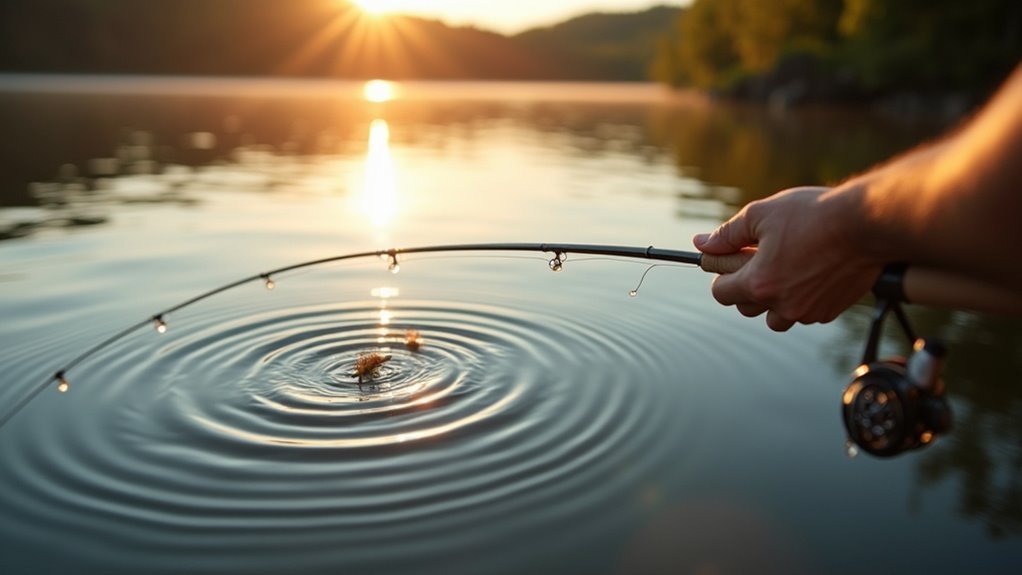
You’ll find that getting accurate casts starts from a few clear steps you can practice right away, and you’ll feel the difference fast. You’ll stand with calm focus, checking casting alignment via eye and feeling the rod tip path.
Initially, pick a visible target and do target identification by noting current lines and likely fish lies. Then grip relaxed, load the rod smoothly, and use short practice false casts to tune distance and alignment.
Pay attention to wrist release timing, wind angle, and line control as you progress. Adjust your stance and feet for lateral precision.
Keep practicing these seven parts together and you’ll join others who cast with confidence, belonging, and steady improvement.
Set Up Rod, Reel, Line & Lures
Setting up your rod, reel, line and lures is the foundation of accurate casting, so take a calm moment to get each piece working together before you head to the water.
You want gear that feels like part of the same team, so match rod action to reel drag and pick a line taper that suits your casting style. Thread line evenly, check guides, and balance spool tension so casts land where you aim. Choose lure weight to match rod rating and the fish you seek.
Tie reliable knots, trial casts in the yard, and adjust leader length for presentation. Ask a friend for feedback, swap tips, and celebrate small gains together as you refine setup and confidence.
Master Grip, Stance & Release
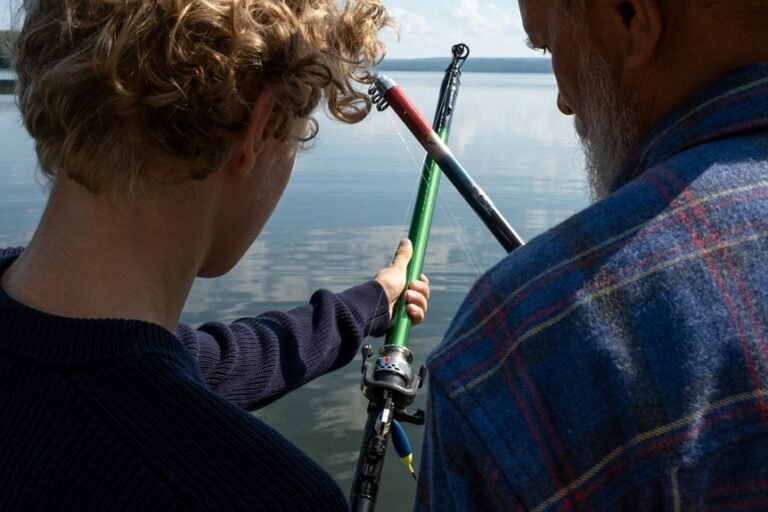
In the moment your grip, stance and release work together, casting becomes calm and confident instead of rushed and messy; you’ll experience more control and see your flies or lures land where you intend. You belong at the water and you’ll learn muscle memory that makes accuracy feel natural.
Pay attention to grip tension so your hand stays relaxed but secure. Your stance anchors the body and links legs to arm for steady alignment. Gentle, consistent release timing ties everything together and keeps your fly on target.
Practice small reps with intention and friendly patience, and you’ll observe steady improvement.
- Keep a light hold with firm control to manage grip tension
- Square your hips and shoulders to the line for alignment
- Bend knees slightly to stay balanced and connected
- Time the forward stroke and release timing with a smooth pause
- Repeat short focused drills to build consistent feel
Use Wrist and Elbow to Control Distance
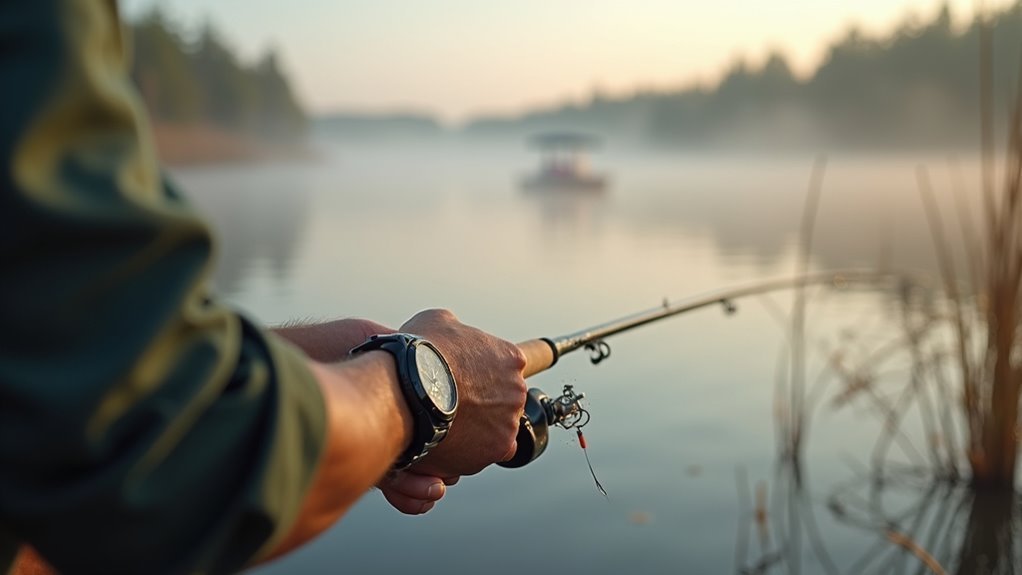
You’ve already built a steady grip, balanced stance and smooth release, so now let your wrist and elbow take over to fine tune how far your fly or lure goes.
You’ll feel more control as you use wrist flexibility to add small amounts of line on short casts and snap subtle distance into longer casts. Next, rely on elbow leverage for midrange power. Bend and extend the elbow in a smooth timing pattern so the rod loads and unloads predictably. Combine both parts for layered adjustments.
Practice tight loops then open them slightly while watching distance change. Trust your crew and share successes so you learn together. With patient practice you’ll join others who consistently hit bank and boat target zones with calm confidence.
Aim in Wind & Current: Compensate for Drift
You’ll read the wind and watch the current before you cast so your fly or lure lands where the fish are feeding.
In case the breeze or river pushes your line sideways you’ll aim into that drift through offsetting your target a few rod lengths upwind or upstream.
With a little practice you’ll feel how much to compensate and place more accurate casts without second guessing.
Read Wind And Water
Should wind or current pushes your fly or lure off the drift line, you’ll lose hookups even in case fish are right below you, so learn to read the water and aim ahead of the drift to compensate.
You belong on the bank and you can learn subtle cues. Watch wind patterns for gentle pushes and gusts. Notice water turbulence around rocks and seams where fish hold. Match your angle to the dominant flow and pick an aiming point upstream of where you want the fly to pass.
Use the next cast to refine your hold and feel confident making small corrections. These steps build trust in your skills and keep you connected to the water.
- Scan for wind shifts and steady directions
- Read eddies and downstream turbulence
- Aim upstream of target drift lines
- Adjust line length to match flow speed
- Use soft, patient casts to reduce drag
Adjust For Lateral Drift
During the moment wind or current pushes your fly or lure sideways, aim ahead of the drift so the fly meets the fish where it’s waiting, not where it ends up. You’ll notice lateral displacement in the beginning when you watch the line and water. Make small drift correction moves with your wrist, stance, and release point. Trust your feel and adjust smoothly so others nearby know you belong to the same rhythm.
| Situation | Sign | Action |
|---|---|---|
| Crosswind | Line pulls right | Aim left of target |
| Side current | Fly slides downstream | Cast upstream of fish |
| Gusty chop | Uneven drift | Delay release slightly |
Those steps help you make steady corrections, stay calm, and connect with fish and friends on the water.
Pitch and Flip Into Tight Pockets
As you need to drop a fly or lure into a skinny pocket next to a log, rock, or weed mat, pitch and flip casts give you the control to place it quietly and exactly where the fish are holding. You’ll rely on soft line control and careful target concealment to keep fish from spooking.
Move slowly, choose a short stroke, and let the rod do the work so your offering lands light and true. You belong with anglers who value patience and craft, and you’ll feel that connection as you nail tight targets.
- Stay close, shorten your cast, and watch line control for subtle corrections
- Use low profile lures to match target concealment needs
- Practice wrist flicks to improve accuracy
- Keep a steady stance for repeatable placement
- Read the pocket edge with quiet confidence
Read Water & Structure to Target Fish Accurately
You’ve nailed the quiet, close-in work with pitch and flip, and now you’ll widen your focus to reading water and structure so you can place more casts where fish actually hold.
You’ll learn to read currents, seams, and boils. Notice where slow water meets fast water. Watch for depth changes, rock piles, logs, and weed edges. Use habitat mapping as a mental map. Consider fish behavior around cover and current breaks. Move slowly and scan from different angles. Visual clues link to where fish rest, feed, or ambush. Try multiple cast angles into the same pocket.
Talk with buddies and share finds to build confidence. You’ll belong to a small team of anglers who reason like fish.
Practice Drills to Build Consistent Aim
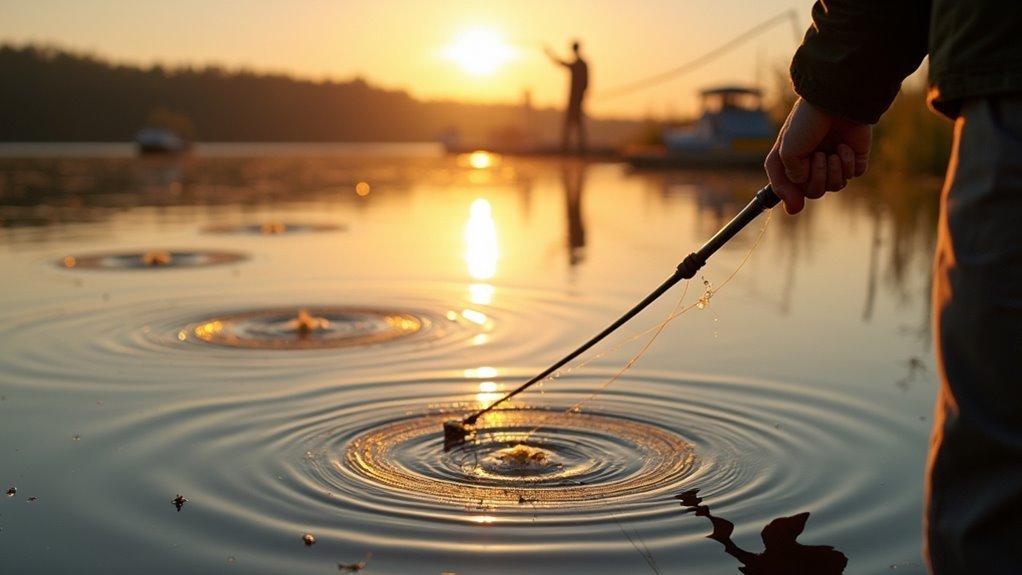
During the period you want to tighten your aim, start with short, deliberate drills that build muscle memory and calm nerves; they’ll give you a steady foundation before you add speed or distance. You belong to a group learning together, so practice feels shared and safe.
Focus on visual focus cues, steady stance, and slow repetition. Start close, then move back as comfort grows. Gentle encouragement helps you push past small mistakes without shame.
- Dot drill: pick targets and hit them repeatedly from the same spot
- Clock drill: step around a circle to practice angle and alignment
- Pause drill: stop mid-cast to reset your visual focus and grip
- Distance ladder: increase range in small steps to build confidence
- Moving target: add slight current or wind to simulate real conditions
Common Casting Mistakes and Fast Fixes
During the period your casts keep landing left of the target or falling short, it’s easy to get frustrated, but small fixes will bring big gains fast. You’re not alone and you’ll improve with focused checks.
Initially, remove line slack before the forward stroke so your leader shoots true. Second, check stance and shoulder alignment to correct left right errors by aiming your chest at the target.
Third, shorten casting arcs to tighten accuracy for close targets and lengthen them for distance. Fourth, slow loop timing fixes overshoot and tailing loops.
Fifth, watch for wrist flip that adds unwanted direction. Sixth, practice smooth acceleration to reduce splash and noise.
Each step links to the next so you build dependable, confident casts together.
Frequently Asked Questions
How Do Electronics Improve Target Identification in Deep Water?
You’ll use sonar technology to map depth, structure and bait, and signal clarity helps distinguish fish from clutter, letting you target precise zones together with confidence, share finds, and improve deep-water identification and teamwork.
Can Benford’s Law Validate My Catch Reporting Accuracy?
Yes - you can use Benford’s law to flag anomalies in catch reporting: it checks data distribution against expected digit frequencies, revealing unusual reporting patterns so your community’s records stay trustworthy and everyone feels included and accountable.
How Do Professionals Measure Distance Precision in Tournaments?
Pros measure distance precision through using laser rangefinders and calibrated markers, you’ll combine repeated shots to compute variance, share protocols with teammates, compare GPS logs, and trust routine calibration to keep everyone confident and consistent.
What’s the Best Way to Estimate Total Recreational Catch From Trip Data?
You’d use a strong sample design, collect trip-level APAIS-style data, then apply weighted data extrapolation to scale sample catch to the population; you’ll include stratification, effort adjustments, and uncertainty estimates so everyone’s contribution counts.
How Is DIDSON Precision Affected by Low Fish Counts?
Didson precision drops with low fish counts: you’ll see increased data variability and greater influence from signal interference, so confidence falls and repeatability suffers; you’ll want larger samples or complementary methods to belong to reliable monitoring.