Book Appointment Now

Pier Fishing : Catch Fish Without a Boat

Pier fishing puts plenty of fish within arm’s reach without needing a boat. Bring a compact cart, sturdy rod-and-reel combos, and a few rod holders to keep lines steady. Pack live shrimp, cut bait, soft plastics, plus weights and swivels for paternoster, fish-finder, and Carolina rigs to match depth and current. Read tides and pier structure to find dropoffs and current seams, adjust baits and retrieval speed by season, and use small hoop nets for safe landings.
Quick Pier Fishing Setup: What to Bring and Why
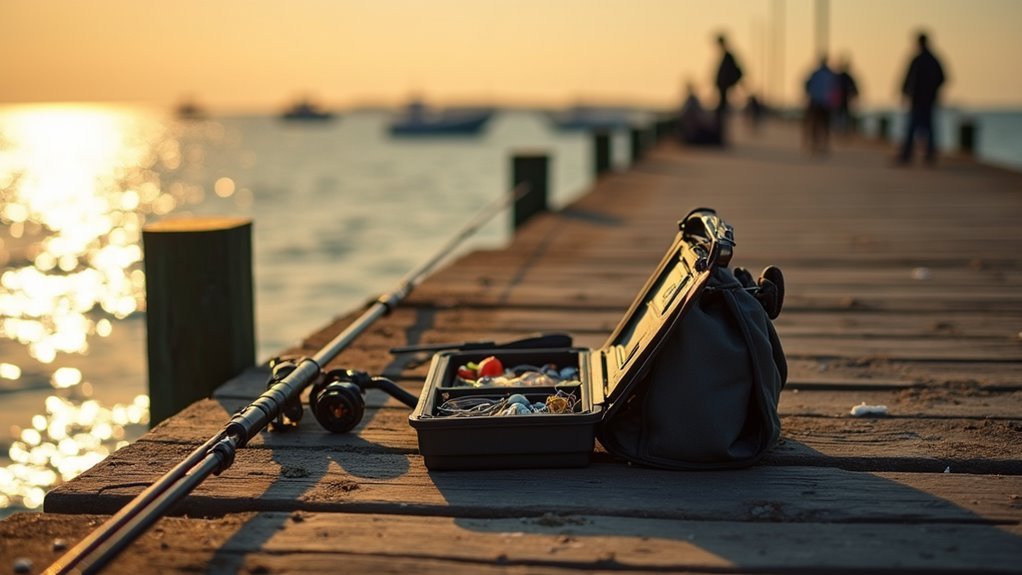
Curious what to bring for a quick pier fishing trip that won’t leave you lugging too much gear? You’ll want a simple kit that helps you belong to the pier community and feel ready. Start with a compact fishing cart to move gear and keep hands free.
Add a sturdy rod and reel combo suited to the pier. Pack a well-organized tackle box with hooks, pyramid sinkers, jigs, and soft plastics so you can adapt to conditions.
Bring corrosion-resistant pliers, a towel, and a folding chair for comfort. Include rod holders that clip to railings and a small hoop net for landing fish.
Finish with a bait bucket or aerator should you use live bait. Keep it light and friendly.
Bait & Lure Choices for Common Pier Species
By the time you head to the pier, choosing the right bait and lures will make the difference between a quiet day and a string of exciting catches, so let’s make your choices simple and smart.
You’ll want live bait like shrimp, fiddler crabs, and cigar minnows for species that bite steady. They attract fish naturally and keep you confident while others struggle. Pair live bait with moderate weights and leaders that match pier currents.
For active predators, use artificial lures such as bucktail jigs, soft plastics, and topwater poppers. These let you work water layers and provoke strikes.
Mix both approaches so you adapt to conditions. You’ll feel included whenever you share tips and swap baits with nearby anglers.
Step-by-Step Rigs: Paternoster, Fish‑Finder, Carolina
You’ve already picked bait and lures that match the fish you want, so now let’s pair those choices with rigs that keep your bait in the strike zone and make hooksets easier.
Start with the paternoster for tight line management. Tie a dropper loop above a weight, let the leader hang freely, and adjust leader length to match depth.
Move to the fish finder whenever current varies. Use a sliding sinker on the mainline, clip a leader with a swivel, and make rig adjustments to keep bait off the bottom.
Try the Carolina for casting distance and soft presentations. Slide the weight, bead, and swivel, then a longer leader to the hook.
Practice each rig, share tips with fellow anglers, and help each other refine setups.
How to Read Tides, Currents & Pier Structure
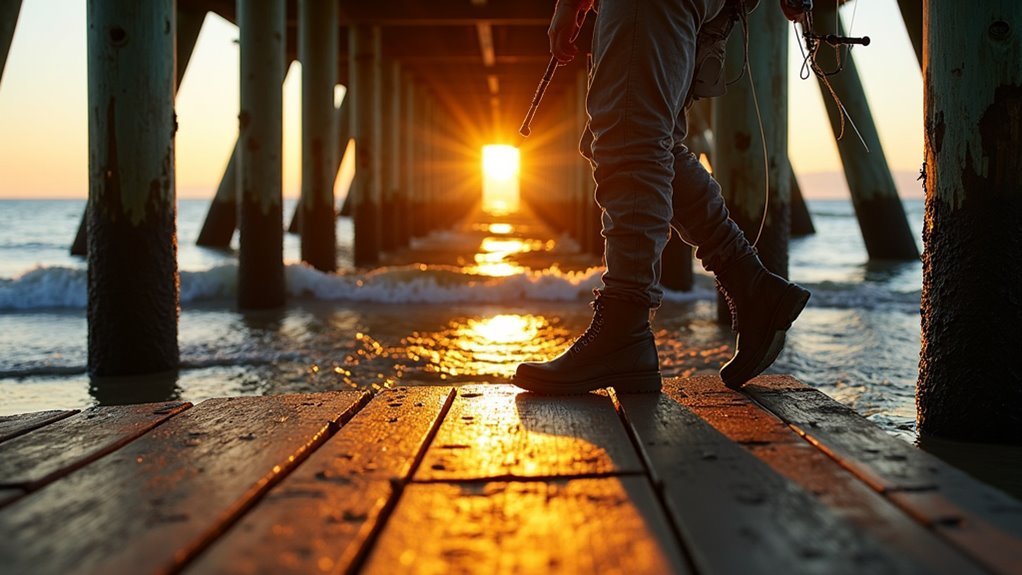
As you learn to read tides, currents, and how a pier is built, you’ll fish smarter and feel more confident out on the water.
You’ll check tide charts before you go, record high and low windows, and watch current patterns near pilings. Understanding where water accelerates helps you place bait and pick sinker weight.
Piers create eddies, drop offs, and flow lanes that hold baitfish. You belong here, learning what locals already realize.
- water cutting around pilings, swirling into calm pockets
- bait schools hugging shadowed pilings at slack tide
- faster channels between pier bays during rising tide
- sandbars revealed at low tide near the pier end
- subtle backflows under crossbeams where fish rest
Seasonal Pier Tactics: Spring Through Winter
Now that you can read tides, currents, and how a pier channels water, you’ll be ready to match your tactics to the season.
In spring you’ll watch migratory patterns and rising bait schools. Fish move closer to structure, so cast jigs, live shrimp, or sabiki rigs near pilings.
As seasonal weather warms into summer you’ll join others chasing surface action. Use topwater plugs initially and live bait later.
Fall brings cooler water and steady bait migrations, so switch to heavier jigs and bottom rigs to target feeding fish.
In winter fish bunch up near deep holes and current breaks. Slow presentations and larger baits work best then.
Share tips with your pier group, learn from local anglers, and adapt each trip.
Stay Safe and Respectful on the Pier
Though a pier feels friendly and open, it’s easy to forget rules that keep everyone safe and comfortable, so you’ll want to be intentional about your behavior from the moment you step on. You belong here, and simple choices help everyone enjoy the space.
Wear personal flotation whenever conditions demand it, keep gear tidy, and follow pier etiquette so others feel welcome. Share space, call out once casting, and offer help to newcomers provided they ask.
Visualize calm, orderly flow with these friendly cues:
- Tidy rods and lines along the railing
- Cooler and cart tucked to the side
- Soft voices and polite distance while rigs are baited
- Quick cleanup of bait and trash
- Clear signaling before you cast
These habits build trust and keep the pier safe.
Pier Tactics for Flounder, Bass, Snapper, Catfish, Mackerel
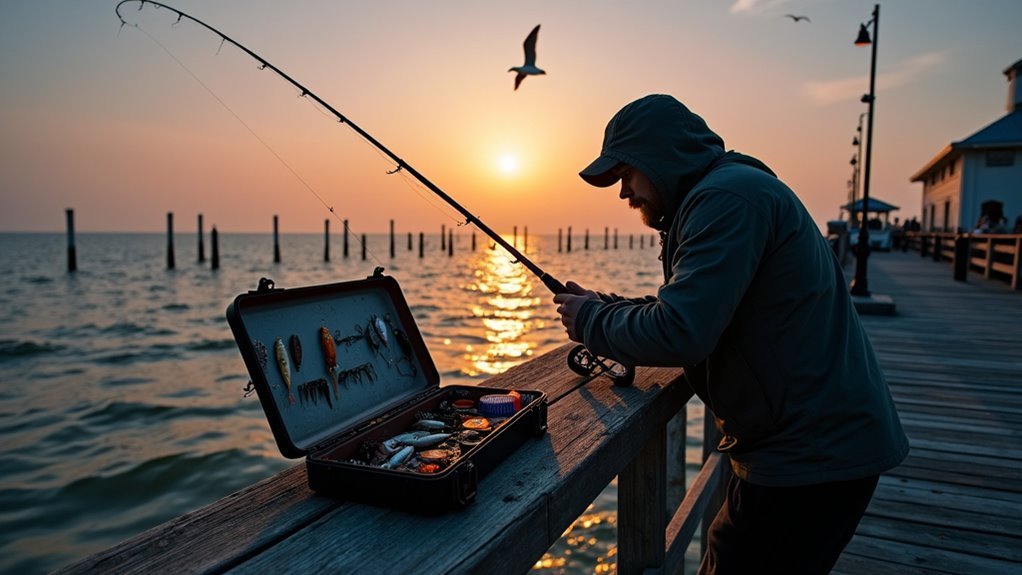
Fishing from a pier gives you access to a wide mix of species, and with the right tactics you can catch flounder, bass, snapper, catfish, and mackerel during the same outing.
You’ll read water, locate flounder habitats near pilings and sandy edges, and slow-fish with scent baits or small jigs. For bass and snappers you’ll cast near structure with medium-heavy rods, vary retrieve speed, and switch to live shrimp or soft plastics whenever fish get picky.
Catfish respond to strong catfish baits like cut bait, stink baits, and chicken livers on stout hooks near the bottom. For mackerel use fast spoons or small jigs and work bait schools vertically.
You’ll share tips, trade spots, and feel part of the pier crew.
Frequently Asked Questions
Can You Fish From a Pier at Night Without Special Permits?
Generally, yes - night fishing often doesn’t need special permits, but local permit requirements vary according to location; you’ll want to check rules so you and your crew feel confident and welcome under the pier’s quiet glow.
How Do I Legally Transport a Live Bait Bucket on Public Piers?
You can legally transport live bait on public piers through using a secure, covered bait bucket with water aeration, following local regulations, keeping it contained, and respecting fellow anglers so everyone feels welcome and safe.
What Are Common Pier Fishing Etiquette Disputes and Resolutions?
Heads up: you’ll run into disputes over line courtesy, space sharing, bait smell, and hooped-net crowding; you’ll compromise through rotating spots, calling shots politely, offering help, and setting clear boundaries so everyone feels part of the crew.
Can I Release Large Fish Safely From a High Pier Without a Net?
Yes - you can, but you’ll need proper handling and release techniques: keep the fish in water, support its belly, remove the hook gently, revive through moving it through water, and only let go once it swims strongly.
How Do Pier Rules Differ for Commercial Versus Recreational Anglers?
“A smooth sea never made a skilled sailor.” You’ll find commercial anglers face stricter licensing requirements, bigger reporting duties and different catch limits than recreational fishers, but you’ll belong through following rules, sharing space, and respecting quotas.