Book Appointment Now

Urban Fishing : Catch Fish in City Waters

Urban fishing delivers fast action in tight spaces and crowded banks. Use a light fast rod, matched reel, and weedless rigs for short casts under bridges and along walls. Pick baits and lures that suit water clarity and current, and learn to read structure for better bites. Follow local access rules and handle fish safely to keep this fun and sustainable. Practice small adjustments and watch your spots improve and fish get bigger.
Where to Fish in Town: Legal Spots, Permits, and Access
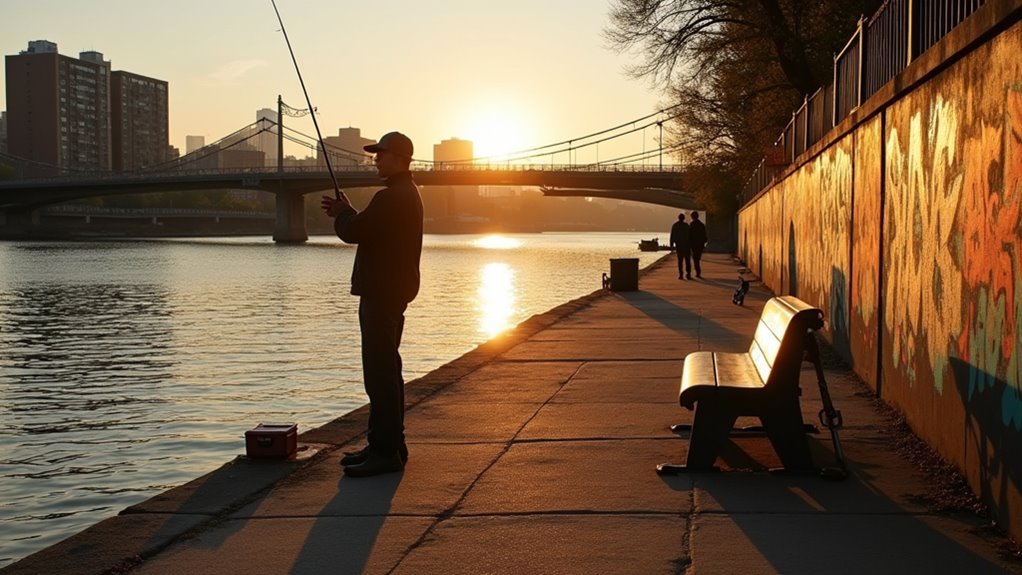
Where can you legally fish in town without worrying about gates or fines? You’ll want to start upon checking park boundaries on maps and apps so you know where public land begins and ends.
Look for city and state parks along rivers, ponds, and canals that show public access layers. Observe posted fishing hours and any seasonal closures before you go. Use walking trails and bridges to reach shorelines without crossing private yards.
Bring your license and confirm bag limits on the local fish and wildlife site to avoid tickets. As you scout, pick spots with shade and structure and plan for quieter times to feel welcome. This approach keeps you inside the law and helps you join local anglers confidently.
City Fishing Quick-Start: Rod, Reel, Tackle
You’ll want a short, light, fast-action rod for tight urban spots because it gives you precise casts and quick hooksets.
Pair it with a smooth spinning reel spooled with 6 to 12 pound braid or fluorocarbon and you’ll be ready for bass, carp, or panfish without fighting line twist.
For tackle, carry a mix of small soft plastics, topwater frogs, a few weighted nymphs, compact pliers, and extra leaders so you can adapt to structure, pressure, and changing water conditions.
Best Rod Types
During the period you’re fishing city ponds, canals, or tight river pockets, the right rod will make the difference between a frustrating day and a fun, productive outing.
You’ll want to weigh rod materials like graphite for sensitivity and fiberglass for forgiveness. Mix materials in a composite in case you need both feel and toughness. Pay attention to action ratings because fast action gives hookset power in heavy cover while moderate action offers bend for wary fish and landing fights.
Pick short, light rods for tight casts and longer rods for distance whenever you need it. Match rod length and power to lure weight and species in your spot. You’ll feel more confident once your gear fits the water and your crew.
Essential Tackle Setup
Should you’re heading into a city pond, canal, or tight river pocket, having the right tackle setup will turn guesswork into confident casting and more fish in hand. You want a short fast rod paired with a smooth reel, matched to line weight for the species and space. Pack varied lures, leaders, and light weights for finesse fishing in pressured waters. Keep tackle storage simple and tidy so you feel ready and calm. Share gear tips with friends and build that neighborhood crew vibe while you fish.
| Item | Feeling |
|---|---|
| Short fast rod | Confident |
| Smooth reel | Reliable |
| Assorted lures | Curious |
| Organized box | Ready |
Gear for Tight Spaces: Rods, Line, and Rig Types
Upon you’re fishing tight urban spots, like narrow canals, crowded ponds, or shorelines bordered with trees, choosing the right rod, line, and rig can make the difference between landing a fish and losing a snagged lure.
You’ll want a short, fast-action rod for control and quick picks from cover. Pair it with compact reels and ultralight tackle to keep casts precise and fights quick. Use braided line for sensitivity and thin diameter, then add a light fluorocarbon leader for invisibility near structure.
Choose weedless rigs, small Texas rigs, drop shots, or shaky heads to present baits without hanging up. Practice gentle, short casts and quick retrieves. You’ll feel confident and welcome in tight water fishing with these gear choices.
Simple Setup: Knots, Rigs, and Short-Range Casting
Because short-range casting changes everything in tight urban water, you’ll want a simple setup that ties reliable knots, rigs that stay snag-free, and casts you can place in the quietest pocket, every time.
You’ll tie a Palomar for strong knot strength on braided line and a clinch or improved clinch once you switch to mono. Use light leader and weedless dropshot, Carolina, or small Texas rigs to slip past trash and roots.
Practice short, controlled wrist casts so your lure lands soft and true. Do regular line maintenance through checking for nicks, sun damage, and old knots before each session.
Bring spare tippets, swivels, and a line clipper. You belong here, learning simple skills that bring steady bites.
Fishing Around Bridges, Boats, and Busy Banks
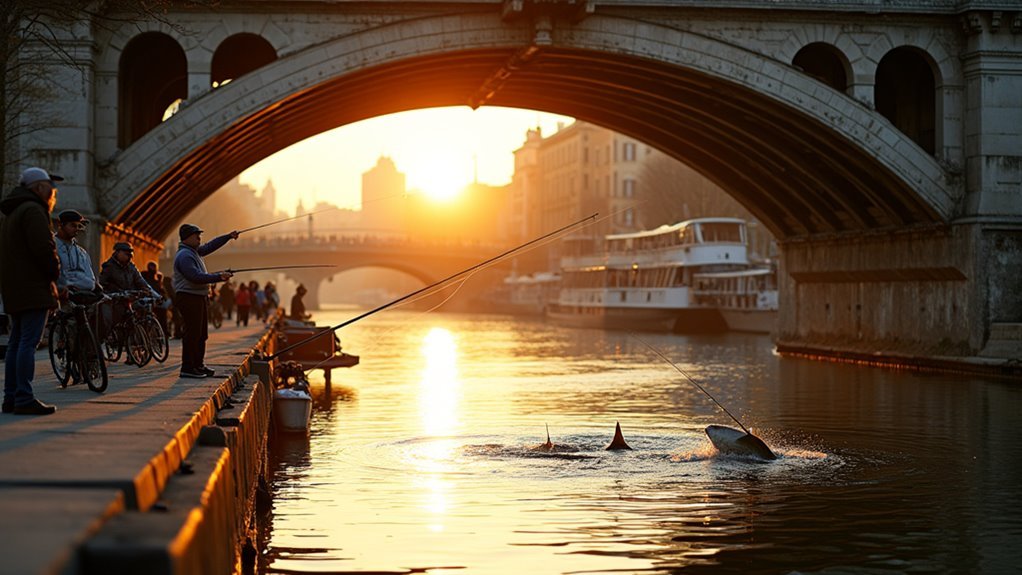
Short, precise casts you practiced for tight ponds serve you well while fishing around bridges, boats, and busy banks because those spots force you to be quiet, accurate, and patient.
You’ll use bridge shadowing to find cool, calm water where fish hide under concrete and wood. Walk slowly, talk softly, and let others know you belong here so you all share space.
Boats create boat turbulence that moves bait and can draw curious fish, so cast a few feet away and twitch toward calmer water. Watch for submerged structure and people leaving food or gear.
Choose short rods, light line, and soft presentations. Be friendly to anglers nearby, swap tips, and adjust as soon as conditions change to stay connected and catch more.
City Fishing Baits and Lures That Work
Whenever you fish city waters, picking the right live bait can make bites happen fast, so consider worms, minnows, and canned corn for carp and panfish.
At the same time, having a few reliable artificial lures like soft plastic shad, small topwater plugs, and size 10 Woolly Buggers lets you cover more water and imitate the local forage. Together these choices give you flexible options for busy banks, shaded structure, and tight casts near bridges and debris.
Live Bait Options
In case you’re fishing in the city, live bait can be your best friend because it quietly does the work of attracting picky, pressured fish, and it’s easy to use whether or not you’re on a park pier or a narrow canal bank. You’ll feel part of a small crew once you share tips on bait preservation and natural attractants. Use worms, minnows, crickets, and shrimp depending on species and access. Keep bait cool, oxygenated, and shaded. Handle gently to keep action and scent. Below is a simple chart to match baits to spots and techniques so you and your group can pick fast.
| Bait | Best Spot | Presentation |
|---|---|---|
| Worms | Shallow bank | Slip hook, slow drift |
| Minnows | Pier edges | Free-line or float |
| Crickets | Vegetated shore | Small hook, twitch |
| Shrimp | Brackish canal | Weight lightly, steady retrieve |
Artificial Lure Picks
Because city waters are full of surprises, you’ll want a small but versatile lure bag that covers common situations and species, and that stays easy to use whenever you’re on a narrow bank or a crowded pier.
You’ll feel welcome at any spot once you pack reliable choices that match urban structure and pressure. Pick lures for clear casts and quick swaps. Consider color patterns that mimic local forage and stand out in stained water. Prioritize lure durability so you don’t lose faith after a few snags.
Mix sizes and actions to cover topwater to bottom.
- Soft plastics: worms, shads, and creature baits for tight spots.
- Small crankbaits: subtle wobble for rocks and pilings.
- Topwater poppers: quick thrills in low light.
- Spinnerbaits: flash for murky channels.
Read Urban Water for Fishing: Structure, Current, Visibility
In case you want to catch more fish in the city, start through learning how to read structure, current, and visibility in urban water; these three things tell you where fish hide, feed, and move.
You’ll notice water temperature affects fish behavior and feeding times, so check surface warmth and shade. Scan for structure like fallen limbs, rocks, submerged walls, and debris where fish hold. Watch current seams, eddies, and slow pockets near faster flow; food funnels there and fish wait to ambush.
Gauge visibility by water clarity and light. Should visibility be low, use vibration and bright lures. In the event it’s clear, downsize and be stealthy. You belong here with others who read water the same way.
Safety, Local Rules, and Low-Impact Catch Handling
After you’ve learned to read structure, current, and visibility, you’ll want to keep yourself, the fish, and the park in good shape while you fish. You belong here, so act like it.
Know local rules, get the right license, and learn emergency protocols for cuts, falls, or bad weather. Pack basic initial aid, a whistle, and a phone in a waterproof case.
Practice low-impact catch handling to protect fish and habitat. Follow these steps:
- Check regulations and seasonal closures before you go.
- Use barbless hooks, wet your hands, and minimize air time.
- Secure gear and pack out all waste disposal items.
- Share safety tips with friends and respect other anglers.
This makes urban fishing safe, kinder, and more welcoming.
Frequently Asked Questions
How Do I Clean and Cook Urban-Caught Fish Safely?
About 70% of urban anglers report inspecting catches; you should gut, use clean filleting techniques, rinse well, then choose safe cooking methods like thorough baking, grilling, or frying. You’ll belong to careful, confident cooks.
Are There Times of Year When City Fishing Is Banned?
Yes - you’ll encounter seasonal closures and fishing regulations that restrict dates or species in some urban waters; check local agency notices, maps, and community forums so you’re following rules and staying part of the responsible angling community.
Can I Fish Near Storm Drains or Sewage Outlets?
Yes - you can, but don’t. Like standing at a stormy mouth, drain ecology and water quality vary; you’ll want safer spots, community knowledge, and caution about contaminants, legal limits, and fish that could carry pollution.
What Precautions for Fishing Near Railways or Construction Sites?
Stay clear of active tracks, wear safety gear, and keep hazard awareness high around trains or construction; you’ll stick together, use marked crossings, communicate with crews, and respect barriers so everyone feels safe and welcome while fishing.
How Do I Report Pollution or Invasive Species Sightings?
Consider it as nudging nature: call your local pollution hotline or file an invasive alert online, stay calm, share clear location, photos, and species signs, and you’ll join fellow stewards protecting your neighborhood waterways.