Book Appointment Now

9 Offshore Fishing Tactics: Improve Deep Sea Success

Offshore fishing rewards smart prep, gear choices, and reading the sea. Pack matched rods, reels, leaders, and varied bait for quick switches. Rig outriggers, spread lines, and set drag and speed for the target species. Learn currents and thermoclines, time tides and moon phases, and mix trolling, live baiting, chunking, drifting, and bottom fishing while keeping crew communication tight.
Pack the Right Offshore Fishing Gear and Tackle
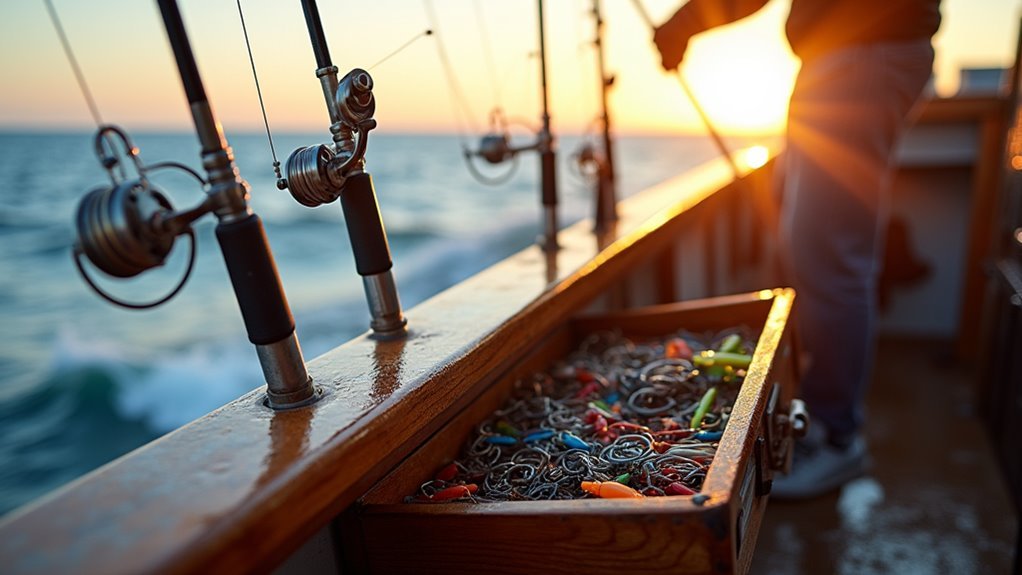
Start through choosing gear that matches the kind of offshore trip you’ll take, because the right tackle keeps you fishing longer and feeling confident as the big one hits. You’ll want rods and reels sized for your target and sea conditions, plus spares so you’re not stranded.
Pack line maintenance tools like a line conditioner, cutters, and spare spools to prevent breakoffs and keep your drag smooth. Organize rigs, leaders, and terminal tackle in labeled tackle storage that’s waterproof and easy to grab once the action starts. Bring strong knots, extra swivels, and a simple repair kit.
Share tips with your crew, keep gear tidy between sets, and check everything before you leave shore so you fish together with calm and trust.
Set Up Your Boat: Lines, Outriggers, and Speeds
Once you rig your boat for offshore fishing, getting lines, outriggers, and speeds dialed in makes the difference between a slow day and nonstop action. You want consistent line tension so lures run true and you feel every tap. Set outriggers to spread lines wide and reduce tangles while keeping baits natural.
Check boat maintenance frequently so gear mounts and clips stay secure and you trust your setup. Match trolling speeds to species and bait type, and adjust slowly until you see steady lure action.
- Calibrate drag and line tension to avoid lost fish and shared excitement.
- Position outriggers for clean spreads and team comfort.
- Keep speeds steady, then tweak for bites and group confidence.
Choose Baits and Live-Bait Rigs for Offshore Fishing
Now that you’ve got your lines, outriggers, and speeds dialed in, picking the right baits and live-bait rigs becomes the step that turns effort into fish on the deck.
You’ll choose live baiting options like pilchards, goggle-eyes, and squid, matching size to your target species. Rigging matters, so learn simple circle hook setups, weighted swivel rigs, and parachute-style hooks for natural action.
Combine live baiting with chunking techniques to create scent trails without spooking nearby fish. Use fresh bait, keep it lively in a well-aerated tank, and rotate baits often.
Share gear choices with your crew so everyone knows roles. You’ll feel confident once your bait presentation looks natural, steady, and inviting to big offshore predators.
Design Your Spread: Chum, Teasers, and Lures
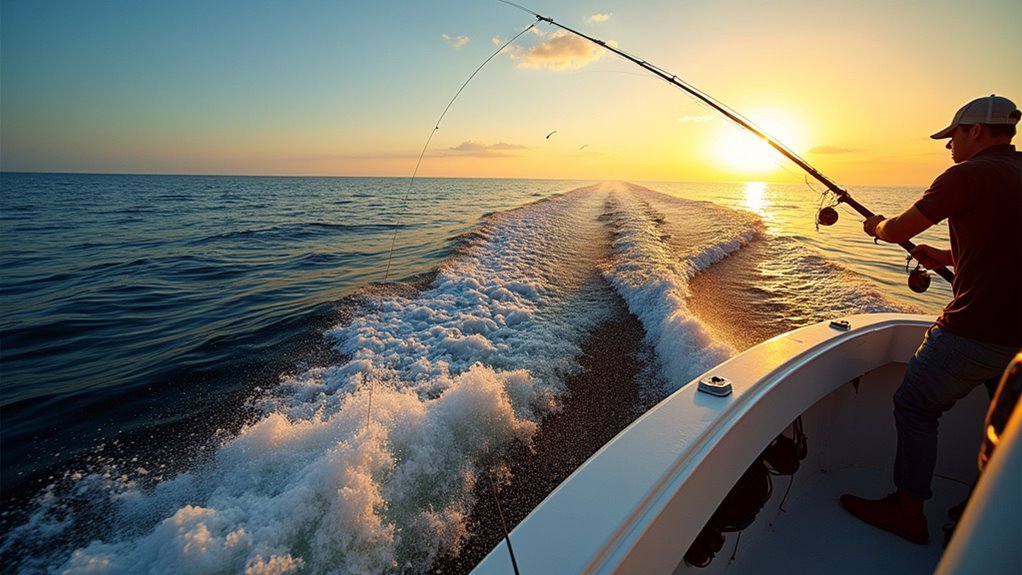
At the moment you put a thoughtful spread together, you’ll observe fish start to pick apart your presentation and you’ll feel more in control of the bite.
You want teammates who trust your choices, so set chum dispersion to form a consistent slick and draw them close. Teaser placement matters; stagger teasers at varied heights to mimic schooling bait and spark curiosity.
- Start with a steady chum line to focus fish attention.
- Add multiple teasers spread wide for safe coverage.
- Follow with lures at different distances to tempt strikes.
Keep lines untangled, match lure action to teaser movement, and rotate lures as interest wanes. You’ll build confidence and belonging once the crew sees your spread work.
Troll Patterns That Catch Tuna and Billfish
You’ve set a smart spread with chum, teasers, and lures, and that groundwork will make patterning tuna and billfish much easier, because fish behavior around a slick tells you where to place lines and what depth to target. You’ll focus on steady troll speeds, varied line placement, and thoughtful lure selection to present baits naturally. Run outriggers wide, center lines closer, and adjust clips or weights for depth. Trust your crew and share observations so everyone learns.
| Role | Action | Benefit |
|---|---|---|
| Captain | Varies speed | Finds sweet spot |
| Angler | Watches strikes | Quick hook sets |
| Crew | Adjusts clips | Maintains depth |
| All | Communicate | Builds team confidence |
Drift and Bottom Tactics for Snapper, Grouper, Amberjack
Once you want steady bites on snapper, grouper, and amberjack, drifting or fishing right off the bottom will do the job best because these species hug structure and hold close to the sea floor; you’ll learn to read the boat’s drift, feel the bottom, and place baits with purpose so you spend more time hooked up and less time guessing.
You’ll use drift techniques and bottom rigs that keep bait near rock, ledges, and wrecks. Fish with weight that bumps bottom softly, and stop to feel for snags. Share tasks so everyone helps and learns. Confidence grows together whenever you land steady fish.
- Tune your drift to current and boat speed
- Use strong bottom rigs and short leaders
- Rotate baits often to stay effective
Read Currents, Thermoclines, and Structure
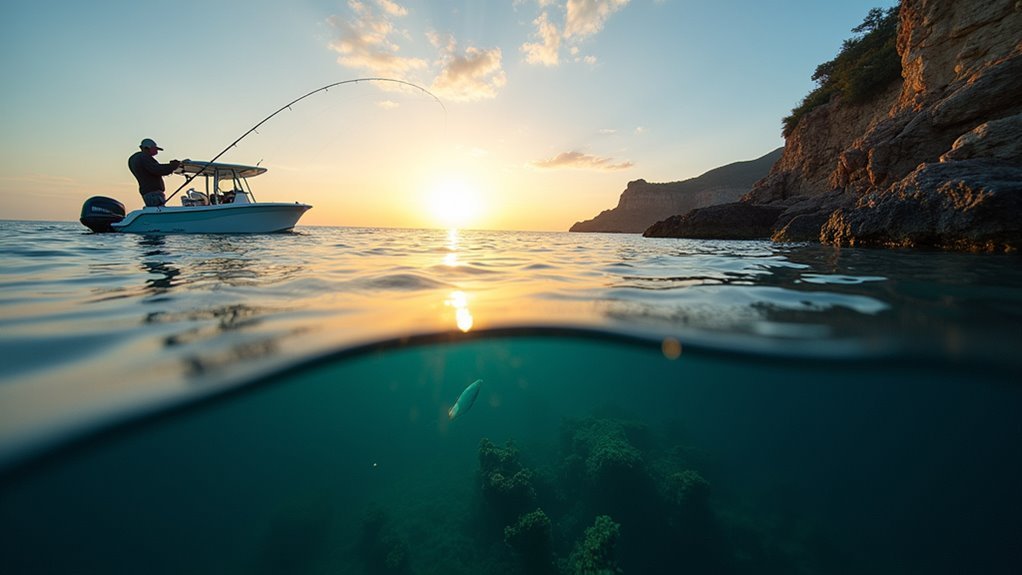
You’ll start through reading current direction because it tells you where bait and fish will move, and that helps you choose trolling lanes or where to anchor.
Next you’ll identify thermocline depths since fish often hold at the temperature break, so adjust your weighted lines or downriggers to that band.
Then map seafloor structure to find ledges, humps, and wrecks where structure-oriented species congregate and tie your tactics together for better bites.
Read Current Direction
- Scan for slicks and eddies near rigging and ledges, then place baits where bait concentrates.
- Observe wind shifts and adjust drift or anchor to keep lines in the strike zone.
- Communicate with your team so everyone moves as one on the water.
Identify Thermocline Depths
Once the surface feels warm but the fish are holding deeper, you’ll want to find the thermocline because it often marks where bait and predators concentrate.
You can use your fishfinder to spot sudden shifts in temperature gradients and a dense bait layer. That abrupt change shows thermocline effects, at the point oxygen and food stack up.
At the moment you see a clear band on the screen, slow your drift or set your trolling depth to match it. Try different lures or live bait just above and within that layer.
Talk with your crew and other boats nearby to confirm depth readings. Together you’ll learn local patterns faster.
Trust what the gear and your eyes tell you and stay adaptable on the water.
Map Seafloor Structure
Whenever you’re attempting to map the seafloor to read currents, thermoclines, and structure, consider the boat as your eyes and the electronics as your memory; together they’ll show where fish like to hang. You’ll use sonar and GPS to trace seafloor topography and build habitat mapping that your crew trusts.
Read contours, ledges, and sand ripples. Spot drop-offs where currents focus bait. Feel proud whenever your plotter paints a new hotspot for everyone aboard.
- Scan slowly to reveal concealed reefs and wrecks.
- Mark thermocline breaks that change fish behavior.
- Share waypoints so your team fishes with confidence.
Stay curious, help each other, and let mapped structure bring you closer out there.
Time Your Trip: Seasons, Tides, Bite Windows
You’ll catch more fish as you match the season to the species you want, because migratory patterns and water temperature drive where fish hang out.
Pay attention to tide charts and focus on prime bite windows around incoming and outgoing tides, since moving water concentrates bait and triggers feeding.
Together, seasonal patterns and tide timing give you a clear plan for at what time to run trolling, live baiting, or bottom trips so you’re fishing when fish are most active.
Seasonal Species Patterns
Once you plan an offshore trip based on season, tide, and bite window, you’ll get more consistent action and a lot less guesswork.
You’ll learn how migratory timings shape where fish show up and how spawning behavior concentrates them near structure. That knowledge helps you pick methods like trolling, bottom fishing, or live baiting with confidence and belonging.
- You feel hope as spring runs bring pelagics closer.
- You feel satisfaction once summer spawn concentrates snapper and grouper.
- You feel fellowship sharing a successful fall run with your crew.
Understand patterns, watch charts, and talk with local anglers. Use timing to match gear and presentation. When you belong to a fishing group, you trade tips that sharpen every trip.
Prime Tide Bite Windows
During the period the tide aligns with the right season and bite window, your odds of landing a big fish go way up, and you’ll observe stronger tidal currents during new and full moons, and fish move to feed along edges and structure. Match your method to that movement.
In case currents run hard, troll or drift with live bait to cover water. In gentler flow, try bottom fishing or chunking near reefs where fish hold. Talk with your crew, share observations, and adjust lines and depths together.
Once you read tides and moon phases, you join a group who fishes smarter and catches more.
Troubleshoot Common Offshore Fishing Problems and Fixes
Should things go wrong offshore, stay calm and recall most problems have simple fixes you can handle on the spot. You belong out here and you can solve common issues like a team.
Weather challenges can change plans, so watch skies, adjust course, and secure loose gear.
Good gear maintenance prevents many breakdowns, so check lines, knots, and battery connections before you push off.
- Engine hiccup: check fuel, filters, and battery terminals; try a restart and call for help as necessary.
- Tackle tangles: stop, free lines methodically, and reset outriggers for safety.
- Lost bite: change bait or depth, and evaluate a new presentation.
These steps keep you confident, calm, and connected to your crew.
Frequently Asked Questions
How Do I Get an Offshore Fishing License and Regulations for My Area?
Check your state or regional fishery website to complete the license application, learn fishing restrictions, and join local clubs for support; you’ll get renewal steps, fee info, species limits, and contact details to stay compliant and connected.
What Safety Gear and Emergency Procedures Are Required Offshore?
Consider sailors’ oaths: you’ll carry life jackets, emergency flares, follow radio protocols, and run safety drills regularly; you’ll belong to a prepared crew, trusting each other whenever every emergency demands calm, practiced action.
How Do I Store and Transport Large Offshore Catches Properly?
You should clean your catch promptly, use ice preservation in insulated containers, secure packaging to prevent leakage, and chill continuously during transport so you’ll feel confident and supported bringing fresh, safe fish home to your crew.
What Are the Best Cold-Weather Tactics for Offshore Fishing?
You should layer clothing, wear insulated gloves, keep a waterproof outer shell, warm headgear, and heated packs, bait appropriately for slower fish, fish midday, buddy up for safety, and prep gear to prevent freezing lines.
How Do I Hire and Vet a Reliable Charter Captain or Crew?
Check references, verify experience verification via licenses and reviews, ask about local knowledge and gear, meet crew, trust your gut - you’ll belong on a boat where communication’s honest, expectations align, and safety feels like family.