Book Appointment Now

Deep Water Fishing Conditions: Find Stable Fish Zones

Deep water fishing isn’t guesswork: stable zones where temperature and structure align hold consistent fish. Use bathymetric charts to locate ledges, humps, and tight contour breaks. Confirm bait and holding arches with multi-frequency and down-imaging sonar. Match depth and presentation to weather and season, choose anchor or drift during slack, and avoid common mistakes that scare fish away.
Quick 5-Step Framework To Find Stable Deep-Water Fish Zones
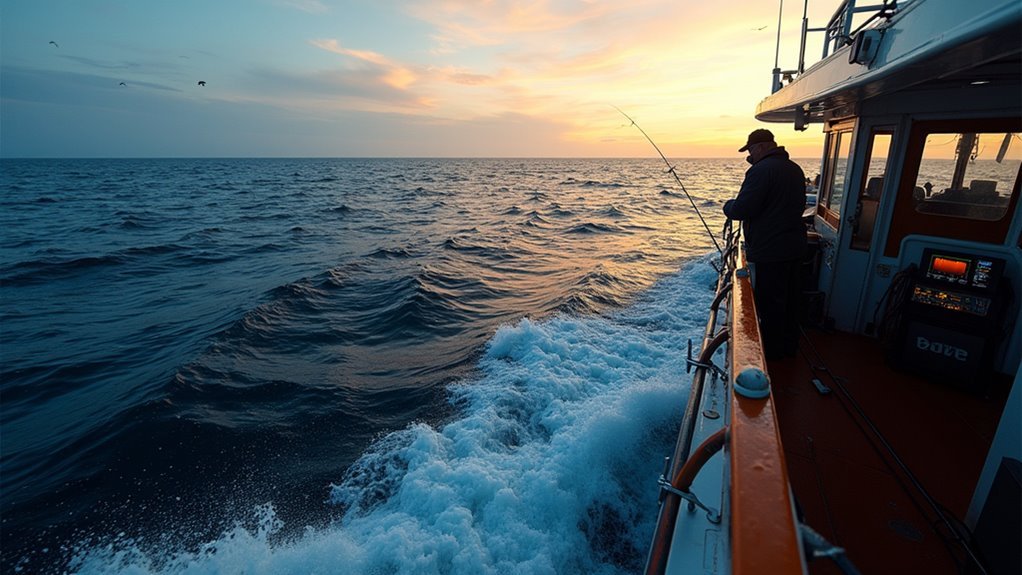
Want to find steady deep-water fish zones without wasting time? You’ll follow five clear steps that build on seasonal movements and pressure effects so you feel part of a reliable group.
Step one, map deep structure and look for drop-offs, humps, and converging breaklines.
Step two, observe seasonal movements from flats to winter basins and mark migration highways.
Step three, check recent weather and pressure effects to predict tight holding on cover.
Step four, target contact points where depth shifts quickly and cast or troll to structure depth.
Step five, use slow presentations and probe multiple ledges, humps, and rock piles until fish respond.
You’ll belong to anglers who trust simple, repeatable patterns and steady results.
Define Stable Deep-Water Fish Zones
Once you learn to read the lake, stable deep-water fish zones become predictable places where fish feel safe, warm, and ready to feed, even as the weather turns.
You’ll find these zones where deep temperature stays steady and structure offers predator safety. Consider humps, rock piles, and ledges that hold fish at a depth that matches their comfort not the bottom.
In winter and high pressure you’ll notice tighter holding patterns near contact points and converging break lines.
You belong to a group that reads subtle signs like stable light, slow current, and nearby migration highways. Use patient tactics, slow presentations, and targeted probing to lock into spots that promise consistent bites and shared satisfaction on every outing.
Use Bathymetric Charts To Find Ledges, Drop-Offs, and Pinnacles
You already know how stable deep-water zones feel like a second home for fish, and bathymetric charts turn that gut feeling into a clear plan you can follow on the water.
You’ll learn to read bathymetric detail and use contour interpretation to find ledges, drop-offs, and pinnacles where fish gather. Charts show breaks, tight contours, and isolated highs that match the structure fish favor.
You’ll feel confident marking spots and sharing them with your group so everyone belongs to the same hunt.
- Identify tight contour lines for sharp drop-offs
- Spot concentric contours for pinnacles and humps
- Trace contour breaks leading to shallow access
These steps connect to your instincts and guide precise, calm decisions.
Read Sonar Returns: What Arches, Bait Marks, and Structure Mean
How do those blips and arches on your fishfinder translate into real fish and structure out there? You’ll learn to read arch shapes as living targets and fixed cover.
Solid, full arches usually indicate a fish passed under you. Thin or faint arches can suggest distant or small fish. Nearby, look for clustered bait echoes. That bait shows where predators might stack up. Use echo size and movement to tell whether bait is schooling or scattered.
Structure returns like humps, ledges, and rock piles appear as hard returns with clear contours. Shift from bait echoes to arches often marks a strike zone.
Trust patterns over time. Practice with friends and share readings. You’ll feel confident and part of a community learning together.
Integrate Multi-Frequency and Down-Imaging Sonar For Clarity
At the moment you want clearer images of what’s below, combining multi-frequency and down-imaging sonar is the smartest move, because each tool fills in gaps the other leaves.
You’ll feel part of a team when you learn multi frequency calibration to match frequencies to depth and target size.
Imaging integration helps you layer crisp visuals over broad returns so structure and fish both show.
- Tune frequencies to separate bait from fish for calm confidence
- Use down imaging for crisp structure and 2D for wide perspective to feel secure
- Practice calibration together to trust your screen and your crew
Start simple, experiment with settings, and adjust as you go.
You’ll bond over clearer finds and steady catches, understanding you belong on the water.
Spot Thermoclines and Temperature Breaks Quickly
You’ll want to find thermocline layers quickly because those sharp temperature breaks often control where fish are holding.
Use your sonar and a temperature probe to read depth-specific temps and mark the exact break so you can fish the strike zone with confidence.
Once you spot the layer, relate it to nearby structure like drop-offs or humps so you’re presenting baits where fish are most likely to be.
Spot Thermocline Layers
As soon as you drop a line into deep water, spotting a thermocline can change the whole day because it marks a sharp temperature break where fish often gather, feed, or hold tight to structure. You’ll learn to read thermocline formation and notice layer disruption after wind or current shifts.
That helps you pick structure edges where fish like to stage. Use your sonar and bait depth to match the layer. You’re not alone out there; other anglers follow the same clues, and you’ll feel that shared confidence.
- Find the sudden temp drop that tells you where life concentrates.
- Watch for disturbance that scatters fish briefly then draws them back.
- Adjust depth and lure speed to stay in the strike zone.
Read Temperature Breaks
Ever question why one cast leads to nothing while the next brings a strike? You learn quick that reading temperature breaks changes everything. Watch your graph for sharp shifts in temperature stratification. Those thermal gradients mark where fish move between stable deep water and active shallows.
Whenever you find a steep gradient, slow your presentation and hold your lure near the edge. Use slow deep-running baits, vertical jigs, or drop shots to stay in that zone of change. Pair sonar readings with gentle drifts along breaklines to feel where fish pause.
Trust the rhythm of the water and adjust depth in small steps. You belong with anglers who read the lake like a map. Share findings, ask questions, and fish those breaks together.
Measure Thermocline Depth Quickly With Your Sonar
As you fire up your sonar, look for the temperature layer readout and watch for a sharp change in degrees over a short depth span.
That sudden temperature shift is your thermocline, so record its depth on your chart or device for quick reference.
With that spot recorded you can target structure at the right depth and keep fish in your strike zone.
Read Sonar Temperature Layer
Curious how to find the thermocline fast so you can target fish where they actually live? Start with grasping temperature layering on your sonar screen. You’ll see a band where colors shift and readings stabilize; that marks the deep thermocline.
Use gentle boat drift and watch real time changes to confirm depth. Readings tell you where fish prefer stable temps and where to set your rig.
- Point your transducer and scan slowly so the layer appears steady
- Mark the depth once the color band stays constant over time
- Trust the layer and move to nearby structure where fish congregate
You belong on the water. Share readings with your crew, stay patient, and let the sonar guide your confidence.
Identify Sharp Temp Change
If you wish to find the thermocline fast, point your sonar and watch for a sudden band of color change that stays steady as you drift or idle.
You’ll notice a clear temperature gradient where warm surface water meets cooler deep water. Keep the transducer steady and scan slowly so the thermal layering shows as a thin, sharp line instead of a blur.
Once the band holds its depth while you move, you’ve found a reliable layer fish will use for shelter and feeding. Trust your screen and trust your pace. Share the finding with your crew so everyone feels part of the search.
This simple scan builds confidence and gets you on structure fish prefer.
Mark Thermocline Depth
Grab your sonar and breathe easy; marking the thermocline depth is quicker than you believe and it’ll change how you target deep water fish.
You scan layers and watch for a sudden color band that shows temperature shift below surface temperature readings. That sharp line tells you where fish find steady comfort amid seasonal variations. You mark depth, lock it in your chart, and fish more confidently.
- Scan transects slowly to spot the band clearly.
- Record repeatable depth over multiple passes for trust.
- Compare with surface temperature and behavior to refine spots.
When you share marks with your crew, you build trust. This method keeps everyone included, helps you choose lures, and makes deep water outings feel like home.
Interpret Current Lines and Tidal Flows For Holding Fish
When currents and tidal flows meet underwater structure, you’ll find the spots where fish like to hold, so learning to read those lines can turn a slow day into a steady bite. You’ll watch current gradients on your chartplotter and feel subtle shifts on the rod tip.
Tidal currents sweep bait and oxygen, so fish queue along seams, edges, and ledges. Trust your sonar to show traffic where water masses collide and slow behind humps or rock piles. Move quietly, work the edges, and let the presentation sit where flows compress prey.
You belong to a group that reads water, shares fixes, and adapts. Practice noting wind, tide stage, and bottom shape to predict holding zones and connect with fellow anglers.
Recognize Bait Movement and How It Signals Feeding Zones
You’ll learn to spot subtle bite tells that tell you if fish are following or tasting your bait, so you can react before they commit.
Pay attention to how your bait drifts and how the weight on your line shifts, because those changes reveal current edges and feeding lanes where fish are staging.
As you watch for these signs, you’ll connect bait movement to specific structure and depth, making it easier to place your offering where fish are most likely to strike.
Detect Bite Tells
Ever question how a tiny twitch or a slow pause on your line tells you where fish are holding and how they’re feeding? You learn to read subtle signals. Watch line tension and feel rod vibration to know whether bait is nudged, inhaled, or ignored. That tells you whether fish are cruising a breakline or sitting tight on a humps edge.
- Notice a light, steady pull and you’ll sense curious bites
- Feel a quick sharp thump and you’ll know a confident strike
- Detect a slow, dragging tug and you’ll realize fish are holding and sampling the bait
You belong to a group that trusts instincts. Share cues with mates. Practice steady hands, quiet patience, and celebrate small wins together.
Assess Bait Drift
Feeling those bite tells helps you read fish, and watching how bait moves next gives you the map to where they feed. You pay attention to current drift and wind influence because they change how your bait sails and pauses.
Watch line angle, bait speed, and subtle twitches. Whenever bait drifts slowly near structure you’re often over a feeding lane. A faster sweep past a drop-off can mean cruising fish nearby.
Adjust rod position and retrieve pace to match the drift and hold your bait in the strike zone longer. Talk with your mates, share observations, and trust their cues.
Together you’ll spot patterns faster. This keeps you connected and confident as you mark likely feeding zones and make better casts.
Watch Weight Changes
Once your rod suddenly lightens or gets a steady, odd pull, don’t shrug it off; those weight changes are your clearest indications to where fish are feeding and how they’re moving.
You want to watch calibration on your gear so small tugs register. Feel the difference between a soft bump and a steady pull. Make weight adjustment slowly to keep bait in the strike zone without spooking fish.
You belong to anglers who read subtle signals, and that connection matters.
- Track subtle lifts to find active layers.
- Observe steady drags as movement along breaklines.
- React calm and confident to changes.
Use calm checks, compare past hits, and adjust sink rate and lure weight for deeper structure detection.
Match Species Behavior To Deep-Water Structure (Grouper, Snapper, Pelagic)
Once you match species behavior to deep-water structure, you’ll see why grouper, snapper, and pelagic fish use the same underwater features in different ways and why that changes how you’ll fish them.
You’ll learn grouper habitat centers on tight cover like ledges, rock piles, and humps where they ambush prey. Snapper often hug structure too but move more within edges and crevices to feed. Pelagic movement follows drop-offs, breaklines, and converging channels where schools cruise for bait.
You’ll feel part of a trusted team as you read structure and pick a zone. Move slowly around contact points, watch depth changes, and respect stable temperature pockets. Use patience, share observations with mates, and adapt whenever fish shift between tight cover and roaming corridors.
Choose Gear and Rigs For Stable Deep-Water Presentations
Pick gear that stays true to the depth and structure you want to fish, because deep-water presentations live or die on consistency and contact. You want gear selection that gives steady feel, slow retrieves, and precise hookups. Match rod power and reel ratio to lures that reach structure depth.
Learn quick rig adjustment so your bait rides at the strike zone and keeps contact with humps, ledges, and breaklines.
- Choose rods, reels, and lines that inspire confidence and steady bites.
- Set rigs that hold depth and promote slow, natural action.
- Share tips and check rigs together so everyone feels supported.
Use simple rigs like heavy gliders, jigging combos, and Texas rigs. Trust your gear and your crew as you fish deep structure.
Set Drift and Position the Boat To Hold Contact
Set your boat so your line stays where the fish are, and you’ll feel the difference right away. You’ll learn to read current drift and use subtle boat positioning to keep contact with structure. Move slowly, talk with your partner, and trust small adjustments. As wind or flow changes, shift motors or use a bow light to hold angle. That keeps your bait in the strike zone and helps everyone feel included in the process.
| Wind angle | Drift speed | Boat positioning |
|---|---|---|
| Headwind | Slow | Nose into wind |
| Tailwind | Fast | Stern toward wind |
| Sidewind | Variable | Angle across drift |
| Current left | Steady | Bow right |
| Current right | Steady | Bow left |
Practice, share cues, and enjoy holding contact together.
When To Anchor Versus Drift During Slack Periods
How do you decide whether to drop an anchor or keep drifting as the wind dies and the bite slows? You trust the spot, your crew, and the feel.
Anchoring benefits pop once fish are tight to structure and you want steady presentation. Drift challenges appear whenever you lose contact with cover or you spool lures too fast. You care about belonging to a team that reads water together and adapts.
- You anchor to hold over a hump, rock pile, or breakline once fish stay put.
- You drift to cover moving fish or follow subtle seams whenever the school shifts.
- You switch between both to test depth, presentation, and patience.
Use calm talk with your mates, rotate roles, and make choices that include everyone.
Use Weather and Barometer To Predict Fish Activity
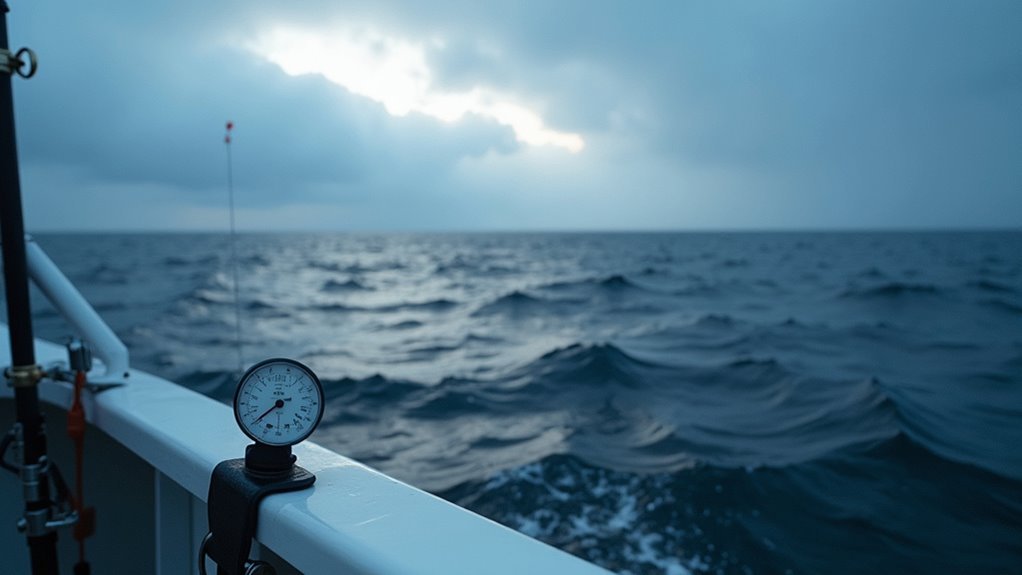
You’ll notice the barometer gives you a clear signal as fish will be active, so watching rising, steady, or falling trends can change how and where you fish.
Pay attention to approaching weather fronts and how pressure shifts before, throughout, and after them, because fish often move shallower on falling pressure and tuck tighter to deep cover on rising pressure. Timing those pressure changes with your bite windows helps you pick the best moments to troll, jig, or present slow baits on deep structure.
Barometer Trends Explained
As the barometer drops or rises, it quietly tells you how fish are likely to behave, and learning its language gives you a clear edge on deep water trips. You’ll notice barometer sensitivity in how fish tighten to cover whenever pressure climbs and loosen up as it falls. Pressure effects guide your tactics and where you look for structure.
- Once pressure rises gradually, fish go deeper and hug rock and humps.
- Whenever pressure falls, fish roam more and feed along breaklines.
- Quick swings make fish inactive or moody so patience pays.
You belong to a group that reads subtle clues. Trust the barometer, pair it with temperature stability, and share observations with mates. You’ll feel calmer, more confident, and more connected on every trip.
Weather Fronts And Fish
You’ve already learned to read the barometer and spot how fish tighten up as pressure climbs or loosen as it falls, and that skill will help you read approaching weather fronts with confidence.
Once a front moves in you’ll notice clear weather impact on fish behavior. Cold fronts often push fish deeper and closer to cover, while warm fronts can loosen them up and send feed-seekers up the breaklines.
Watch pressure effects as they change ahead of a front and use that cue to target points, humps, and drop-offs where fish can move quickly.
You’ll feel part of a group that reads water and sky together. Trust your barometer, stay flexible with depth, and enjoy shared success on changing days.
Pressure Change Timing
As pressure starts to climb or fall, your barometer becomes the clearest initial warning for how fish will change where and at what time they feed, so learn to read it like a fishing buddy. You watch barometric shifts and translate pressure timing into action.
Whenever pressure rises slowly you’ll find fish tighten to deep structure and hold; whenever it drops quickly they’ll move shallower and feed more aggressively. Trust the steady tick of your gauge and the feel of the water.
- You feel calm confidence once steady high pressure means patient presentations win.
- You thrill whenever falling pressure brings fast, shallow bites.
- You bond with others over shared barometer reads and the same favorite breaklines.
Read it often, share insights, and adapt your drift.
Adjust Bait, Depth, and Presentation With Seasonal Shifts
As seasons shift, your bait, depth, and presentation need to shift with them so you’ll keep catching fish instead of guessing where they went. You’ll use seasonal baiting to match local forage and water temp, choosing slow deep-running lures in cold months and brighter, shallower selections in warm times. Presentation adjustment matters more than gear weight.
Move shallower on low light or wind, and hold tighter to structure during pressure rises. Try jigging humps, drop shotting ledges, or slow gliders on 12 plus feet when fish hug stable deep zones.
Trust your group and share what works. You’ll learn routes from spawning flats to deep winter holds, and adapt bait, depth, and action together for steady success.
Top Mistakes That Ruin a Deep-Water Hold Search
Shifting your bait, depth, and presentation with the seasons helps you find fish, but it won’t save a search in case you make avoidable mistakes while hunting deep holds. You belong here, and you deserve confidence.
Avoid common casting errors that spook fish off structure, and don’t chuck gear without considering lure selection for depth and action. Move with purpose, not panic. Keep a steady plan so you and your buddies trust each other on the boat.
- Overcasting and wild retrieves that blow past breaklines and humps
- Wrong lure selection that doesn’t reach the 12 to 30 foot strike zone
- Ignoring sonar marks and staying stuck on one spot
Use quiet presentations, change depth in small steps, and stay patient.
Frequently Asked Questions
How Do Deep-Water Fish Respond to Long-Term Climate Change?
You’ll face fish undergoing thermal adaptation and migration shifts; they’ll alter depth, range, and timing, seeking stable temperatures and refuge, and you’ll adapt too, finding community with others tracking changes and sharing strategies.
Can Deep-Water Structures Concentrate Invasive Species?
Yes - you’ll find deep-water structures can concentrate invasive species through causing habitat disruption and intensifying species competition; you’ll feel enabled joining others to monitor, report, and restore affected spots for healthier, shared aquatic communities.
What Legal or Conservation Rules Affect Deep-Water Fishing Spots?
About 30% of fisheries use seasonal closures to protect spawning; you’ll follow seasonal closures, fishing quotas, catch-and-release rules, gear restrictions, and protected-area no-take zones-so join fellow anglers respecting rules that sustain shared fishing places.
How Do Underwater Noise and Boat Traffic Alter Holding Patterns?
Boat noise and traffic disruption push fish deeper or into cover, changing holding patterns; you’ll see tighter schools and reduced feeding. Sonar interference can spook or mask targets, so you’ll coordinate quieter runs and respectful spacing.
Can Deep-Water Oxygen Depletion Force Fish Shallower?
Yes - whenever thermal stratification causes low bottom oxygen from disrupted nutrient cycling and decomposition, fish’ll move shallower to breathe; you will observe tighter holds near edges, springs, or inflows where oxygenated water and community anglers gather.