Book Appointment Now

8 Best Lines for Topwater Fishing for 2026
ByBEGUM
Topwater fishing punishes sloppy line management. A line that catches on the guide, tangles during a stripper retrieve, or lacks visibility above the surface can ruin a tightly focused cast. I prioritize abrasion resistance, smooth casting, manageable stretch, knot strength, and the visibility needed to follow surface lures.
The list mixes purpose-built fishing braids with Kevlar utility cords and clear monofilament. That distinction matters because not every tough cord belongs on a reel, and not every technically strong line suits the fluid demands of topwater work. I’ve separated dedicated fishing options from multipurpose cords so the practical fit is clear before the line reaches water.
A Side-By-Side Look
PickWhy I Picked ItBest ForAction

Crafting Pick
BIG WORM FISHING Clear Monofilament String
Nearly invisible decorative support
Hanging lightweight decorations

Top Pick
Beyond Braid 4-Strand 8-Strand Braided Line
Low-stretch response and smooth handling
Surface lure hooksets

Range Pick
HERCULES Super Cast 8-Strand Braided Line
Broad strength and length choices
Saltwater and varied targets

Visibility Pick
Reaction Tackle Colored Braid Freshwater Saltwater
Colored braid for easier tracking
Following surface lures

Utility Pick
emma kites Camo Braided Kevlar Utility Cord
High-strength multipurpose cordage
Outdoor rigging and repairs

Hobbyist Pick
emma kites Natural Yellow Braided Kevlar Cord
Variable diameter and strength
Crafts and field repairs
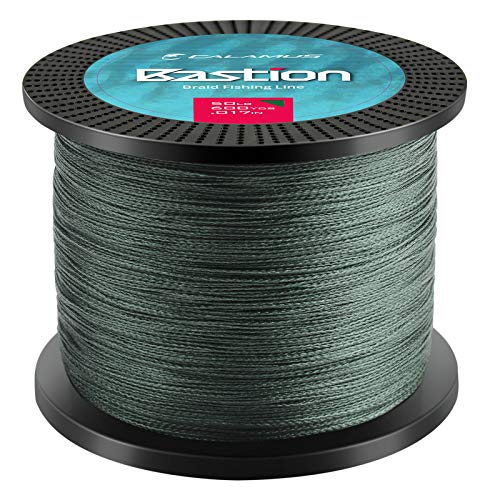
Balanced Pick
Calamus Bastion Multicolor Braided Line
Thin braid across varied strengths
Freshwater and saltwater casting

Specialty Pick
emma kites Black Braided Kevlar Utility Cord
Low-profile black utility cord
Tactical and outdoor projects
More On The Choices That Made The List
This 0.47 mm monofilament creates discreet support for balloon garlands, paper lanterns, ornaments, and photo displays. Its clear profile keeps decorated spaces visually clean, while the stated 20 lb strength is more substantial than delicate craft wire.
That makes it a craft material rather than a dedicated topwater line. Compared with the fishing braids later in the list, it lacks their low-stretch handling, abrasion-oriented construction, and reel-oriented design.
Everyday Perks
- Clear material preserves the appearance of hanging displays.
- The 20 lb rating supports several lightweight decorations at once.
- Monofilament is easy to cut and tie for temporary event setups.
- A fine 0.47 mm diameter offers more discreet support than bulky cord.
Small Caveats
- Ordinary monofilament can develop memory and snag more readily than braid.
- It is intended for decoration rather than repeated casting or fish contact.
Quick Facts
Made For
Party decorators and crafters who need transparent support for lightweight indoor displays.
Consider Something Else When
Topwater anglers benefit more from Beyond Braid 4-Strand 8-Strand Braided Line, which is designed around fishing handling.
Braid is particularly relevant to topwater fishing because low stretch creates a direct connection between a surface lure and the rod tip. Beyond Braid emphasizes that sensitivity with a polyethylene construction and a smooth fluoropolymer coating, while color choices make it easier to follow than a subdued line.
For anglers working across structure, weeds, or rough shoreline, that direct response is a meaningful advantage. The trade-off is reduced forgiveness, so knots and drag settings need careful attention.
Everyday Wins
- Low stretch improves sensitivity during erratic surface retrieves.
- The smooth coating supports controlled travel through fishing guides.
- Available braid constructions suit different handling preferences.
- Multiple colors aid line tracking in changing light.
Points To Note
- Direct hookset response can feel abrupt for beginners.
- Braided line usually requires more frequent replacement and careful cleaning.
- Wind can lift exposed braid during long casts.
Technical Highlights
Who It Suits Best
Experienced anglers seeking sensitive hooksets and direct control over surface presentations.
Another Choice May Suit
Calamus Bastion Multicolor Braided Line offers a broader strength range for mixed freshwater and saltwater use.
HERCULES brings substantial selection to the reel, with strength ratings from 10 lb through 300 lb, multiple diameters, and several spool lengths. That range makes it useful for changing conditions, from delicate topwater plugs around pressured fish to heavier coastal presentations.
The eight-strand design is described as smooth and rounded, with low memory that should support cleaner retrieves and better capacity. Compared with Beyond Braid, the main attraction is choice rather than a narrowly defined handling style.
Reasons It Performs
- Strength choices support everything from light freshwater species to larger saltwater targets.
- The eight-strand construction favors smooth casting and reel capacity.
- Low memory is useful during repeated stripping and casting.
- Several colors and lengths suit varied water and reel combinations.
Trade Offs
- Low-stretch handling may feel too direct for someone learning braid.
- The broad range requires matching diameter and strength to the reel carefully.
- Braid is prone to wind pickup during long, exposed casts.
Best Suited To
Anglers who want one line family for changing species, water types, and presentation weights.
A Better Fit Elsewhere
Reaction Tackle Colored Braid is more directly oriented toward visibility while fishing freshwater or saltwater.
Following a lure is often harder than making the cast, especially where reflections, current, and wave action break up the surface. Reaction Tackle addresses that problem with a colored braid suitable for freshwater and saltwater, giving the line a clearer visual reference during long retrieves.
Its ultra-high-molecular-weight polyethylene construction also emphasizes toughness and abrasion resistance. That profile fits anglers working close to rock, grass, or structure where a softer line could suffer repeated contact.
Advantages To Know
- Color aids tracking a surface lure after a long cast.
- Polyethylene braid resists demanding fishing conditions.
- Freshwater and saltwater compatibility broadens its seasonal use.
- Low stretch supports immediate contact with the lure.
Details To Watch
- Visibility can vary with depth, glare, and water clarity.
- Braid can cut hands during fast handling without protective gloves.
- A direct feel requires disciplined knot tying and drag adjustment.
Right Fit For
Angler prioritizing line tracking and abrasion resistance around cover-heavy water.
Look Elsewhere When
Beyond Braid 4-Strand 8-Strand Braided Line better fits anglers comparing strand construction and coating style.
Camouflage, high strength, and abrasion resistance make this cord more convincing as field utility cordage than reel-ready fishing line. Strength choices range from 200 lb to 1,800 lb, supporting situations such as trip lines, model rocket shock cords, boot laces, and friction-saw applications.
Its braided Kevlar construction resists end fraying more effectively than many twisted cords. The honest distinction is important: strength does not automatically provide the smooth casting, controlled stretch, and knot behavior expected from a fishing braid.
Strengths Worth Knowing
- High strength options suit demanding outdoor rigging tasks.
- Braided construction improves handling and resists raveling at cut ends.
- Color options help the cord blend into outdoor surroundings.
- Abrasion resistance suits repeated contact with rough structures.
Possible Compromises
- It is not presented as a reel-ready topwater fishing line.
- Very high-strength cord can be difficult to handle and tie.
- Abrasion can damage the surface without becoming immediately obvious.
Built With In Mind
Outdoor hobbyists needing strong camouflage cord for rigging, model rockets, or emergency repairs.
Where A Sibling Pick Shines
emma kites Black Braided Kevlar Utility Cord is a more discreet choice for dark equipment and low-light projects.
Natural yellow gives this braided Kevlar cord a practical, highly visible finish for crafts, repairs, camping, and field rigging. The material range spans roughly 1 mm to 4.3 mm and 100 lb to 1,700 lb, so a single product family can cover delicate handwork or heavier utility jobs.
Compared with the camo cord, visibility is the defining difference. It may be easier to locate on a workbench or in grass, although that visibility has little value during normal casting and makes it less natural as fishing line.
Everyday Advantages
- Natural color is easy to see during outdoor tasks.
- Multiple diameters suit craft and structural cordage needs.
- Braided Kevlar yarn resists raveling at the ends.
- Flame resistance supports specialized utility applications.
Where It May Fall Short
- Its high-visibility color is poorly suited to discreet fishing presentation.
- Heavy variants are unwieldy for fine handcraft work.
- Storage should keep the cord clean and away from sharp edges.
Feature Snapshot
Whose Shelf It Belongs On
Crafters, campers, and model-rocket hobbyists who want visible multipurpose cordage.
Skip It When
Calamus Bastion Multicolor Braided Line is the stronger choice for actual topwater casting and retrieve work.
Calamus Bastion covers a broad middle ground with 6 lb through 80 lb options and spools from 150 to 600 yards. That selection is useful for anglers moving between light freshwater species and more demanding saltwater presentations without changing line families.
Its multicolor braid adds visibility, while the four-carrier construction and diamond weave are designed to deliver strength and abrasion resistance in a thin profile. For a first dedicated braid setup, the range feels easier to approach than the broader HERCULES catalog.
Positive Points
- Strength options cover many common target sizes.
- Thin construction preserves casting smoothness and spool capacity.
- Abrasion resistance is useful around weeds, rocks, and structure.
- Multiple colors make line tracking easier during surface retrieves.
Less Ideal Details
- The stated range does not cover extremely heavy saltwater applications.
- Braid requires regular cleaning and occasional replacement after abrasion.
- Low stretch offers little forgiveness during missed hooksets.
Who Will Love This
New braid users and weekend anglers who want several strengths and colors in one fishing-line range.
Reach For A Different Pick When
HERCULES Super Cast 8-Strand Braided Line is the better fit for anglers needing higher strength ratings and longer spool options.
Black Kevlar cord disappears more readily against dark tackle, equipment, and shaded outdoor surroundings. Diameters from about 0.4 mm to 4.6 mm and strength ratings from 50 lb to 1,700 lb support applications ranging from fine utility work to substantial survival cordage.
It sits closer to a specialist rope than a fishing line. The braided construction resists raveling and handles well for tie-down, snare, model-rocket, and fishing-assist tasks, but reel casting and smooth surface-lure tracking are not its primary design goals.
Benefits That Matter
- Black color blends with dark equipment and outdoor hardware.
- A broad diameter range supports light through heavy tasks.
- Braided construction improves grip and reduces end raveling.
- Flame and abrasion resistance suit demanding cordage work.
Practical Considerations
- The cord is not presented as conventional reel line.
- High-strength versions are difficult to tie with standard knots.
- Edge damage can be difficult to notice in black material.
Core Details
Made For
Tactical, camping, and model-rocket hobbyists needing discreet black utility cord.
Not Your Match When
Reaction Tackle Colored Braid Freshwater Saltwater is the relevant option for casting a topwater lure and following it back.
What Matters Before Choosing Fishing Line
Start with purpose. A topwater lure needs controlled casting, reliable knot strength, enough visibility to follow the retrieve, and a feel that suits the angler’s experience. Clear monofilament and Kevlar utility cords can be physically strong, but neither is automatically the right reel line.
Diameter and strength must also match the reel, target, and water. Thin braid adds casting smoothness and capacity, while heavier line can handle greater abrasion and load. Too much strength for the application may create stiffness that reduces control and makes knots harder to form.
Stretch is another important difference. Braid has little elasticity, so it transmits lure movement quickly, but that direct response can make hooksetting less forgiving. A strand construction, coating, and diameter all influence how easily the line leaves the reel and passes through the guides.
Color and maintenance deserve attention too. Brighter braid is easier to follow against glare and open water, while muted colors blend into structure. Regardless of material, rinse salt from the line after coastal use and replace braid once its surface becomes fuzzy or embedded fibers begin protruding.
A Few Practical Checks
Mistakes Worth Dodging
Choosing line solely by its strength rating ignores casting feel, visibility, and reel fit. Match the line to the lure and conditions rather than assuming the heaviest option will handle every surface presentation.
What Separates Premium From Basic
A higher-tier fishing braid may add a smoother coating, finer diameter control, consistent construction, or specialized handling. Those improvements matter most for frequent casters, demanding water, and anglers who notice small changes in retrieve feel.
Frequently Asked Questions
Is braid better than monofilament for topwater fishing?
Braid offers lower stretch and strong abrasion resistance, while monofilament usually provides more stretch and a smoother, more forgiving presentation. The best choice depends on lure weight, target species, casting conditions, and handling preference.
What line diameter works best for topwater lures?
A thinner braid often improves casting smoothness and spool capacity, but it may be less abrasion resistant. Match diameter to lure weight and reel specifications, then consider the cover the line will contact.
Does line color matter for topwater fishing?
Brighter colors are easier to track during long casts and bright reflections. Muted colors may blend into weeds or structure but can become harder to follow in open water.
How often should fishing braid be replaced?
Replace braid after visible fraying, embedded guide debris, surface fuzzing, or repeated abrasion from rocks and structure. Coastal use calls for careful rinsing because salt residue can accelerate wear.
Can Kevlar cord be used as fishing line?
Kevlar utility cords serve specialized rigging and repair tasks, but they are not designed like reel-ready fishing braid. Poor casting behavior and difficult knot handling can make dedicated fishing line the more dependable choice.
Final Thoughts
For topwater fishing, direct control and abrasion resistance usually matter more than sheer cord strength. Beyond Braid and Reaction Tackle offer the most focused fishing-line features, while HERCULES and Calamus cover broader strength ranges. The Kevlar cords remain useful utility materials, but they don’t replace reel-ready line for casting and tracking a surface lure.
