Book Appointment Now

8 Best Ocean Fishing Kayaks for 2026: Confident Coastal Choices
ByBEGUM
Choosing an ocean fishing kayak means balancing stability, tracking, seating comfort, storage, and transport weight against the water you actually fish. I prefer a sit-on-top platform for easy launching and wide casting access, while a sit-in kayak offers a lower profile and more sheltered cockpit in rougher conditions. The roundup also covers fish-finding electronics, protective gloves, and an inflatable platform because those details can shape a full day on the water.
A Side-By-Side Look
PickWhy We Picked ItBest ForAction

Editor’s Choice
Pelican Sentinel 100X Angler Sit-On-Top Fishing Kayak
Stable sit-on-top platform
Easy-access offshore fishing

Smart Upgrade
LUCKY MT-202PLUS Wireless Kayak Fish Depth Finder
Long-range wireless sonar
Scouting from a kayak

Feature Rich
LUCKY Wireless Handheld Fish Finder Waterproof Sonar
Waterproof portable display
Splashes and changing weather

Value Pick
LIFETIME Tamarack Angler 100 Fishing Kayak
Rod storage and foot support
Organized lakeshore fishing

Well Rounded Pick
Pelican Argo 100X Angler 10-Foot Sit-In Fishing Kayak
Lightweight sit-in layout
Long paddling sessions
Comfort Choice
ChinFun 3/4-Finger Kayaking Gloves
Wet-surface palm grip
Comfortable paddle handling
On-The-Go Choice
LUCKY MT-202 Rechargeable Wireless Fish Finder
Cable-free sonar scouting
Mobile shoreline sessions

Travel Ready
Beyond Marina 10’8 Inflatable Fishing Kayak
Foldable full-length platform
Remote launch access
Meet The Standout Selections
The Sentinel 100X Angler favors a broad, open cockpit that makes casting and getting in or out less awkward. Its multi-chine, flat-bottom hull, which uses angled hull sections to add initial stability, gives me more confidence for stand-up casting near sheltered coastal water than a narrow recreational model would.
At 9 feet 6 inches and 44 pounds, it remains manageable for rooftop transport, short launches, and compact storage. Compared with the LIFETIME Tamarack Angler 100, the sit-on-top format offers easier access, although neither model’s supplied specifications establish offshore tracking performance.
Everyday Wins
- The open deck simplifies casting, landing fish, and changing position.
- Flat-bottom geometry supports a stable platform for moving around.
- Its stated weight keeps lifting manageable for solo paddlers.
- Ram-X construction targets durability for repeated outdoor use.
Points To Note
- Open-water tracking and directional stability require local condition checks.
- Salt exposure calls for thorough rinsing and careful storage after use.
Technical Sheet
Who It Suits Best
Beginner and intermediate paddlers fishing from sheltered bays, estuaries, and relatively calm coastal areas benefit from its open platform and manageable weight.
Another Choice May Suit
The Pelican Argo 100X Angler 10-Foot Sit-In Fishing Kayak suits paddlers who prefer a lower-profile cockpit and a longer sit-in platform.
A kayak leaves little room for a permanently mounted sonar system, so the MT-202PLUS makes sense as a portable scouting tool. Sonar sends sound through the water and returns information about submerged structure, and the wireless sensor lets me carry the display without trailing a cable across the deck.
The stated range reaches up to 853 feet, while the floating plate is designed to keep a bait-boat-style transmitter positioned for reception. For a person working nearshore structure from a compact paddle craft, that range feels meaningful, though actual clarity will depend on water, depth, and obstacles.
What Makes Sense
- Wireless operation reduces cable clutter around the cockpit.
- The stated 853-foot range supports broader nearshore scouting.
- A floating plate stabilizes the transmitter for remote deployment.
- Portable construction suits changing launch sites.
Small Caveats
- The transmitter requires careful placement to maintain a dependable link.
- Electronics require a dry storage plan between wet outings.
- Sonar reading quality can change with rough water and submerged structure.
Feature Breakdown
Built With In Mind
Kayak anglers scouting drop-offs, channels, and nearshore structure benefit most from the cable-free setup.
Look Elsewhere When
The LUCKY Wireless Handheld Fish Finder Waterproof Sonar better fits anglers prioritizing splash resistance and direct wired-sensor operation.
Splashes are a normal part of kayak fishing, so a waterproof handheld display offers practical peace of mind. The specified housing is designed to resist rain and float after entering the water, which is useful during an unexpected capsize or while moving between a wet launch and a dry vehicle.
Unlike the MT-202PLUS casting setup, this model uses a wired transducer connection, meaning cable routing needs a little more planning. That physical link may still suit people who prefer a sensor at the kayak rather than one deployed toward distant structure.
Reasons It Performs
- Waterproof construction suits rain and spray exposure.
- Floating behavior improves recovery chances after a drop.
- Wired sensing can support more continuous sensor positioning.
- Portable operation works across kayak, shore, and small-boat trips.
- The handheld format keeps controls accessible while paddling.
Honest Caveats
- The connected cable can crowd a small fishing deck.
- Owners commonly need to ventilate an electronic display after submersion.
Made For
Anglers fishing in rain, wind, or splashy coastal shallows value the waterproof housing and recoverable display.
A Better Fit Elsewhere
The LUCKY MT-202PLUS Wireless Kayak Fish Depth Finder suits people who want to cast the sensor away from the hull without managing a cable.
The Tamarack Angler 100 is built around practical deck organization rather than minimalist styling. Two flush-mounted rod holders, one top-mounted holder, and two six-inch storage compartments keep essential gear off the paddler’s lap, which matters during a long day of casting and repositioning.
UV-protected high-density polyethylene provides a durable shell, while multiple footrest positions and an adjustable padded seat accommodate different body dimensions. Compared with the lighter Argo 100X, the emphasis here is on accessible storage and rod management, although the supplied information does not define its open-water tracking class.
The Good Stuff
- Three rod holders support organized access to multiple rods.
- Two storage compartments reduce loose deck clutter.
- Adjustable footrests improve fit for different paddlers.
- The padded seat adds comfort on extended sessions.
- HDPE construction is suited to routine outdoor use.
Practical Considerations
- Flush compartments can retain sand and salt residue after launches.
- Rod holders need inspection because leverage can stress their mounting points.
Core Details
Who Will Love This
Organized shore anglers and lake paddlers who carry multiple rods favor its dedicated holders and accessible compartments.
Where A Sibling Pick Shines
The Pelican Sentinel 100X Angler Sit-On-Top Fishing Kayak offers easier entry and exit for paddlers who move frequently.
At 10 feet long and 36 pounds, the Argo 100X Angler combines a useful amount of internal length with transportable weight. The sit-in cockpit feels more enclosed than the Sentinel 100X, reducing exposed deck space and giving the hull a lower profile during paddling.
Adjustable footrests and an adjustable Ergoform padded backrest with seat cushion make it a sensible fit for family fishing trips or mixed-skill outings. I would still verify capacity, buoyancy, and tracking specifications against expected coastal conditions before committing to exposed water.
The Upside
- The stated 36-pound weight remains approachable for solo transport.
- Ten-foot length provides useful room for gear and leg movement.
- Adjustable footrests improve fit across different paddlers.
- Padded seating supports longer periods on the water.
- The sit-in layout feels more sheltered during casual fishing trips.
Where It May Fall Short
- Getting in and out is less direct than on a sit-on-top kayak.
- The cockpit requires more care to remain clear during landings.
The Right Fit
Recreational paddlers and family anglers wanting a light, comfortable sit-in kayak benefit from its 10-foot layout.
Reach For A Different Pick When
The Pelican Sentinel 100X Angler Sit-On-Top Fishing Kayak better serves anglers who prioritize open casting access and frequent entry changes.
Wet hands can make a paddle shaft slippery, and the ChinFun gloves focus on that practical problem. Their palm material is designed to preserve grip during paddling and other water activities, while the partial-finger coverage leaves more fingertip sensation than a full glove.
Three-quarter coverage extends cushioning across the palm, fingers, and knuckles, but it does not provide full wrist or forearm coverage. Compared with the electronics in this roundup, these gloves fill a much smaller role, yet they may matter on a cool morning with a wet deck or a long session using a bare shaft.
Benefits That Matter
- Resistant palms improve handling around a wet paddle shaft.
- Three-quarter fingers preserve useful touch and dexterity.
- Cushioning covers common contact points during paddling.
- Flexible construction supports quick dressing at the launch.
Things That May Matter
- Open fingertips offer less cold protection than full-finger gloves.
- The partial cuff leaves the wrist exposed in cool conditions.
- Fit and grip may vary with wet or sandy hands.
- Gloves should be rinsed and dried after salt-water use.
Quick Facts
Who Should Grab It
Paddlers who get wet hands or prefer light hand coverage benefit from the grip-focused partial design.
Not Your Match When
The Beyond Marina 10’8 Inflatable Fishing Kayak is the more relevant choice for someone comparing complete kayaks rather than paddle accessories.
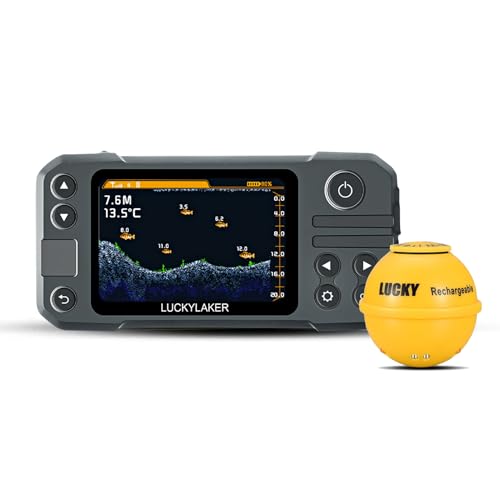
The MT-202 is built for moving between a kayak, boat, dock, or shoreline without a permanently installed display. Its rechargeable handheld format and wireless sensor reduce cockpit clutter, while the stated 853-foot operating distance supports scouting targets beyond immediate reach.
That range is most useful near a defined drop-off or channel rather than in heavy surf, where a cast sensor may be harder to position. Compared with the MT-202PLUS, this model appears aimed at portable operation rather than a specific floating-plate setup, so I would verify the included mounting details before planning a deployment style.
Real Benefits
- Rechargeable operation suits repeated mobile outings.
- Wireless transmission keeps cables away from the deck.
- The stated range supports scouting from several launch positions.
- Portable construction works beyond a single kayak.
Less-Strong Areas
- Recharge timing and runtime are not specified in the supplied details.
- Range alone does not determine sonar clarity in rough or deep water.
- The sensor still requires careful deployment and retrieval.
Whose Shelf It Belongs On
Mobile anglers moving among shorelines, docks, and compact watercraft benefit from the rechargeable wireless format.
Consider Something Else When
The LUCKY MT-202PLUS Wireless Kayak Fish Depth Finder better fits setups that depend on a floating transmitter plate.
The Beyond Marina platform is built around portability: a 10-foot-8-inch inflatable fishing kayak folds into a vehicle rather than occupying a roof rack. Its 325-by-120-centimeter standing area creates room to move, cast, and handle light gear, making it appealing for people reaching smaller launch sites without a trailer.
Reinforced 1000D mesh and heat-welded seams support a durable, air-retaining structure, while integrated rod holders organize the deck. Unlike the rigid Sentinel 100X, this model must be inflated before use and may have different handling characteristics, so local surface conditions and manufacturer guidance should guide use.
Key Advantages
- The deflated format simplifies vehicle transport and storage.
- The large deck supports movement while fishing.
- Rod holders reduce loose equipment on deck.
- Reinforced mesh and welded seams support repeated inflation.
- The ten-foot length offers a full-length fishing platform.
Details To Watch
- Setup requires inflation, valve checks, and a dry storage plan.
- Any trapped sand near valves can interfere with sealing.
- Open-water limits and permitted use require verification before coastal trips.
Feature Overview
Right Fit
Travel-focused anglers using small vehicles, remote launches, or limited storage space benefit from the foldable format.
Swap It Out When
The Pelican Argo 100X Angler 10-Foot Sit-In Fishing Kayak suits paddlers who prefer immediate launch readiness and a rigid lower-profile cockpit.
What Matters Before Taking a Fishing Kayak Offshore
Hull behavior should be the first filter. A sit-on-top model gives me easier casting access and entry, while a sit-in kayak offers a lower profile. Stability matters more than nominal length for anglers who stand to cast, so local instruction and a test paddle are valuable before entering exposed water.
Stability, Tracking, and Load
A flat bottom can feel steady during initial movement, yet tracking describes how efficiently the kayak holds a line as wind, current, and waves act on the hull. I would compare the manufacturer’s tracking information, load rating, and seating layout instead of assuming one hull shape suits every coastal condition.
Storage and Seating
Rod holders keep lines from tangling, while dry storage protects electronics and clothing. Adjustable footrests and padded seats matter during a long paddle, especially for mixed-skill family groups where one setup needs to accommodate several body sizes.
Electronics and Accessories
A wireless fish finder reduces cable clutter, though a transducer connection must be secured away from the paddle. Gloves add grip around a wet shaft, but neither accessory substitutes for correct flotation planning, required safety equipment, and knowledge of local weather conditions.
Materials and Maintenance
HDPE and Ram-X-style rigid plastics tolerate routine handling, while inflatable mesh requires valve care and correct drying. Salt residue, sand, and damp closures deserve attention after coastal use because neglected fittings and electronics can degrade faster than the main hull.
Common Sense Before Launch
Mistakes Worth Dodging
Avoid choosing solely from length, weight, or color. Capacity, seating fit, flotation, tracking, and intended water conditions carry more practical value, while portable electronics should be checked for cable routing and sensor placement before the first trip.
Where The Extra Money Goes
Higher-cost rigid kayaks may invest in hull shaping, seating adjustment, storage, and molded fittings. Those upgrades matter for repeated fishing trips, while an inflatable platform can make more sense for occasional access to remote launches and limited transport space.
Frequently Asked Questions
Are sit-on-top kayaks better for fishing?
A sit-on-top kayak offers easier casting access and frequent entry, while a sit-in layout feels more enclosed. The better choice depends on water conditions, storage needs, and handling preferences.
Can an inflatable kayak be used for ocean fishing?
Only models approved for the intended conditions and properly sized for the paddler should enter rough or exposed water. Wave height, current, weather, and local rules all affect that decision.
Is a fish finder necessary in a kayak?
A fish finder can reveal submerged structure and depth information, but it remains optional. Proper navigation, flotation, and weather awareness are more fundamental to safe travel.
What kayak weight is easiest to transport?
The easiest weight depends on vehicle access and lifting ability. A compact sit-on-top model usually handles differently from a longer sit-in kayak, even when their listed weights are close.
How should a fishing kayak be maintained?
Rinse salt and sand from the hull, clean storage compartments, inspect rod holders, and dry electronic equipment after use. Inflatable models also need their valves and seams checked before packing.
Wrap Up
I favor the Sentinel 100X for active coastal fishing, the Argo 100X for a lighter sit-in format, and the Beyond Marina platform for transport-focused access. Match the kayak to the water, confirm the stated specifications, and prepare the full safety kit before launching. The right setup feels predictable before conditions turn demanding.
