Book Appointment Now

8 Best Fishing Deck Shoes for 2026
ByBEGUM
Fishing deck shoes face a difficult routine: they need grip on wet fiberglass, comfort through long hours, and enough protection for splashing water, mud, and tackle-room floors. I favor lightweight footwear for moving around a boat, while anglers who regularly work in cold or wet conditions benefit from fuller rubber or neoprene coverage. Leather, mesh, and quick-drying shorts broaden the category beyond conventional boots, so the right fit depends on climate, footwear style, and how much protection the day demands.
The Choices Worth Comparing
PickWhy We Picked ItBest ForAction

Comfort Choice
XTRATUF Leather Ankle Deck Boot Black
Breathable leather ankle coverage
Boat fishing in mild weather
Heavy Duty Pick
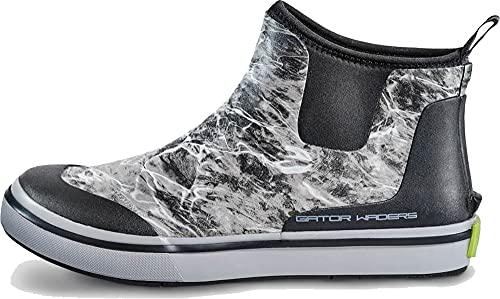
Gator Waders Men’s Deck Boots Blacktip
Reinforced waterproof rubber construction
Cold mornings and rough terrain

Travel Ready
Columbia PFG Rambler Water Short
Quick-drying UPF 50 coverage
Hot-weather fishing and travel

Feature Rich
Columbia PFG Bonehead Fishing Shirt
Pockets, rod holder, and ventilation
Warm-weather anglers needing utility

Daily Driver
Columbia Tamiami PFG
Water resistance and wet-deck grip
Frequent boat anglers

Outdoor Ready
HISEA Mid Calf Waterproof Rubber Deck Boot
Full waterproof mid-calf coverage
Wet docks and demanding weather

Premium Pick
HUK Rogue Wave Waterproof Fishing Shoes
Waterproof fishing-shoe construction
Anglers prioritizing low-profile footwear

Multi-Use Pick
Trudave Waterproof Anti-Slip Deck Shoes
Fishing, yard, and garden versatility
Outdoor chores beside the water
What Each Pick Brings To The Table
The XTRATUF Leather Ankle Deck Boot offers a more refined profile than the bulkier rubber options later in this roundup. Its ankle-height leather upper suits mild-weather fishing days, dock crossings, and casual wear afterward, although the listed size 13 configuration narrows availability for anyone ordering from this particular variant.
I find the balance especially sensible for anglers who dislike the boot-like feel of full rubber footwear. A waterproof, breathable membrane helps manage wet conditions, while the EVA insole adds underfoot cushioning; the honest question is whether that lighter construction handles cold water and prolonged submersion as well as neoprene or mid-calf rubber.
What Earns Its Place
- The breathable membrane balances water protection with more everyday comfort than a solid rubber upper.
- An EVA insole gives the foot a softer landing during long stretches of standing and walking.
- Front and rear pull tabs simplify dressing, especially with wet hands.
- The slip-resistant outsole supports steadier footing on damp boat surfaces.
Small Caveats
- Leather needs prompt drying and occasional conditioning to resist salt, dirt, and repeated moisture exposure.
- The supplied size and color combination may not suit shoppers seeking other dimensions.
Core Details
Who It Suits Best
This model fits anglers who fish from boats in mild weather and want footwear that transitions easily from the dock to everyday settings.
A Better Fit Elsewhere
Gator Waders Men’s Deck Boots Blacktip is the stronger choice for cold mornings, neoprene warmth, and reinforced heel and toe coverage.
Gator Waders Men’s Deck Boots Blacktip leans toward protection and warmth rather than the streamlined appearance of XTRATUF Leather Ankle Deck Boot Black. The neoprene lining adds insulation and flexibility, making the boot more natural for early launches, cool rain, and shoreline work where damp feet would quickly become uncomfortable.
Rubber construction and reinforcement at both the heel and toe target the areas most exposed during repeated boarding, climbing, and walking across uneven ground. For a day centered on a stable bass boat or sheltered launch, that durability may be unnecessary; for frequent access to slick ramps and shallow water, it is a sensible trade.
What Pays Off
- Complete waterproof construction keeps the foot isolated from puddles, spray, and wet ground.
- Neoprene lining supplies warmth and flexibility without recreating the stiffness of solid rubber.
- Reinforced heels and toes add protection at common contact points.
- A grosgrain pull tab helps with repeated on-and-off use.
Practical Considerations
- Rubber can retain dirt and salt, so owners commonly need to rinse the boots after coastal use.
- Waterproof coverage does not necessarily make the boot comfortable in hot weather.
- Size 12 is the only variant identified for this listing, so other footwear sizes require checking available options.
Quick Facts
Made For
It suits cold-water anglers, launch operators, and shore fishers who favor protective coverage over a lightweight casual profile.
Another Choice May Suit
Columbia Tamiami PFG better matches anglers who prioritize low-profile mesh construction and wet-deck traction during warm-weather boat fishing.
Columbia PFG Rambler Water Short is footwear-adjacent gear for hot days, but it solves a different problem from every deck shoe here. The shorts suit anglers who wade, launch a small craft, or travel between fishing spots without needing full-foot coverage after the water stops.
Advanced water repellency helps splashes dry from the fabric, while UPF 50 provides a stated level of sun protection. The regular fit should feel familiar to shorts wearers, though the water-repellent treatment isn’t the same as a fully sealed garment, and actual drying behavior may vary with humidity and fabric thickness.
Positive Takeaways
- Water repellency supports quicker drying after launching, wading, and accidental splashes.
- UPF 50 adds meaningful daytime coverage for exposed fishing trips.
- The regular fit offers a conventional alternative to performance-cut apparel.
- Extended sizing and multiple colors broaden the fit options described for the model.
Worth Noting
- These are shorts rather than deck shoes, so they provide no traction or toe protection.
- The listing doesn’t identify the exact fabric composition, making hand-feel difficult to compare from the available information.
- Washing and drying care may affect how quickly the water-repellent finish continues to perform.
Feature Snapshot
Right Fit For
This pair best serves warm-weather anglers, wading participants, and travelers who need lightweight clothing that can handle frequent moisture.
Where Another Pick Shines
HISEA Mid Calf Waterproof Rubber Deck Boot is the better match for anglers who need protected feet, waterproof coverage, and physical support while working around docks.
Columbia PFG Bonehead Fishing Shirt is another companion option rather than a direct footwear competitor. Its short-sleeve cotton poplin construction feels more practical for a warm, sunny outing than a waterproof overshirt, and the button-down shape works as well at a marina as it does on an undecked boat.
Storage is the decisive advantage: multiple pockets, a rod holder, and a utility loop keep common tackle close at hand. A mesh-lined vented back promotes airflow as the sun warms the deck, but cotton absorbs sweat and splashes, so this shirt trades quick drying for a softer, more casual feel.
Notable Upsides
- Several pockets reduce the need to search through a tackle bag for lures, line, and small tools.
- The integrated rod holder helps keep a rod positioned and both hands available.
- Mesh lining in the vented back encourages airflow during long periods in the sun.
- A utility loop provides another accessible attachment point for fishing gear.
- Soft cotton poplin offers a more relaxed feel than technical performance mesh.
Trade Offs
- Natural-fiber cotton may retain sweat or splash moisture longer than synthetic technical fabric.
- The regular short-sleeve cut offers little protection in cold or windy weather.
- Loaded pockets and attached gear can add minor bulk around the torso.
Key Product Details
Who Will Love This
It appeals to casual weekend anglers who want pockets and rod storage without carrying a technical outer layer.
Consider Something Else When
Columbia PFG Rambler Water Short is a more useful companion for trips centered on repeated immersion, splashing, and hot-weather drying.
Columbia Tamiami PFG returns the roundup to conventional deck footwear, combining a water-resistant mesh and synthetic upper with a low-profile shape. That construction makes more sense aboard a fishing boat than on a cold shoreline walk, where the neoprene lining in Gator Waders Men’s Deck Boots Blacktip would provide more insulation.
The outsole is designed around wet boat surfaces, using Omni-Grip traction channels that help move water away from the contact area. A Blood ‘n Guts finish adds resistance to water and stains, useful around bait, fish slime, and marina puddles; snug, airtight fit can’t be confirmed from the available listing details.
Features That Help
- Omni-Grip channels improve traction on wet decks while also supporting movement across damp land surfaces.
- Water and stain resistance helps the upper remain presentable through common fishing messes.
- The mesh-and-synthetic design avoids the heavier feel of full rubber boots.
- The low-profile construction gives anglers a shoe suitable for moving around a boat without bulky coverage.
Possible Compromises
- Mesh construction offers less cold-weather protection than neoprene-lined or mid-calf rubber footwear.
- Owners commonly let boat shoes air-dry fully, especially after salt water or prolonged damp use.
- Water resistance is useful, but it should not be treated as permission for extended submersion.
Technical Highlights
Built With In Mind
It is built for frequent boat anglers who spend more time standing on wet decks than walking through cold water.
Look Elsewhere When
HISEA Mid Calf Waterproof Rubber Deck Boot serves people who regularly need deeper waterproof coverage around docks, mud, and heavy spray.
HISEA Mid Calf Waterproof Rubber Deck Boot provides more coverage than the low-profile Columbia Tamiami PFG, reaching farther up the lower leg for wet docks, muddy ramps, and heavy spray. The rubber build is the central reason to consider it: it creates a physical barrier that mesh and ordinary leather cannot match.
Depth is also its tradeoff. A mid-calf boot may feel cumbersome aboard a small boat, particularly during climbs or long stretches of standing, and hot weather can make full rubber less comfortable. The available listing identifies waterproof rubber construction but doesn’t disclose sole traction, insulation, fastening style, or exact dimensions, so I’d verify those details before committing.
Practical Advantages
- Waterproof rubber protects the foot from puddles, mud, and repeated dock spray.
- Mid-calf coverage adds protection around the ankle and lower leg.
- The substantial construction suits outdoor chores where wet footwear gets dirty quickly.
Details To Watch
- Deep rubber boots should be rinsed and dried after use to limit trapped dirt and salt.
- The unspecified outsole construction makes wet-surface traction difficult to evaluate in advance.
- The fuller cut may add weight and restrict movement compared with fishing shoes or neoprene deck boots.
The Right Fit
This boot fits people who work around exposed docks, muddy launches, and wet outdoor surfaces more often than they fish from a stable deck.
Swap It Out When
Columbia Tamiami PFG is the lighter, low-profile alternative for anglers who need wet-deck grip without substantial ankle coverage.
HUK Rogue Wave Waterproof Fishing Shoes target anglers who want a shoe-shaped profile with explicit waterproof construction. That positioning sits between the breathable upper of Columbia Tamiami PFG and the near-total coverage of HISEA Mid Calf Waterproof Rubber Deck Boot, making it potentially useful for launches, shallow water, and everyday dock work.
I wouldn’t judge the exact fit or outsole behavior from the model name alone. The source data provides no material breakdown, traction pattern, insulation level, or closure details, so those ownership questions deserve close attention on the product page, especially for people who stand for hours or walk on uneven shoreline surfaces.
Useful Highlights
- Waterproof construction gives the shoe stronger wet-weather credentials than an ordinary mesh deck shoe.
- The low-profile design may be easier to pair with casual clothing than a mid-calf boot.
- The fishing-specific positioning makes it more relevant than a general rain shoe for days centered on the water.
A Few Limitations
- Waterproofing does not reveal how quickly the shoe drains or dries after being submerged.
- The unspecified outsole leaves wet-deck traction uncertain until the construction details are confirmed.
- Owners may need to rinse salt and mud from the upper after coastal or shoreline use.
- Unconfirmed materials make expectations about weight and breathability difficult to set.
Best Suited To
The model best fits anglers who prioritize waterproof protection while keeping a conventional shoe silhouette.
Reach For A Different Pick When
Gator Waders Men’s Deck Boots Blacktip is the stronger fit for cold-water trips where neoprene warmth and reinforced rubber coverage matter more than low-profile styling.
Trudave Waterproof Anti-Slip Deck Shoes extend beyond fishing into yards, gardens, farming, and general outdoor work. That makes the pair interesting for someone who needs wet-weather footwear around a property and only fishes on weekends, since the same ankle-height coverage can handle multiple kinds of ground conditions.
The title specifies waterproof and anti-slip functions, but the available source doesn’t describe the upper material, outsole pattern, closure, or exact dimensions. I would therefore compare the sizing carefully and consider soil conditions, especially on loose gravel or garden beds, before assuming the anti-slip designation suits every surface.
Reasons It Performs
- Waterproof construction is useful for wet decks, garden beds, and outdoor work areas.
- Ankle-height coverage offers more protection than a low shoe without the full height of a rubber boot.
- Fishing, farming, and yard use make it more versatile than a boat-only shoe.
- The anti-slip positioning supports everyday traction needs, subject to surface and outsole confirmation.
Smaller Drawbacks
- Missing material and outsole details make it hard to judge breathability, weight, and grip precisely.
- Dense outdoor soil may lodge in the tread and require regular cleaning.
- Owners commonly need to inspect the upper and seams after repeated exposure to wet vegetation.
Who Should Grab It
It suits mixed-use outdoor workers and weekend anglers who need one shoe for docks, gardens, yards, and damp access areas.
A Better Fit Elsewhere
XTRATUF Leather Ankle Deck Boot Black better matches mild-weather anglers who favor a polished leather profile and cushioned insole.
Choosing Footwear That Handles the Water
Start with the environment rather than the fishing label. A fiberglass boat rewards a light, low-profile shoe with deliberate wet traction, while a cold shoreline calls for neoprene or rubber coverage. My priority is a sole designed for wet surfaces, followed by a secure upper that won’t admit water during repeated boarding.
Coverage should match the day. Low mesh designs move freely in warm weather, ankle boots add everyday polish, and mid-calf rubber creates the strongest barrier against spray and mud. Fuller coverage usually adds weight, so it isn’t automatically the more comfortable choice aboard a small boat.
Fit deserves close attention across the wider category. Waterproof footwear needs room for normal sock thickness without creating loose heel movement, and the listed size may represent only one purchasing variant. I also check closure security, toe room, and whether the outsole pattern suits the surfaces being crossed.
Maintenance separates useful gear from footwear that deteriorates quickly. I rinse salt, mud, and plant debris after use, then let the pair air out at room temperature. Direct heat can accelerate damage to adhesives and some synthetic materials, so a ventilated indoor location is more sensible than leaving wet footwear beside a heater.
Lessons Before Choosing Wet Footwear
Wrong Turns To Avoid
A waterproof label doesn’t establish the entire footwear profile. Upper material, outsole design, fit, and drying behavior still determine how a deck shoe handles a full day, and those details deserve confirmation before purchase.
What The Upgrade Payoff Means
A higher price can support specialized materials, reinforced construction, or technical traction. That extra spending makes sense for cold water, rough access points, and frequent boat use; light seasonal trips may need less demanding construction.
Frequently Asked Questions
Are waterproof fishing deck shoes suitable for standing in water?
Some models can tolerate brief exposure, but construction determines actual performance. Rubber and neoprene options generally offer more coverage than mesh shoes, and prolonged submersion requires careful model-specific care.
Should deck shoes be worn with boat socks?
A thin moisture-wicking sock can improve comfort and reduce rubbing. It should also dry quickly and avoid trapping water around the ankle, particularly inside waterproof footwear.
Are leather deck shoes better than rubber options?
Leather often creates a dressier, lighter profile for mild weather. Rubber usually provides stronger water protection and easier rinsing, so climate and maintenance tolerance should guide the choice.
How do I dry wet deck shoes?
Remove loose dirt, rinse away salt or mud, and let the footwear air-dry at room temperature. Check the manufacturer’s care instructions before using strong heat or specialized cleaning products.
Can fishing shoes work for everyday outdoor tasks?
Waterproof models can handle wet docks, gardens, and light yard work. Grip still depends on the actual outsole, while long work shifts may require more substantial toe and ankle protection.
Final Verdict
I find the strongest split among Columbia Tamiami PFG for warm-weather boat use, Gator Waders Men’s Deck Boots Blacktip for colder protection, and HISEA Mid Calf Waterproof Rubber Deck Boot for extensive wet coverage. Trudave Waterproof Anti-Slip Deck Shoes serve mixed outdoor routines especially well. Match the footwear to the water, weather, and ground conditions rather than relying on the deck-shoe label alone.
