Book Appointment Now

8 Best Fish Finders for Kayak Fishing for 2026
ByBEGUM
A kayak leaves little room for electronics, so the right fish finder must deliver useful information without crowding the cockpit. I focus on compact displays, sonar capability, mounting requirements, and the practical differences between portable and permanently installed systems. The actual choice depends on fishing from a moving kayak, casting from shore, or using a larger display mounted near a fishing rod.
The Lineup, Simplified
PickWhy We Picked ItBest ForAction

Compact Choice
Garmin Striker 4 CHIRP GPS Fishfinder
Compact display with ClearVu
Space-conscious kayak anglers

Workshop Pick
Scotty 173 2-1/4 Inch Ball Mount
Stable support for larger displays
Custom kayak electronics mounts

Feature Rich
Humminbird HELIX 7 CHIRP MEGA DI GPS G3N
Detailed sonar on a wide display
Anglers with roomy cockpits
Travel Ready
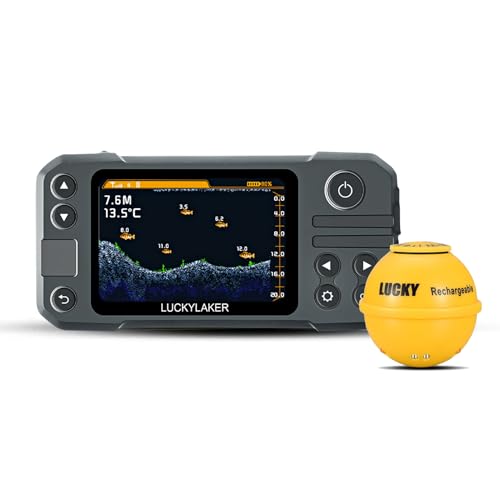
LUCKY MT-202 Wireless Portable Fish Finder
Wireless control from kayak or shore
Mobile anglers casting remotely

Beginner Friendly
LUCKY FFC1108 Portable Fish Depth Finder
Approachable depth and fish display
New kayak anglers

Utility Pick
Deeper Smart Sonar Attachment Bolts Set
Dedicated hardware for sonar attachment
Existing smart sonar setups

Professional Pick
Lowrance Elite FS Fishfinder and Chartplotter
High-resolution sonar and mapping
Advanced kayak fishing setups

On-The-Go Choice
LUCKY Portable Fish Depth Finder for Boats and Bank
Pocketable depth information
Shore and compact kayak trips
The Details Behind The Selections
The 3.5-inch Striker 4 makes more sense on a narrow kayak console than the roomier HELIX 7. I find the combination of CHIRP sonar, GPS, and ClearVu scanning practical for anglers moving between familiar structure and deeper water. The smaller display may feel modest, yet its low footprint leaves more room for paddle clearance and fishing gear.
Waypoint marking is useful for a productive morning, particularly when I want to return to a specific drop-off or submerged feature. ClearVu provides a side-looking view, which helps reveal fish-holding areas beside the kayak rather than only beneath its path. That makes this a more conventional mounted system than the castable LUCKY models later in the lineup.
The Practical Payoff
- The 3.5-inch display suits constrained kayak cockpits.
- CHIRP sonar sends a frequency sweep that helps separate targets and bottom structure.
- GPS waypoints make productive water easier to revisit.
- ClearVu adds side-scanning coverage without needing a larger screen.
Things To Consider
- The display offers less room for split views and detailed readings than the HELIX 7.
- Owners still need a secure kayak mount and a protected route for the transducer cable.
Quick Facts
Made For
I favor the Striker 4 for kayak anglers who value waypoints and side-scanning information in a compact permanent setup.
Another Choice May Suit
The Humminbird HELIX 7 suits anglers willing to trade cockpit space for a larger display and more detailed sonar views.
The Scotty 173 solves a different problem from every sonar unit in this roundup: securely positioning a larger display. I see its 2.25-inch ball and square base as useful for custom installations where a stock bracket does not place the screen correctly. Anglers with a 10- to 12-inch fish finder have something solid to work with, although this is a mount rather than an electronic display.
Installation is the central consideration. The square base accepts 1/4-inch bolts, so the kayak’s deck, console, or existing accessory surface must offer secure attachment points. Once fitted, the ball allows the display angle to be adjusted for glare, viewing height, and the seated paddling position.
Notable Upsides
- The broad 2.25-inch ball supports larger marine displays.
- Angle adjustment can place the screen in a clearer viewing position.
- The square base creates a defined surface for 1/4-inch fastening hardware.
Worth Noting
- This mount does not include a fish finder, transducer, cable, or display.
- Proper sealing and reinforcement around drilled mounting points demand care, particularly on a lightweight kayak deck.
Built With In Mind
I recommend the Scotty 173 for owners of 10- to 12-inch displays who need a stable, adjustable mounting foundation.
Look Elsewhere When
The Garmin Striker 4 is the more direct choice for anglers seeking a complete fish finder rather than installation hardware.
The HELIX 7 brings a much larger information canvas than the Striker 4, making split-screen analysis more practical. Its ultra-wide display accommodates the available sonar, navigation, and down-imaging views without making each panel quite so compressed. For a rigged fishing kayak with a stable mounting area, that extra room can be more valuable than a minimal footprint.
MEGA Down Imaging reaches 125 feet and offers up to three times the output of standard down imaging. Dual Spectrum CHIRP provides wide coverage or a narrower, detail-focused view, allowing me to change the presentation as structure becomes more promising. Built-in GPS, Humminbird Basemap, AutoChart Live, Bluetooth, and Ethernet support add broader navigation and networked-device possibilities.
The Value In It
- The 7-inch ultra-wide display supports clearer, more flexible layouts.
- Dual Spectrum CHIRP switches between broad coverage and concentrated detail.
- MEGA Down Imaging reveals structure to 125 feet.
- GPS and mapping features support repeatable trips to productive water.
Trade Offs
- The larger display requires more cockpit space and a rigid mount.
- Its many viewing modes may feel excessive for casual anglers, depending on fishing experience.
Technical Sheet
Best Suited To
I favor the HELIX 7 for experienced anglers who have room for a 7-inch screen and regularly interpret multiple sonar layers.
Where A Sibling Pick Shines
The Garmin Striker 4 better serves a minimalist cockpit where display size matters more than detailed side and down imaging.
Wireless control separates the MT-202 from kayak-mounted models that need a cable running through the craft. I can cast the sonar sensor ahead of the kayak and use the handheld display while moving slowly or fishing from shore. That flexibility makes the system useful for exploring a creek without drilling holes or fitting a permanent console.
The stated operating distance reaches 853 feet, though real usefulness depends on water conditions and keeping a clear path between sensor and display. The transducer is the part that enters the water, so careful retrieval matters around rocks, vegetation, and current. Compared with the LUCKY FFC1108, this model emphasizes untethered operation and longer wireless control.
Bright Spots
- Wireless operation removes a kayak-mounted display cable from the setup.
- The stated 853-foot range supports scouting from a distance.
- Portable construction suits boats, kayaks, and shoreline fishing.
- The handheld format makes repeated relocation straightforward.
A Few Limitations
- A cast sensor can snag underwater and must be retrieved carefully.
- The long range should be treated as a maximum rather than an everyday expectation.
Feature Snapshot
Who Will Love This
I recommend the MT-202 for mobile anglers who prioritize a cable-free sensor and frequently change fishing locations.
Swap It Out When
The Garmin Striker 4 suits someone who prefers a permanent GPS display and waypoint navigation over a cast sensor.
The FFC1108 offers a less demanding entry into portable sonar. I see it as a useful teaching tool for anglers learning to connect depth changes with submerged structure, rather than a full navigation system. The LCD presents approximate fish location and water depth, while the transducer can attach to a kayak or boat hull during movement.
Its stated depth range runs from 3 to 328 feet with the transducer fully immersed. That broad range covers shallow lakes and deeper water, although readings depend on correct placement and a clear sonar path. The transducer and fish-return data remain simpler than the HELIX 7’s MEGA Down Imaging and Dual Spectrum presentation.
Good Reasons To Consider
- A straightforward LCD helps new anglers learn basic sonar readings.
- Depth tracking during movement reveals changing bottom contours.
- The transducer supports both kayak and boat attachment.
Small Caveats
- Approximate readings do not provide the image separation seen on higher-end sonar systems.
- Hull attachment requires checking the transducer’s position and cable routing to avoid snagging.
Core Details
Right Fit For
The FFC1108 suits beginners who want a simple depth display while learning basic sonar interpretation.
A Better Fit Elsewhere
The Humminbird HELIX 7 better serves an experienced angler who needs distinct down-imaging and split-screen detail.
Attachment hardware only makes sense within an existing smart-sonar setup, but that narrow purpose gives it a clear job. I would pair it with a compatible sonar unit whose original fasteners are missing, damaged, or poorly positioned. Keeping the correct attachment bolts available also supports routine maintenance after repeated kayak launches.
Compatibility is the deciding factor, and the supplied data does not identify dimensions, material, or the devices covered. I would avoid assuming that these bolts fit a different sonar brand merely because both products attach to a kayak. The smart move is to compare the original fasteners and mounting holes before ordering.
A Strong Showing
- Replaces missing or damaged smart-sonar attachment hardware.
- Supports maintenance and reinstallation of a compatible unit.
- Keeps a small repair need separate from a complete electronics purchase.
Points To Note
- The available data does not state bolt dimensions or included quantities.
- It does not identify a transducer, display, cable, or sonar electronics package.
- Compatibility with other brands remains unconfirmed in the supplied information.
Built With In Mind
I consider this set useful for existing compatible-sonar owners who need replacement attachment bolts.
Reach For A Different Pick When
The LUCKY FFC1108 better serves an angler seeking complete portable depth-finding equipment rather than mounting hardware alone.
The Elite FS combines navigation and several sonar views in one permanent kayak system, making it a stronger fit for a purpose-built electronics setup than a castable display. Active Imaging 3-in-1 combines CHIRP, SideScan, and DownScan, while FishReveal helps interpret conventional sonar returns. That layered information supports careful inspection of cover, drop-offs, and bottom composition.
The listing includes configurations with and without a transducer, so the complete package matters. I would choose the transducer-equipped version for a new installation rather than pairing an unspecified display with separate hardware. Compared with the HELIX 7, the Elite FS is aimed more directly at anglers combining detailed sonar with chartplotter functions.
Standout Benefits
- Active Imaging 3-in-1 combines CHIRP, SideScan, and DownScan.
- FishReveal is intended to help separate fish from surrounding structure.
- Chartplotter capability combines sonar interpretation with navigation.
- The transducer-equipped package provides a more coherent starting point.
Possible Compromises
- A permanent installation consumes more kayak space and requires cable management.
- The no-transducer configuration adds another compatibility decision before installation.
Feature Breakdown
Made For
The Elite FS fits advanced anglers building a fixed multi-sonar system with navigation on a suitably sized kayak.
Not Your Match When
The LUCKY MT-202 better serves anglers who need a portable wireless sensor instead of a permanent installation.
Pocketability gives this LUCKY model a distinct role among larger fixed displays and sonar rigs. Its compact body is designed for anglers moving between a boat, kayak, or shoreline position, with a neck strap supporting easier carrying. The hand-focused layout appears practical for operating the unit while keeping a fishing rod in the opposite hand.
I would not treat the same level of detailed structure interpretation offered by the Elite FS as the deciding priority here. This option is more compelling for packing simplicity, quick access, and basic depth awareness. A non-slip exterior also seems sensible around wet hands, although careful storage and regular drying remain important.
Key Advantages
- The pocket-sized format suits mixed boat and shore trips.
- One-handed button operation supports use while holding a rod.
- The neck strap keeps the unit accessible during a long outing.
- The non-slip grip is practical around spray and wet hands.
Less-Strong Areas
- The compact format prioritizes portability rather than large-screen analysis.
- Electronics and transducers need dry storage after use to limit moisture-related wear.
Who Should Grab It
This portable finder suits anglers who split time between a kayak, small boat, and shoreline fishing.
Skip It When
The Lowrance Elite FS better serves someone who wants detailed multi-sonar imaging in a permanent chartplotter setup.
What Matters Before Choosing Kayak Sonar
Display Size And Cockpit Space
I start with available deck or console space. A 3.5-inch display preserves room on a narrow fishing kayak, while a 7-inch screen supports more simultaneous views but needs a rigid mount and a clear viewing position. Sun glare, paddle clearance, and screen height matter as much as the listed dimensions.
Portable Sensor Or Fixed System
Portable sonar suits spontaneous launches and shore fishing because the sensor can move with the angler. A wired system supports continuous navigation, waypoints, and permanent display placement, but it needs a protected cable route. The LUCKY MT-202 offers wireless separation, while the Garmin Striker 4 follows the more conventional fixed-system approach.
Sonar Detail And Depth
CHIRP uses a frequency sweep that can help produce defined fish arches and clearer bottom structure. Down Imaging looks beneath the kayak, while SideScan examines areas beside it. I balance image detail against the maximum operating depth of the kayak area, rather than selecting a deeper specification automatically.
Power And Installation
A permanently mounted unit demands a dependable power connection, secured transducer, and cable routing that survives launching. Portable models reduce installation work but still need charging, transducer handling, and dry storage. The Scotty 173 is relevant only for a compatible large display, while the Deeper bolts set is maintenance hardware rather than a complete sonar system.
Common Errors and Upgrade Value
Common Shopping Slip Ups
I would avoid buying a display without confirming transducer compatibility, power requirements, and kayak mounting space. A screen that looks portable may still require a permanent cable connection. Protective covers and dry storage also matter because splash exposure is common around launching areas.
What The Higher Tier Buys
Larger systems generally provide more screen area, multiple sonar layers, mapping, and networking rather than simply clearer numbers. The Lowrance Elite FS and Humminbird HELIX 7 suit anglers who interpret structure and fish returns regularly. A compact Garmin or portable LUCKY model can be the more sensible choice for limited space or occasional use.
Frequently Asked Questions
Are portable fish finders good for kayak fishing?
Portable models work well for anglers who value easy packing and flexible fishing locations. Their accuracy and depth information still depend on proper sensor placement and a clear sonar path.
Do kayak fish finders need installation?
Fixed systems require a secure mount, power connection, and protected transducer cable. Portable sonar removes most installation work but still requires careful sensor handling and charging.
Is a 3.5-inch fish finder display enough?
A 3.5-inch display is practical for basic sonar, GPS, and waypoint information. Larger screens become more useful for split views, mapping, and detailed structure interpretation.
Can portable sonar be used from shore?
Portable fish finders can suit shoreline fishing because the sensor may be cast into the water without a boat-mounted system. Range and signal clarity depend on the specific model and conditions.
Wrap Up
I favor the Garmin Striker 4 for a compact fixed system, the Humminbird HELIX 7 for detailed sonar on a roomy kayak, and the LUCKY MT-202 for wireless portability. The right choice comes down to cockpit space, navigation needs, and how much sonar detail the fishing style actually requires.
