Book Appointment Now

8 Best Boots for Fishing for 2026: Built for Water, Mud, and Cold
ByBEGUM
Fishing footwear has to handle more than wet ground. Chest waders cover deep water and cold weather, hip styles suit shallow banks, and rubber boots keep feet dry during launches, creek work, and long days outdoors. I’ve compared eight options by coverage, insulation, material, traction, fit features, and maintenance needs, with a separate pick for children.
A Side-By-Side Look
PickWhy We Picked ItBest ForAction

Premium Pick
HISEA 400G Neoprene Chest Waders
Insulated coverage for cold water
Cold-weather fishing and hunting
Heavy Duty Pick
Trudave 5mm Neoprene Steel-Shank Rubber Boots
Supportive construction for rough ground
Hunting, farm work, and mud

Family Friendly
GREENWATER Kids Chest Bootfoot Waders
Integrated boots for young anglers
Family fishing and creek trips

Well Rounded Pick
GREENWATER Waterproof Chest Waders with Boots
Flexible construction with reinforced seams
Mixed-use fishing and outdoor work

Compact Choice
Showave Men’s Waterproof Ankle Deck Boots
Low-profile protection for wet decks
Boating, rain, and light fishing

Streamlined Pick
GREENWATER Lightweight Nylon-PVC Hip Waders
Lightweight coverage for shallow water
Warm-weather banks and creek fishing

Travel Ready
SUREWAY Men’s Non-Slip Ankle Fishing Boots
Ankle-height traction for wet travel
Boats, docks, and shorelines

Outdoor Ready
GREENWATER Waterproof Bootfoot Hip Waders
Durable fabric in an integrated design
Shallow water and frequent use
Inside Each Recommended Option
Cold water changes the requirements for chest waders, and this HISEA model centers warmth alongside full-body coverage. Its 4.5mm neoprene construction provides insulation while the rubber boot section keeps the lower legs and feet protected during fishing, creek work, or colder outdoor excursions.
Compared with the lightweight nylon-PVC models later in this roundup, this pair carries more material and bulk by design. For winter anglers, that insulation may be the deciding benefit; for warm-weather use, Trudave 5mm Neoprene Steel-Shank Rubber Boots may feel more manageable.
Strengths Worth Knowing
- 400-gram insulation adds meaningful warmth in cold conditions.
- Chest coverage reaches higher water than hip and ankle styles.
- Neoprene construction flexes through crouching, casting, and climbing.
- Cleated rubber soles improve grip on slippery banks.
- The integrated boot removes the need to match separate wading footwear.
Small Caveats
- Insulated neoprene can feel restrictive during hot weather.
- Owners of thick neoprene commonly need extra time to dry the suit thoroughly.
The Numbers That Matter
Built With In Mind
This model suits cold-water anglers and outdoor workers who prioritize warmth over minimal weight.
A Better Fit Elsewhere
GREENWATER Lightweight Nylon-PVC Hip Waders suit anglers working warm, shallow water who prefer less insulation.
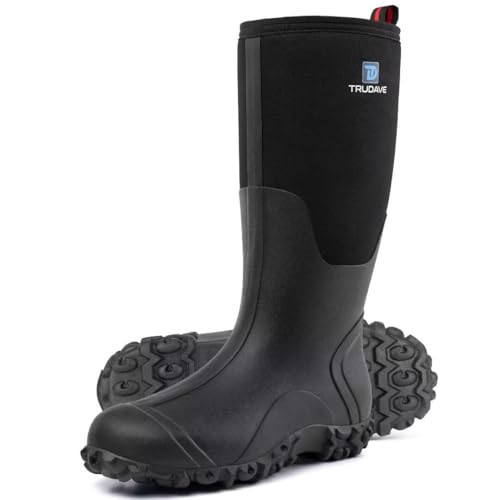
Hunting boots and fishing waders serve different jobs, but both face mud, wet vegetation, and uneven ground. Trudave’s ankle-height rubber design centers on those conditions, with 5mm neoprene insulation and a steel shank, a rigid insert that supports the foot beneath the sole.
This isn’t a chest wader, so it won’t protect against deep water. For launching a boat or working a marshy bank, however, the trade may be worthwhile, depending on how much ankle support and cold protection the outing requires.
The Case For It
- Five-millimeter neoprene provides warmth without full chest coverage.
- The steel shank adds support during long walks over firm, rough ground.
- Waterproof rubber construction serves fishing, hunting, and outdoor chores.
- Size choices cover a broad range of adult men’s feet.
Practical Considerations
- Ankle coverage leaves the lower legs exposed in cold water.
- Neoprene boots need time to air out because trapped moisture can linger.
- Fit matters with stiff rubber, so normal shoe sizing may not translate exactly.
Made For
Adults who hunt, fish from banks, or handle muddy outdoor work appreciate the supportive, insulated construction.
Consider Something Else When
HISEA 400G Neoprene Chest Waders offer a better fit for anglers entering water above the knee.
Young anglers need waders that are light enough for short adventures and substantial enough for wet creek banks. This GREENWATER pair combines a chest-height suit with attached boots, removing the loose footwear problem during family fishing trips.
The PVC-coated nylon shell is described as tear resistant, a useful characteristic around rocks, brush, and wet grass. Compared with insulated adult models, it avoids the heavy neoprene layer and appears better aligned with mild-weather outings.
Positive Points
- The bootfoot design keeps boots connected to the suit.
- PVC-coated nylon offers protection without adult neoprene bulk.
- Chest height suits shallow water and active play near creeks.
- Lightweight construction may be easier for children to walk in.
Honest Caveats
- Children outgrow fitted chest waders quickly.
- Proper fit is essential because loose shoulders can let water enter at the neck.
- The integrated boots need cleaning and drying after muddy outings.
Core Details
Who Will Love This
Families introducing children to fishing in mild weather will value the attached boots and youth-oriented coverage.
Another Choice May Suit
Adults needing substantial cold-weather insulation will find HISEA 400G Neoprene Chest Waders more suitable.
Frequent anglers often need a suit that moves well without carrying thick insulation. This GREENWATER chest wader uses two layers of nylon-PVC material, described as 35% lighter than traditional rubber, while the attached boots keep the lower body covered.
Its fit system is more noteworthy than the material alone. Adjustable H-back suspenders, a quick-release buckle, chest pocket, drawcord, and waist belt distribute and secure the suit across different body shapes, making it a practical middle ground between basic and insulated designs.
The Practical Payoff
- Lightweight PVC-nylon supports easier walking and crouching.
- Glued, double-stitched, and taped seams reinforce vulnerable areas.
- The waist belt and suspenders help keep the torso stable.
- An inner chest pocket keeps small fishing items accessible.
- The included boot hanger encourages air drying after muddy use.
Details To Watch
- It lacks the thermal insulation of the HISEA neoprene model.
- Loose adjusters can create gaps, so each strap needs careful tensioning.
Feature Snapshot
Who Should Grab It
Mild-to-cool-water anglers and outdoor workers benefit from the flexible shell, reinforced seams, and adjustable fit.
Where A Sibling Pick Shines
GREENWATER Kids Chest Bootfoot Waders are a better fit for youth fishing than this adult-oriented model.
Not every fishing trip requires a full wader suit. A waterproof ankle boot can handle rain, wet boat decks, and splashes from a shoreline, making Showave’s deck-boot shape useful for anglers who move more than they wade.
The trade is coverage. Rubber keeps the foot and ankle dry, but water entering above the opening still reaches the leg. Compared with Trudave 5mm Neoprene Steel-Shank Rubber Boots, this model appears more compact, though the supplied information doesn’t confirm equivalent insulation or support.
Strong Points
- Waterproof rubber suits docks, decks, rain, and wet shorelines.
- Ankle height offers a lighter alternative to chest waders.
Points To Note
- It provides no insulation beyond the ankle.
- Wet socks and skin may remain damp after prolonged submersion.
- Stiff rubber can need breaking in, with fit varying more than fabric footwear.
- Limited material and outsole details make careful specification review essential.
Right Fit
Boat anglers, dock fishermen, and commuters in wet weather benefit from compact waterproof coverage.
Not Your Match When
SUREWAY Men’s Non-Slip Ankle Fishing Boots may offer a more relevant fit for anglers focused on deck traction.
Hip waders fill the space between ankle deck boots and chest-high suits. This GREENWATER model protects the torso and legs while stopping below the waist, a practical choice for warm-weather anglers standing in shallow water along a bank or working near a launch.
Its nylon-reinforced PVC is described as 35% lighter than rubber. The material also allows easier movement than a stiff full suit, although the shorter height means this pair belongs in calmer, shallower water rather than deep crossings.
Practical Advantages
- Hip coverage protects more than an ankle deck boot.
- The flexible shell supports walking and repeated casting movements.
- Nylon reinforcement adds strength to the lightweight PVC body.
- Double-stitched, taped, and glued seams reinforce water-contact areas.
- The streamlined cut suits mild and warm conditions.
Room For Improvement
- Hip height leaves the lower body exposed during deeper water.
- Light PVC can feel less supportive than thick neoprene.
At A Glance
Who It Suits Best
Warm-weather anglers who work shallow water and value easy movement appreciate this lighter coverage.
Look Elsewhere When
GREENWATER Waterproof Chest Waders with Boots provide a better fit for deeper water or stronger weather protection.
Boat decks and dock edges reward footwear that stays stable during movement, and SUREWAY centers that use case in an ankle-height design. The non-slip designation is the key stated feature, pairing the low profile with traction-oriented fishing and boating use.
This makes the boots more compact than the GREENWATER hip styles and less insulated than the HISEA chest waders. Since the source doesn’t describe the upper material, waterproof lining, or insulation, I’d treat it as a traction-focused option rather than a deep-water choice.
The Helpful Details
- Non-slip construction supports movement on wet boat and dock surfaces.
- Ankle height remains compact for fishing and boating travel.
- The low cut pairs easily with ordinary clothing.
Potential Drawbacks
- Ankle coverage cannot handle water above the boot opening.
- Unspecified material and insulation details limit certainty about cold protection.
- Wet footwear should be rinsed and dried to reduce persistent moisture.
Built For
Boat anglers and dock users who mainly need low-profile, non-slip footwear will find this format relevant.
Reach For A Different Pick When
Trudave 5mm Neoprene Steel-Shank Rubber Boots offer more clearly documented insulation for cold and rough conditions.
This GREENWATER hip wader targets outdoor work that involves abrasion, frequent movement, and shallow water. Its high-density fabric is paired with PVC to create a composite shell described as lighter than traditional rubber, while heat-welded seams form the waterproof connections.
Unlike the preceding GREENWATER hip model, this version explicitly presents the boot and leg as an integrated design. Adjustable thigh straps help hold the upper section in place, making it a sensible alternative for anglers who want more coverage than a deck boot but less bulk than a chest wader.
Useful Highlights
- High-density nylon-PVC composite resists abrasion while limiting weight.
- Heat-welded seams support waterproof construction.
- The attached bootfoot design simplifies dressing for fishing.
- Adjustable thigh straps help stabilize the suit during movement.
- Wide size variants offer a more substantial fit for some adults.
Trade-Offs To Consider
- Hip height remains unsuitable for deep water.
- Composite footwear needs careful cleaning and complete drying.
- No insulation is specified, making cold-water suitability uncertain.
Key Product Details
The Right Fit
Adults needing abrasion-resistant hip coverage for shallow water, fishing, or outdoor chores will benefit from this design.
Swap It Out When
GREENWATER Waterproof Chest Waders with Boots suit anglers who require higher water coverage and more torso support.
Choose the Coverage That Matches the Water
The right fishing footwear depends on depth, temperature, terrain, and movement. A deck boot handles splashes, a hip wader covers shallow water, a chest wader protects deeper areas, and a neoprene insulated model adds warmth where temperatures drop. I consider the stated construction, fit system, sole design, and care requirements more useful than a broad waterproof label alone.
Match Height to Water Depth: Ankle boots suit decks, docks, and shorelines. Hip waders cover the waist and legs for shallow streams, while chest waders make more sense for deeper water, uneven creek crossings, and colder outings. Coverage beyond the actual waterline adds little, so I avoid choosing a taller model by habit.
Check Insulation and Flexibility Together: Neoprene and synthetic insulation help in cold conditions, but thicker material can restrict movement. Nylon-PVC and similar composite shells often feel lighter during warm-weather walks, making them easier for repeated casting and long periods on a bank.
Treat Fit as Part of Performance: Suspenders, waist belts, thigh straps, and neck seals influence whether water stays out. Boots must also have adequate internal room, and stiff rubber or composite footwear may require a careful size check before a long day outside.
Look at Traction and Maintenance: Cleated or non-slip outsoles matter on mud, rocks, and wet decks. Owners also need a drying plan, especially for neoprene or fully waterproof footwear, because trapped moisture can linger inside the material and make the next outing uncomfortable.
Small Details That Change the Choice
Where Shoppers Go Wrong
Choosing by waterproof wording alone can lead to mismatched coverage. I compare the intended water depth, boot height, insulation, and terrain before deciding. Fit also deserves attention, since loose suspenders or thigh straps can create leaks that construction alone cannot prevent.
What Separates Premium From Basic
Higher-tier waders commonly add insulation, stronger seams, broader adjustability, and integrated storage. Those details matter most in cold water, prolonged outdoor work, or frequent muddy use. Lightweight hip waders remain a more efficient choice for shallow water and warm conditions.
