Book Appointment Now

8 Best Big Fishing Rods for 2026
ByBEGUM
A big fishing rod still needs protection during trunk storage, crowded boat decks, and long walks to the launch. That is why this 2026 selection includes neoprene sleeves, telescopic combos, a conventional trolling rod, and a few useful tackle companions. I focus on fit, transport, included equipment, and the fishing situations each option handles best, without pretending that every large-item scenario requires the same setup.
The Picks In Brief
PickWhy We Picked ItBest ForAction

Storage Saver
OLOLYAP Five-Piece Neoprene Rod Sleeves
Five sleeves for shared gear
Families with several rods

Heavy Duty Pick
Ugly Stik Bigwater Spinning Combo
Rod and reel in one setup
Bigger freshwater fishing gear

Compact Choice
OLOLYAP Two-Piece Neoprene Rod Sleeves
Focused two-rod protection
Minimal fishing setups

Specialty Choice
SAFETAO Topwater Crawler Dragonfly Lure
Compact surface presentation
Freshwater bass fishing

Shared-Space Pick
OLOLYAP Two 6.9-Foot Telescopic Combos
Two complete portable setups
Trips with fishing companions
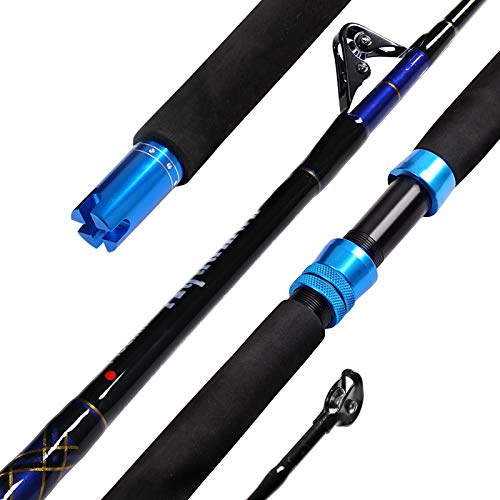
Marine Pick
Fiblink 6-Foot Offshore Trolling Rod
Carbon power for boat fishing
Offshore trolling setups

Beginner Friendly
OLOLYAP 6.9-Foot Telescopic Combo Kit
Starter gear in one bag
New freshwater anglers

Feature Rich
OLOLYAP Dual 6.9-Foot Telescopic Combo Set
Two rods and four reels
Fishing with family or friends
The Details Behind The Selections
Five sleeves make more sense than one protective sock for a household carrying several 6- to 7-foot rods in a vehicle. I see this set as useful for bank anglers and family fishing trips where loose tips can knock against one another during transport. The mixed colors also make individual rods easier to identify at a glance.
Neoprene adds cushioning against scratches and ordinary bumps, while the tapered shape follows the rod more closely than a straight loose cover. Compared with the two-piece set later in this roundup, the five-piece format covers more gear without requiring a separate hard case.
What Makes Sense
- Five covers protect a larger share of a multi-rod setup.
- The fitted taper limits excess material around the rod tip.
- Soft neoprene helps separate tips during crowded transport.
- Mixed colors simplify quick rod identification.
Small Caveats
- The stated 5.9- to 6.9-foot range may not suit every oversized rod.
- Soft sleeves cannot prevent crushing under heavy equipment.
- Owners should dry damp covers before storing them in a closed vehicle.
Quick Facts
Made For
Families and fishing partners carrying several standard 6- to 7-foot rods in a shared vehicle benefit most.
Consider Something Else When
Carry a single oversized rod in a hard tube instead, which offers better crush protection than this neoprene set.
The Bigwater name gives this Ugly Stik combo a clear role: assembling a substantial spinning setup without choosing every component separately. It is a more direct fishing option than the OLOLYAP sleeves, and it suits anglers who have reached the limits of a basic telescopic kit. Exact dimensions are not provided here, so matching it to a particular boat or trailer deserves close attention.
The listed Ugly Tech construction, Clear Tip, Ugly Tuff guides, and select-model rubber gimbal support a focus on durability and tip visibility. For heavier freshwater applications, the complete rod-and-reel format is the main convenience, although water depth and target species still determine whether it is truly appropriate.
Useful Strengths
- Combines the rod and spinning reel in one package.
- Ugly Tech construction targets dependable handling.
- Clear Tip visibility helps anglers monitor line movement.
- Tuff guides suit repeated contact with line during casting and retrieval.
Worth Noting
- Exact rod length, power, and target line rating are missing.
- The large-format setup may be unnecessary for small lakes and short trips.
- Reel maintenance and line replacement add normal ownership upkeep.
Feature Snapshot
Who It Suits Best
Anglers assembling a larger freshwater spinning setup appreciate having fewer separate components to select.
Another Choice May Suit
The OLOLYAP Dual 6.9-Foot Telescopic Combo Set suits anglers prioritizing packable rods and shared family trips.
Two covers suit a deliberately small setup, especially a solo angler carrying a pair of telescopic rods. I would consider this the tidier counterpart to the five-piece OLOLYAP set: it protects the essential gear without adding covers that remain empty. For regular shore fishing around brush, docks, or crowded parking areas, the soft material also helps guard blank and guide surfaces.
The narrow top and broader base suit rods in the stated 5.9- to 6.9-foot range, reducing the loose fit that can let tips move around. That tailoring matters more for transport than casting, since sleeves generally come off before the gear reaches the water.
Noteworthy Benefits
- Cushions two rods against scratches and light impacts.
- The tapered profile stays close to the rod during transport.
- Water-resistant neoprene tolerates damp or rainy outings.
Practical Considerations
- Two covers leave gaps in a larger family collection.
- Compatibility is centered on rods measuring 5.9 to 6.9 feet.
- The soft construction offers no substantial crush resistance.
- Residual moisture should be allowed to escape before storage.
Right Fit For
Solo anglers carrying two compact rods benefit from this focused two-sleeve format.
A Better Fit Elsewhere
OLOLYAP Five-Piece Neoprene Rod Sleeves serve households that regularly transport several rods together.
Unlike the transport gear and rod combos elsewhere in this selection, the SAFETAO Topwater Crawler is tackle rather than a rod. I still include it because a capable big-water setup often needs a compact surface presentation, and this lure is built around the delicate movement of an insect crossing the water. Bass anglers casting around lily pads, grass edges, and calm shorelines are the natural fit.
A 3.2-inch length and 0.3-ounce weight keep the lure small enough for precise surface work. The trade-off is that such a light presentation is not a substitute for covering distance or working deeply submerged water.
Why It Works Well
- Creates an insect-like surface disturbance.
- The compact weight fits close-range bass presentations.
- Its small profile avoids overwhelming fish in clear water.
- It adds variety to a conventional rod-and-lure loadout.
Possible Compromises
- Wind can make a light topwater presentation difficult to control.
- It is specialized tackle rather than a complete fishing system.
- Hook placement requires care because many crawlers expose the hook.
Technical Highlights
Built With In Mind
Freshwater bass anglers working calm shorelines and vegetation edges benefit from the surface-focused action.
Look Elsewhere When
The Fiblink 6-Foot Offshore Trolling Rod fits anglers who need rod hardware for boat-based trolling rather than a surface lure.
Two complete telescopic setups make sense for a fishing trip shared by two people, particularly one involving a small apartment, cabin, or vehicle. Each person receives a 6.9-foot rod, pre-spooled spinning reel, and access to shared tools and lures. That is more immediately useful than buying two rods and discovering that reels, pliers, and tackle are still missing.
The collapsible rods improve storage after the trip, while the included bag keeps the pieces together. Compared with the larger OLOLYAP set reviewed later, this package has two reels rather than four, making it the cleaner choice for a couple.
Advantages To Know
- Provides two rods and two pre-spooled reels.
- Collapsible construction simplifies post-trip storage.
- Includes pliers, a gripper, lures, and a tackle box.
- A shared carry bag reduces loose equipment during transport.
Trade-Offs To Consider
- Two complete setups may be more than a solo trip requires.
- The included terminal tackle may not match every target species.
- Reel setup still requires an honest check of line, drag, and spool tension.
Made For
Two friends or family members heading to the same freshwater or mixed-water fishing spot benefit most.
Another Choice May Suit
The OLOLYAP 6.9-Foot Telescopic Combo Kit serves a solo angler who needs accessories but only one complete setup.
The Fiblink is the only conventional boat rod in this group, and that distinction matters at a trolling setup. A 6-foot length fits close to a mounted rod holder, while its stated power ranges cover different line and target loads. I would pay closer attention to vessel clearance and trolling weight than to the shortened name, because both affect practical compatibility.
Carbon and glass fiber reinforcement support a balance of response, sensitivity, and strength. That construction suits anglers who want direct feedback while handling a one-piece rod in a moving boat, unlike the lighter, collapsible intent of the telescopic OLOLYAP packages.
Positive Points
- Reinforced carbon construction balances strength and sensitivity.
- The 6-foot format suits many compact trolling layouts.
- Three stated power ranges support different line loads.
- One-piece construction avoids telescopic section joints.
Where It May Fall Short
- A one-piece rod is harder to transport than a collapsing model.
- The boat must provide adequate rod-holder clearance.
- Reel, line, and terminal tackle are not identified in the supplied data.
Key Product Details
Who Will Love This
Boat anglers targeting offshore species benefit from conventional construction and multiple line-power options.
Swap It Out When
The OLOLYAP Two 6.9-Foot Telescopic Combos suit anglers who value compact transport over a permanent boat-mounted setup.
One telescopic rod and spinning reel make this the most focused starter package in the roundup. I can see it serving a new angler at a local pond, provided the included lures and line fit the intended species. The pliers, lip gripper, line, hooks, and carrier bag cover several basic handling needs without creating duplicate equipment.
Arriving unassembled gives the owner control over how much fishing line goes onto the spool. That avoids settling for an arbitrary fill level, though the spool still needs proper tension and a clear line path before the first cast.
The Good Stuff
- One package covers a rod, reel, line, and basic handling tools.
- The collapsible rod reduces storage space needs.
- A folding reel handle improves packability.
- The included bag keeps loose accessories together.
Minor Gripes
- Assembly and line spooling remain part of setup.
- Included tackle may be too limited for a specialized target.
- The 6.9-foot length may be cumbersome for very small vehicles.
Who Should Grab It
A solo beginner fishing close to home benefits from a compact set that supplies the basic accessories.
Reach For A Different Pick When
The OLOLYAP Five-Piece Neoprene Rod Sleeves serve someone whose main need is protecting existing rods rather than assembling a new combo.
This package goes beyond the usual one rod and one reel arrangement by including two 6.9-foot telescopic rods, two blue reels, two red reels, lines, terminal tackle, and a carrier bag. The extra reels give two people setup flexibility, such as using a second reel for a different line or preparing a backup before heading onto the water.
Interchangeable reel handles can accommodate different winding preferences, while the aluminum spool and folding design support compact transport. I would still check line capacity against the intended species, because reel color tells nothing about suitability.
Where It Helps
- Two rods support a shared trip or a backup setup.
- Four reels offer separate line or handle configurations.
- Collapsible rods fit more easily into a car trunk.
- Multiple included lures and hooks reduce initial packing.
Honest Caveats
- The four-reel package may be excessive for solo fishing.
- Included tackle may not suit every freshwater or saltwater species.
- Multiple spools require careful labeling and line checks.
- Spooling and drag adjustment remain necessary before use.
Core Details
The Right Fit
Families and fishing partners wanting multiple portable setups benefit from the two rods and four reels.
Not Your Match When
The Fiblink 6-Foot Offshore Trolling Rod better serves a dedicated boat angler who prioritizes conventional power and feedback.
Matching Rod Size to Fishing Conditions
Length and construction should follow the actual fishing environment. A 6.9-foot telescopic rod is easier to store and carry than a full-length boat rod, while a one-piece conventional design usually stays deployed on a vessel. The term “big” is often subjective, so physical dimensions provide a more useful comparison than the marketing label alone.
A neoprene sleeve protects against ordinary contact, but it cannot match the structural protection of a rigid tube. That difference matters when rods share a crowded truck bed, rest against heavy tackle boxes, or travel to unfamiliar launch ramps. Compare storage volume with the rod’s full assembled length before ordering covers.
Power ratings and line ratings describe different sides of the same system. Rod power concerns the blank’s intended bending and load characteristics, while line rating indicates the line range for which the rod is designed. Matching both to the target species, current, and trolling load reduces surprises offshore.
Combo packages suit people who value completeness and convenience. A separate rod, reel, line, and terminal-tackle purchase offers more control over component selection, but it also requires compatibility work. I favor a complete package for a local beginner and a purpose-built setup for specialized saltwater fishing.
Rod Setup Details That Matter
Pitfalls First Timers Fall Into
Longer rods can look more capable while being harder to control in confined vehicles. Rods also need enough room to assemble, spool, and collapse without forcing joints or tangling line against one another. Measure the storage area before choosing a combo, especially for small apartments and travel vehicles.
What Separates Premium From Basic
Higher-tier equipment commonly adds stronger blank materials, more durable guides, sensitive tip construction, or specialized reel components. Those improvements matter for heavy lines, repeated boat use, and anglers who need consistent feedback. Basic packages remain sensible for local fishing, and specialized parts are worthwhile only when the fishing method calls for them.
Frequently Asked Questions
Are Big Fishing Rods Harder to Transport?
Longer or one-piece models usually take more space than telescopic rods. Sleeves protect against light contact, but rigid tubes provide stronger protection from crushing and impact.
Is a Telescopic Rod Suitable for Beginners?
A telescopic combo can suit beginners because it combines a rod, reel, line, and basic accessories. The angler must still check line tension, drag operation, and reel security before fishing.
What Size Sleeve Fits a Fishing Rod?
Sleeve compatibility depends on both length and shape. The OLOLYAP sets here are stated for rods measuring 5.9 to 6.9 feet, so larger rods need another form of protection.
Should Offshore Anglers Choose Spinning or Conventional Gear?
Spinning tackle suits lighter presentations and active casts, while conventional trolling rods suit heavier lines and mounted offshore setups. The water, target species, and intended technique determine the fit.
How Many Rods Fit in a Family Fishing Kit?
A two-rod package suits two active anglers or one angler with a backup. The OLOLYAP dual set adds extra reels, which helps only when separate line or handle configurations are useful.
Final Verdict
The right large-rod setup depends less on size alone than on storage, water, target species, and whether the gear travels in a vehicle or stays on a boat. I would choose the Fiblink for conventional trolling, one of the OLOLYAP combos for portable freshwater outings, and the two-piece sleeve set for a small existing collection. Matching the actual setup to those conditions matters more than chasing the biggest label.
