Book Appointment Now

8 Best Bass Fishing Spinning Reels for 2026: Cast Control
ByBEGUM
Bass fishing rewards a reel that manages line cleanly through repeated casts, sudden runs, and long stretches beside cover. I favor smooth drag, a durable spool, manageable gearing, and a size matched to the lure. The list includes four spinning reels and four baitcasters, so I’ve identified which models suit bass and which serve broader fishing situations better.
The Main Contenders
PickWhy We Picked ItBest ForAction

Heavy Duty Pick
KastKing ReKon Saltwater Spinning Fishing Reel
High-capacity carbon drag
Large bass and saltwater

Performance Leader
KastKing Megatron 5.2:1 Spinning Reel
Confident drag under load
Bass anglers seeking control
Built To Last
KastKing Rover Round Baitcasting Reel
Metal construction and gearing
Catfish and heavy tackle

Streamlined Pick
KastKing Spartacus II 7.2:1 Baitcasting Reel
Low profile and light weight
Bass and tight tackle

Budget Friendly
KastKing Brutus Lightweight 5.2:1 Spinning Reel
Lightweight multi-size frame
Freshwater fishing on a budget

Premium Pick
KastKing Spartacus II Plus 8.0:1 Baitcasting Reel
Balanced magnetic spool control
Faster lure retrieval

Comfort Choice
KastKing Centron Lite 7.1:1 Baitcasting Reel
Lightweight ergonomic baitcasting
Long casting sessions

Everyday Favorite
KastKing Centron Spinning Reel with Collapsible Handle
Balanced spool and bearing layout
Frequent freshwater outings
More Details On Our Top Picks
Large bass placed near timber, rocks, or deep grass can test a spinning reel harder than a long open-water cast. The ReKon answers that scenario with size-dependent carbon-fiber drag stacks, giving smaller 2500, 3000, and 4000 models 30 pounds of rated drag and the 5000 and 6000 versions 40 pounds.
I see it as a coastal-bass choice rather than a lightweight creek reel. Larger versions also suit saltwater structure fishing, while the smaller frames make more sense for lighter terminal tackle.
Features That Help
- Carbon-fiber drag discs provide smooth, high-capacity stopping power.
- The size range supports light inshore duties through heavy saltwater work.
- The 8000 model reaches 55 pounds of rated drag for demanding fish.
- Multiple frame sizes make lure and line matching easier.
Small Caveats
- High drag ratings demand careful adjustment to prevent line damage or spool overrun.
- Larger models may feel excessive for panfish, trout, and lightweight bass lures.
- Saltwater use calls for a thorough rinse and dry-down after each outing.
Technical Highlights
Made For
I recommend the ReKon to anglers targeting large bass, striped bass, and saltwater species with powerful tackle.
A Better Fit Elsewhere
The KastKing Centron Spinning Reel with Collapsible Handle fits freshwater anglers who prioritize a lighter everyday setup.
The Megatron sits between open-water speed and the more compact ReKon approach. Its 5.2:1 ratio gives the handle one turn for roughly 5.2 spool rotations, a useful balance for moderate-speed bass retrieves and controlled sweeps of the boat deck.
Compared with the reel that follows, it remains the more conventional spinning choice for anglers moving between freshwater and saltwater. The angular body gives it a purposeful appearance, although the practical decision remains drag consistency and reel size.
The Case For It
- The moderate ratio supports both lure control and productive hook sets.
- Freshwater and saltwater positioning makes it a versatile coastal option.
- Distinctive geometry helps it stand apart from conventional round reels.
- A moderate retrieve rate avoids the extreme speed of high-ratio baitcasters.
Things To Consider
- Power-head balance may influence comfort during long casting sessions.
- No source dimensions clarify the weight difference against smaller spinning models.
- Owners commonly wipe exposed saltwater residue carefully to protect moving parts.
Right Fit For
The Megatron suits anglers who need one versatile spinning reel for bass, inshore fishing, and mixed freshwater trips.
Where A Sibling Pick Shines
The KastKing ReKon Saltwater Spinning Fishing Reel better serves anglers prioritizing higher stated drag capacities and size-specific carbon drag systems.
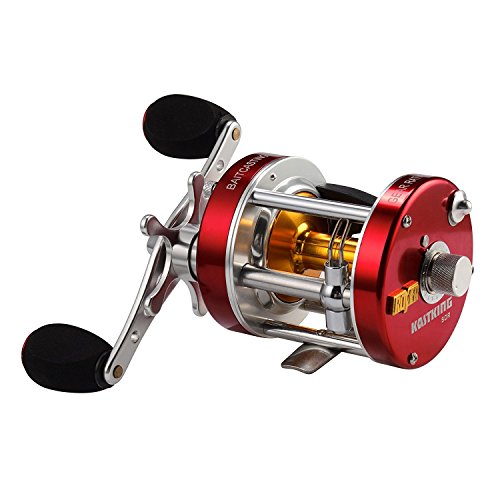
Round reels often feel natural to bass anglers accustomed to placing the spool beneath the rod. The Rover is heavier in purpose, with hard-anodized aluminum plates, a machined spool, brass gears, stainless steel parts, and an alloy level wind that suits catfish, carp, and heavier freshwater fishing.
I would not call it a dedicated bass choice, despite the category overlap. For weekend anglers switching from spinning tackle, its winding system offers precise placement and more direct lure control.
Bright Spots
- Metal plates and a machined spool suit sustained heavy use.
- Brass gears and stainless components emphasize structural durability.
- The carbon drag provides up to 15 pounds of rated stopping power.
- Double-shielded stainless bearings support smooth spool rotation.
Trade Offs
- Its weight and drag rating are excessive for light bass tackle.
- Baitcasting requires spool control that spinning reels handle automatically.
- Cleaning around the level wind and exposed metal needs care after wet trips.
Feature Snapshot
Whose Shelf It Belongs On
The Rover belongs with catfish and carp anglers who want direct baitcasting control and a substantial metal chassis.
Consider Something Else When
The KastKing Brutus Lightweight 5.2:1 Spinning Reel is the cleaner choice for panfish, trout, and light bass presentations.
A low-profile reel can feel less cumbersome during a full day of casting and changing lures. The Spartacus II measures 39 millimeters tall and weighs 6 ounces, giving bass anglers a compact alternative to the heavier Rover Round.
Its 7.2:1 ratio adds more handle speed than either of the spinning reels in this roundup. That helps with fast retrieves, although crank speed alone cannot replace a properly adjusted spool.
Everyday Perks
- The compact profile fits neatly on many bass and spinning outfits.
- Six-ounce weight reduces bulk for lighter tackle combinations.
- A 7.2:1 ratio supports brisk lure retrieves and quick hook sets.
- The low profile lowers the reel’s presence beneath the rod.
Practical Considerations
- Baitcasters need thumb control to prevent overruns during the first casts.
- The faster ratio may feel abrupt with heavier swim baits.
- Owners commonly check the spool tension and reel screws after repeated use.
Key Attributes
Best Suited To
I favor the Spartacus II for bass anglers who prefer a compact, high-speed baitcaster for medium lures.
Look Elsewhere When
The KastKing Centron Spinning Reel with Collapsible Handle offers easier lure changes for anglers moving frequently between rods and baits.
The Brutus makes sense for someone assembling a multi-species freshwater outfit without carrying several large spinning reels. Sizes 500 through 5000 cover bass, trout, panfish, and light saltwater targets, while the graphite frame and rotor keep weight down.
Unlike the metal-heavy Rover, this reel emphasizes portability and simple lure changes. For a first bass setup or a compact boat bag, that balance may matter more than maximum drag capacity.
The Good Stuff
- Six frame sizes make lure, line, and species matching straightforward.
- The graphite frame and rotor reduce weight across long sessions.
- A 5.2:1 ratio supports controlled bass retrieves and effective hook sets.
- The small sizes suit trout and panfish without excessive bulk.
Where It May Fall Short
- Stated construction details do not position it for heavy saltwater abuse.
- The 5000 size may feel large for stream trout or small lake trout.
- Regular freshwater use still benefits from occasional spool and drag cleaning.
Who Should Grab It
The Brutus fits beginners, multi-species freshwater anglers, and anyone wanting several compact spinning-reel sizes.
Another Choice May Suit
The KastKing Megatron 5.2:1 Spinning Reel better serves mixed-water anglers who need a reel designed for both freshwater and saltwater settings.
The Spartacus II Plus prioritizes cast control through its DualBalance magnetic braking system. Even magnetic engagement across the spool helps reduce unstable spool behavior, a common source of backlash on baitcasters, particularly with lighter aerodynamic lures.
Its 8.0:1 hybrid gear ratio advances the handle faster than the original Spartacus II. Bass anglers chasing reaction baits benefit from that speed, provided the spool remains properly tensioned.
Key Advantages
- Balanced magnetic braking steadies the spool throughout casting.
- The 8.0:1 ratio retrieves compact baits with fewer handle turns.
- Reduced backlash potential eases use with lighter lures.
- Longer casts become more practical across open water.
Points To Note
- Maximum gearing can feel uncontrolled with heavy baits and low line diameter.
- Magnetic braking still requires spool tension to be set correctly.
- Owners commonly lubricate the handle and spool shaft after heavy service use.
Feature Breakdown
Built With In Mind
I recommend this model to experienced bass anglers using lightweight lures and wanting precise, fast casts.
Reach For A Different Pick When
The KastKing Centron Lite 7.1:1 Baitcasting Reel better serves anglers who prioritize low weight and physical comfort over maximum handle speed.
Fishing from a small boat often makes reel weight more noticeable as the day stretches on. The Centron Lite weighs 7.6 ounces and uses a narrow, glass-fiber-reinforced nylon frame, giving it a lighter profile than many metal-bodied baitcasters.
The 7.1:1 ratio remains fast enough for bass retrieves, while 15.4 pounds of rated drag covers plenty of freshwater work. For a reel meant to be carried all day, that combination feels sensible.
The Value In It
- Seven-and-a-half-ounce weight reduces fatigue during extended casting.
- The compact frame fits comfortably beneath a spinning-style setup.
- A 7.1:1 ratio supports quick lure retrieval and hook sets.
- Stated drag capacity suits many medium and heavy bass baits.
Minor Gripes
- Nylon construction may show wear sooner than a thick metal chassis.
- The reel still requires baitcasting technique and spool-tension control.
- Saltwater anglers should rinse carefully because the frame is not described as metal.
Who Will Love This
This Centron Lite suits bass anglers who spend long days casting and prefer a light, compact baitcaster.
Swap It Out When
The KastKing Spartacus II Plus 8.0:1 Baitcasting Reel fits anglers who value magnetic spool control and faster retrieval over lower weight.
The Centron brings a familiar spinning layout to frequent bass sessions where lure changes and manageable weight matter. Its CNC-machined aluminum spool is lighter and stronger than a conventional spool, with internal grooves designed to retain lubricant around the line lay.
Nine ball bearings and an instant-stop one-way bearing support smooth operation, while the collapsible handle simplifies transport. Compared with the ReKon, it remains more oriented toward everyday freshwater use than extreme drag capacity.
Where It Delivers
- The machined aluminum spool provides a compact, durable line-retention surface.
- Up to 17.5 pounds of rated drag covers substantial bass fishing tasks.
- Nine ball bearings support smooth winding and retrieval.
- The collapsible handle improves packing and storage convenience.
Worth Bearing In Mind
- Its rated drag is lower than the larger ReKon configurations.
- Ball bearing count does not replace correct spool sizing and drag adjustment.
- Owners commonly keep the spool grooves clean so line lays down consistently.
Core Details
The Right Fit
The Centron suits freshwater bass anglers who want smooth operation, practical transport, and a moderately powerful drag.
Not Your Match When
The KastKing ReKon Saltwater Spinning Fishing Reel is a stronger match for inshore anglers requiring drag ratings up to 55 pounds.
Matching Reel Size and Mechanics to the Job
Frame size should follow the line and lure, not fashion. A small spinning reel handles lighter line and lures more cleanly, while larger bodies support thicker line, deeper pools, and heavier presentations. Baitcasters demand compatible line diameters and spool tension that matches the lure weight.
Drag controls the amount of line released while a fish pulls. More capacity adds resistance, although it can create unnecessary stress when paired with light line. For bass, a smooth, adjustable drag is more useful than an oversized rating.
Handle speed also shapes the feel of a reel. Ratios around 5:1 favor controlled retrieves, while 7:1 or faster models suit brisk reaction-bait retrieves. Faster gearing does not automatically mean better casting control.
Material choices affect handling and care. Graphite and reinforced nylon reduce weight, while aluminum and stainless components often suit heavier duties. Saltwater use calls for careful rinsing regardless of the material.
Two Lessons That Prevent Reel Regret
Wrong Turns To Avoid
A common mistake is choosing a reel solely by drag capacity. Line diameter, spool size, and application matter just as much. I also avoid judging an unfamiliar reel by maximum gearing before considering the lure and the angler’s control.
When Paying More Pays Off
Higher-tier designs can add stronger drag materials, refined machining, better bearings, or more controlled braking. Those traits matter most with demanding lures, frequent casting, saltwater exposure, or long fishing days.
Frequently Asked Questions
What size spinning reel is best for bass fishing?
A medium-size spinning reel usually balances common bass lures with suitable line capacity. Larger sizes suit heavier presentations, while smaller frames favor lighter tackle.
Is a higher gear ratio better for bass fishing?
A higher ratio retrieves line faster, which helps with reaction baits. Moderate ratios provide a smoother, more controlled retrieve with heavier lures.
Are baitcasting reels better for bass fishing?
Baitcasters provide direct lure control and accurate placement, but they require more practice. Spinning reels are easier to control and faster to deploy around cover.
What drag strength does a bass fishing reel need?
The correct setting depends on line, lure, and fish size. A smooth adjustment matters more than selecting the highest available rating.
How should I maintain a fishing reel?
I rinse saltwater residue with fresh water, dry the reel fully, and inspect the line and drag before storage. Periodic cleaning and lubrication keep moving parts operating smoothly.
