Book Appointment Now

8 Best Bass Fishing Reels for 2026: Smarter Casting Choices
ByBEGUM
Choosing a bass reel becomes much easier once the water, target species, and line setup are clear. A balanced spinning reel handles everything from pond casting to light jig work, while heavier saltwater-capable models provide more strength around docks, rocks, and other cover. Fly-fishing reels serve a different purpose and work best for targeting bass with weighted flies. I focus on drag control, retrieval direction, line capacity, corrosion resistance, weight, and the balance between casting comfort and fish-fighting power.
A Snapshot Of The Selections
PickWhy We Picked ItBest ForAction

Specialty Choice
ANGLER DREAM CNC Fly Fishing Reel Line Combo
Complete starter line setup
Targeting bass with flies
Performance Leader
Daiwa BG Spinning Reel Black/Gold
Sealed saltwater-capable construction
Coastal and heavy cover fishing

Heavy Duty Pick
Penn Battle IV Spinning Fishing Reel
Metal body and sealed protection
Bass fishing around dense cover

Streamlined Pick
KastKing Lethal Blaze 5.2:1 Spinning Reel
Lightweight reinforced composite frame
Long freshwater casting sessions

Budget Friendly
Okuma Ceymar Graphite 8BB Spinning Reel
Lightweight multi-size platform
Practical freshwater fishing

Everyday Favorite
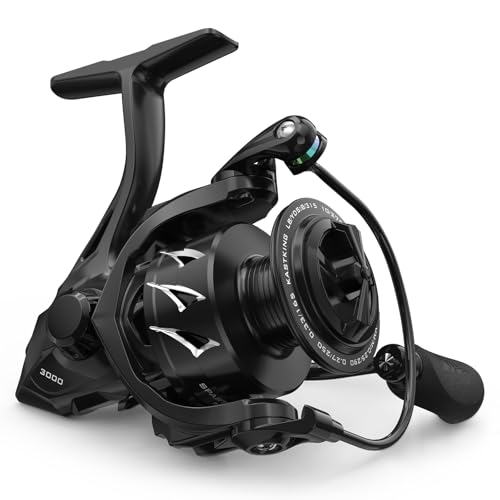
KastKing Centron Spinning Fishing Reels
Smooth gearing and collapsible handle
Versatile bass setups and travel
Outdoor Ready
KastKing Spartacus II Plus IPX5 Spinning Reels
Four-ring water and grit protection
Kayak, surf, and pier fishing

Dependable Option
Penn Spinfisher VI Spinning Fishing Reel
Sealed drag and metal housing
Shore fishing in variable weather
What Each Pick Brings To The Table
ANGLER DREAM takes a specialized approach by combining a CNC-machined fly reel with 3, 5, and 8-weight floating line, backing, and leaders. That arrangement suits anglers targeting bass with streamer flies rather than conventional lures, and it reduces the need to assemble each component separately.
The aluminum frame, large arbor, and one-way bearing give the reel a compact, purposeful design. I favor its 1:1 ratio for stripping or retrieving line with a fly rod, although retrieve-hand changes may require arranging support with the seller.
Real-World Strengths
- The included line, backing, and leaders create a ready-to-rig starting point.
- Three stated weight classes cover more fly choices than a single fixed setup.
- Two bearings plus the spool bearing support smooth low-speed handling.
- The large arbor stores line efficiently and starts the drag promptly.
Trade Offs
- The 1:1 ratio is specialized and does not match the retrieve of a typical bass spinning reel.
- Cleaning around the arbor and drag requires care because this is a compact mechanical assembly.
Core Details
Who It Suits Best
This reel fits freshwater anglers pursuing bass with streamer flies and a properly matched fly rod.
Another Choice May Suit
Penn Battle IV offers a more conventional retrieval for anglers casting plugs, spoons, and other standard bass tackle.
Where the fly reel focuses on specialized tackle, the Daiwa BG handles conventional bass lures with considerably more versatility. Its sealed architecture suits anglers moving between ponds, rivers, and brackish water, while the black-and-gold aluminum housing gives it a substantial appearance without changing its low-profile spinning format.
Sealed drag components, an air rotor, and corrosion-resistant Zaion body parts help manage exposure to water and grit. Depending on the lure, the retrieve can feel more forceful than a lightweight freshwater reel, which may be useful around rocks but tiring over a full day.
Key Advantages
- Sealed construction expands suitability beyond protected freshwater sites.
- The aluminum housing tolerates repeated handling around docks and cover.
- An air rotor supports smooth starts and rapid line pickup.
- The oversized gear train adds strength for larger lure loads and heavy line.
Worth Noting
- The reel may feel heavy for repeated light jigs or delicate plastics.
- Frequent saltwater use calls for careful rinsing, drying, and occasional lubrication.
Technical Highlights
Built With In Mind
It suits experienced anglers fishing powerful tackle from piers, shorelines, and brackish reservoirs.
A Better Fit Elsewhere
KastKing Lethal Blaze offers lighter handling for anglers spending long hours casting small lures in freshwater.
The Penn Battle IV moves from saltwater-capable Daiwa territory toward a reel centered on powerful freshwater retrieves. Its full-metal body feels appropriate for fishing heavy cover, pitching largemouth bass into reeds, or working a crankbait through a rocky shoreline without the lighter feel of an all-composite frame.
Hydro Armor sealing protects internal components from harsh conditions, while the carbon-fiber drag system supplies controlled resistance. I see the main trade-off in weight: anglers moving constantly along a bank may prefer the more portable KastKing Lethal Blaze.
What Works In Its Favor
- Metal housing adds rigidity for heavy lures and fish pressure.
- Sealed components suit rain, spray, and exposed shoreline conditions.
- The drag system offers smooth control for medium and heavy presentations.
- CNC gearing supports consistent retrieval under load.
Points To Note
- The metal construction may become tiring for long walks with lightweight tackle.
- Careful rinsing remains important after fishing muddy banks or saltwater.
Made For
Penn Battle IV fits freshwater anglers targeting largemouth bass around docks, timber, rock, and heavy vegetation.
Where Another Pick Shines
Okuma Ceymar provides a lighter alternative for anglers moving between a kayak, shoreline, and shallow water.
Freshwater and inshore anglers benefit from the Lethal Blaze’s glass-fiber-reinforced nylon frame, which reduces weight while resisting the flex associated with inexpensive all-plastic bodies. At 5.2:1, its ratio sits between a slow bass reel and a faster baitcasting-style retrieve, making it relevant for both flipping and covering water with moderate-speed lures.
The listed maximum drag reaches 17.6 pounds, enough for many bass applications, but the reel is not a substitute for a heavy saltwater model. I would expect its lighter construction to feel more comfortable during a long day than a metal-bodied Penn Battle IV.
Useful Highlights
- The reinforced nylon frame lowers weight without creating a delicate structure.
- A 5.2:1 ratio balances casting speed and controlled line pickup.
- Drag capacity supports common freshwater and inshore bass presentations.
Room For Improvement
- Frequent exposure to salt or abrasive sand still requires prompt rinsing and storage care.
- The lighter frame may feel less rigid under very heavy lures than a metal reel.
Feature Snapshot
The Right Fit
This reel suits active freshwater anglers who want light handling, medium retrieve speed, and inshore capability.
Reach For A Different Pick
Daiwa BG fits anglers needing a more sealed, substantial reel for repeated casting in exposed coastal water.
The Okuma Ceymar brings a lighter approach than the Penn Battle IV while retaining a machined-aluminum spool and eight-bearing foundation. Multiple sizes allow the same model family to cover light presentations, general-purpose bass work, and situations requiring more line capacity, which makes it a practical first spinning reel for many anglers.
Its ported spool and rotor reduce bulk, while the quick-set anti-reverse prevents the handle from turning backward during a hooked fish. Owners should still treat it as a freshwater-first tool around muddy water, and a light rinse after shore fishing helps prevent line grit from settling into moving parts.
Strong Points
- The lightweight spool and rotor reduce fatigue during repeated casting.
- Three listed sizes support different lure weights and line capacities.
- Eight bearings contribute to smooth startup and retrieve.
- The machined spool maintains rigidity while keeping weight down.
Small Caveats
- The model lacks the heavy saltwater emphasis of the Daiwa BG.
- EVA knobs may absorb water and require periodic cleaning during wet trips.
- Metal guide hardware needs regular attention to prevent line abrasion.
Built With In Mind
Ceymar fits beginners and regular freshwater anglers seeking several size options without moving to a metal-bodied reel.
Look Elsewhere When
Penn Spinfisher VI makes more sense for anglers whose bass fishing regularly includes surf, pier, and saltwater spray.
Centron and Centron Lite cover different priorities within the same general platform. The standard version emphasizes a machined aluminum spool and fish-fighting hardware, while the Lite version targets lower weight. That distinction matters during long bank walks, although the correct size and version still depend on line weight, lure weight, and target species.
Nine ball bearings plus an anti-reverse bearing support smooth handling, and internal spool grooves retain lubricant around the spool. The foldable handle improves transport, though I would tighten and inspect it after repeated packing and unpacking.
Points In Its Favor
- The spool’s even line lay supports consistent casting and retrieves.
- Drag force reaches 17.5 pounds, covering many freshwater bass situations.
- The collapsible handle fits compact tackle boxes and travel bags.
- Internal spool grooves aid lubrication around moving components.
Practical Considerations
- The full-featured version is less attractive than the Lite model for light-lure fishing.
- Sanding and saltwater exposure call for freshwater and lubrication checks before storage.
Quick Facts
Who Will Love This
This reel suits general freshwater anglers who value smooth operation, simple handling, and easy storage.
Swap It Out When
KastKing Lethal Blaze is the more natural selection for anglers prioritizing composite construction and minimal weight.
The Spartacus II Plus broadens the list toward mixed environments, including kayak slips, piers, surf, and inshore flats. Four Everseal rings provide the listed barrier against spray, water, and grit, while IPX5 sealing makes the reel a more logical choice for changing weather than a typical open freshwater design.
Size selection changes the balance: the 1000 provides 8.8 pounds of drag for finesse work, while the 2000 and 3000 reach 17.6 pounds. I would avoid forcing heavy line onto the smallest version simply because of that difference in drag capacity.
A Few Strong Suits
- Four sealing rings add multiple barriers against moisture and grit.
- IPX5 protection supports freshwater, brackish, and inshore use.
- Three sizes cover delicate presentations through heavier bass work.
- Carbon-fiber drag washes support controlled resistance and smooth startup.
Details To Watch
- Seals reduce exposure but do not remove the need to rinse sand and salt from the reel.
- The 1000 size’s listed 8.8-pound drag is modest for heavy cover fishing.
Important Details
Built For
Spartacus II Plus fits mobile anglers moving between freshwater, kayak, pier, surf, and inshore locations.
Consider Something Else
Penn Spinfisher VI offers an alternative for anglers who prefer a fully metal housing and sealed spool architecture.
Penn Spinfisher VI shares the exposed-water focus of the Spartacus II Plus but takes a different construction approach. A full-metal body and sideplate support the CNC gear system under load, while a sealed spool contains the HT-100 drag washers. That combination makes it a practical choice for bass anglers moving between rivers, marshes, and brackish areas.
IPX5 sealing is designed to limit salt spray and water reaching the gearbox and drag, although post-trip rinsing remains essential. Standard, Live Liner, and long-travel versions also give anglers different line-management options, depending on the presentation being used.
Useful Strengths
- IPX5 sealing supports use in rain, spray, and mixed water conditions.
- The sealed spool protects the HT-100 drag washers during wet trips.
- Metal housing adds rigidity beneath heavier fish.
- CNC gearing supports consistent mechanical operation under load.
- Multiple line-management versions suit different casting needs.
Trade-Offs To Consider
- The full-metal frame may feel substantial beside a composite freshwater reel.
- Long-travel versions require enough reel size to retain suitable line capacity.
Whose Shelf It Belongs On
This reel suits freshwater and inshore anglers who want metal construction, sealed drag components, and multiple spool options.
Not Your Match
Okuma Ceymar is a lighter choice for anglers fishing protected ponds and staying on the move.
Matching A Reel To The Fishing
A conventional bass reel starts with the fishing method. A spinning reel is convenient for light lures, quick pitches, and broad searches, while the ANGLER DREAM fly reel belongs with weighted flies and a matching fly rod. Mixing those roles usually produces unnecessary drag, gearing, and line-layout compromises.
Drag And Fish-Fighting Control
Drag creates controlled resistance as a fish tires, rather than a fixed line limit that breaks under pressure. A listed 8.8-pound drag suits light line and finesse presentations, while 17.5- and 17.6-pound systems provide more room for heavier line and aggressive cover fishing. I would pair drag capacity with line strength instead of choosing the highest available setting.
Weight And Retrieval Speed
A lighter reel reduces fatigue during long casts and repeated retrieves. The Lethal Blaze’s reinforced composite frame and Ceymar’s ported construction suit mobile anglers, while the Battle IV and BG place more emphasis on metal rigidity and heavy-lure stability.
Sealing And Exposure
IPX5-rated sealing matters around surf, piers, rain, and brackish water, but maintenance remains part of ownership. Freshwater rinse, gentle drying, spool removal, and periodic inspection help prevent sand, salt, and line-abrasion debris from accumulating around the drag and moving components.
Common Errors To Avoid
A reel’s appearance does not reveal its best size, and model families often span multiple capacities. Matching reel size to line diameter, line length, lure weight, and target species prevents poor spool fill and weak drag settings.
Another mistake is selecting a reel only for saltwater resistance while using a one-way fly-reel drag for ordinary bass tackle. Each type belongs in a matching retrieval system, with maintenance and replacement parts handled according to its design.
What Additional Spending Changes
Higher-priced models commonly add sealing, stronger housing materials, refined gearing, and drag components designed for repeated load. Those features make sense for anglers fishing exposed water, heavy cover, or traveling with one reel across several environments.
Lightweight freshwater models offer better value for controlled bank fishing and light presentations. Paying for heavier construction becomes worthwhile only when the fishing location and target species justify that added bulk and maintenance attention.
Frequently Asked Questions
What size spinning reel works best for bass?
A medium-size reel generally fits common bass lures and moderate line diameters. Larger fish and heavier cover favor a stronger body, while light plastics and finesse line favor a smaller spool with more sensitive control.
Is an aluminum reel better for bass fishing?
Aluminum adds rigidity and suits heavy lures, saltwater spray, and strong drag loads. Composite or reinforced nylon frames reduce weight and fatigue, making them comfortable for long freshwater sessions.
Can a saltwater spinning reel be used for bass?
Yes. Sealed saltwater-capable models also handle rain, piers, and brackish water, although they may feel heavier than a freshwater-focused reel.
Do I need a reel with IPX5 sealing?
IPX5 sealing is useful for surf, piers, heavy rain, and mixed water. It adds protection, yet regular rinsing and careful drying remain necessary.
Can a fly reel be used for regular bass lures?
A fly reel is intended for fly-line retrieval and lacks the gearing and drag behavior of a bass spinning reel. Standard bass lures require a suitably sized spinning or baitcasting reel.
Final Verdict
The most practical reel depends on water exposure, lure weight, and casting style rather than a single universal specification. Lightweight freshwater designs suit long days on the move, metal-bodied models handle heavy cover, and sealed models cover shorelines and mixed water. Choose the size and gearing that match the actual setup, then maintain the reel according to the conditions it sees.
