Book Appointment Now

How to Cast Your Line Like a Pro
ByIMRAN
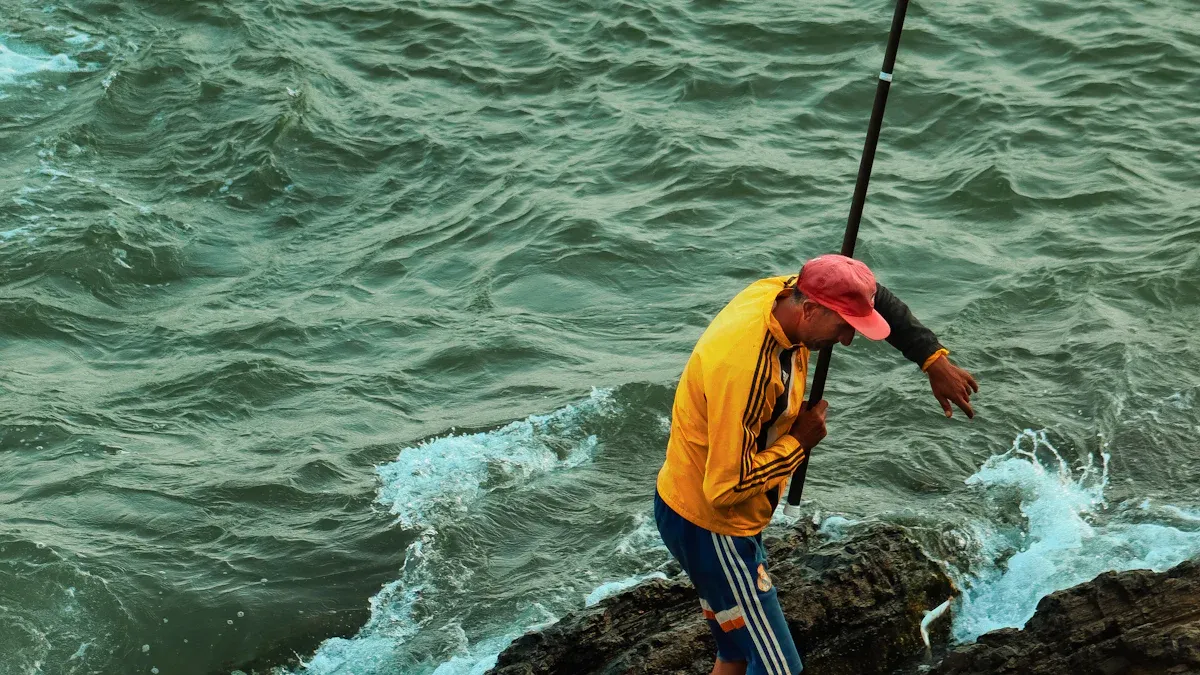
When you cast your line, the technique you use can make all the difference in your fishing success. Mastering proper casting techniques not only enhances your experience but also boosts your chances of landing that big catch. For instance, a basic WF cast can reach distances of 15-20 meters, leading to high success rates. Remember, good timing and a straight, accelerating rod tip are key to effective casting. So, let’s dive into how you can improve your skills and enjoy fishing even more!
Key Takeaways
Choose the right fishing gear to match your style and target species. This ensures better performance and increases your chances of success.
Master the grip and stance for effective casting. A solid grip and balanced stance enhance your control and accuracy.
Practice different casting techniques like the overhead and sidearm casts. Each method has its strengths, so find what works best for your fishing conditions.
Focus on timing and release to maximize casting distance. Smooth, controlled movements lead to better results than forceful throws.
Regular practice is key to improvement. Set specific goals, challenge yourself, and seek feedback to refine your casting skills.
Casting Basics
Equipment Selection
Choosing the right equipment is crucial for successful casting. You want to ensure that your gear matches your fishing style and the species you’re targeting. Here are some common types of fishing gear you might consider:
Fishing Rods:
Spinning Rods: Great for beginners due to their ease of use.
Casting Rods: Offer precision and control for targeting specific fish.
Fly Rods: Designed for fly fishing, requiring unique techniques.
Fishing Reels:
Spincasting Reels: Easy to cast, perfect for kids.
Spinning Reels: Versatile and suitable for various fishing styles.
Baitcasting Reels: More complex, better for experienced anglers.
Fishing Lines:
Monofilament: Common and versatile for different conditions.
Fluorocarbon: Nearly invisible underwater, ideal for leaders.
Braided Lines: Strong and thin, used as the main line.
When you select your gear, consider the type of fishing you’ll do. For freshwater fishing, lighter tackle works best for smaller species like Largemouth Bass. In contrast, saltwater fishing requires heavier gear to handle stronger fish. Saltwater gear is also more durable, as it resists corrosion from the ocean’s salt.
Components of a Good Cast
A good cast involves several key components. First, the rod type matters. Different rods suit various techniques, so choose one that fits your needs. Rod length also plays a role; longer rods can cast farther, while shorter rods provide better control in tight spaces.
Next, consider the rod action. Fast action rods are great for larger fish, while slow action rods are more forgiving for smaller catches. Lastly, the material of the rod affects its performance. Graphite rods are lightweight and sensitive, while fiberglass rods are durable and heavy-duty.
By understanding these components, you can improve your casting skills and enhance your overall fishing experience. Remember, practice makes perfect, so get out there and start casting!
Grip and Stance
Proper Grip
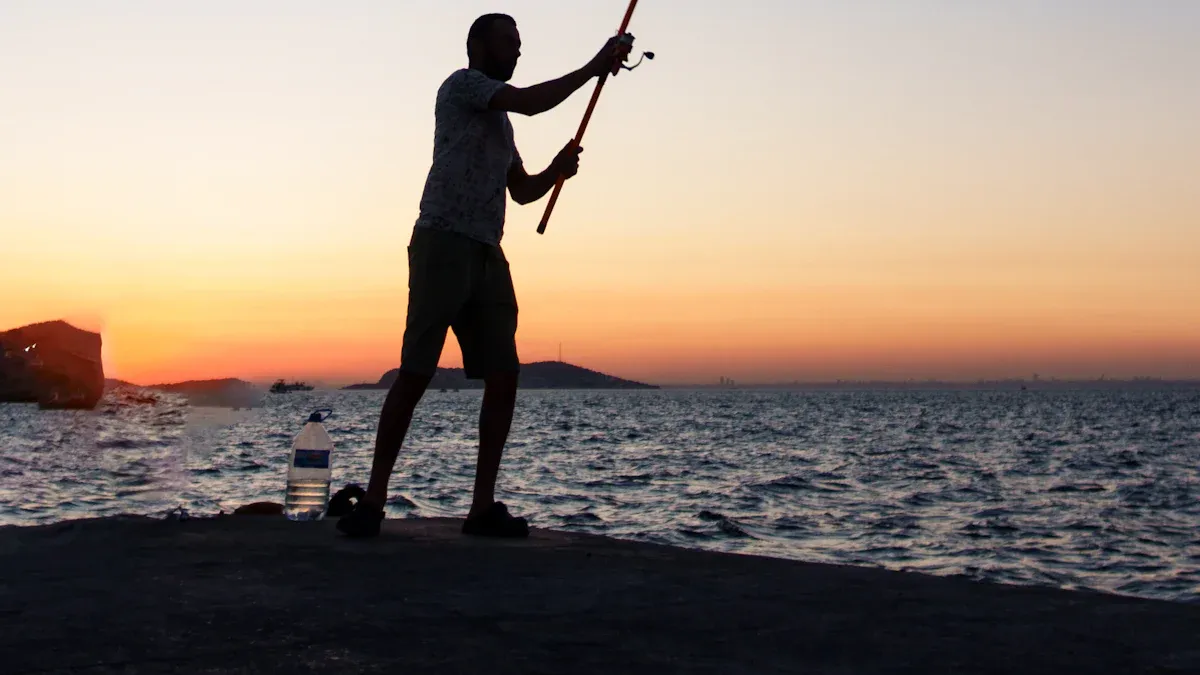
Getting your grip right is essential for effective casting. A solid grip gives you better control over your rod and line. Here are some recommended techniques from professional anglers:
Dart Cast: This compact motion works well for accuracy on medium to long casts.
Pitch or Pendulum Cast: Perfect for close-quarters casting, especially in marshy areas.
Feathering Line: This technique enhances accuracy and reduces wind knots by controlling line speed.
Match the Lure to the Rod: Selecting the right lure weight ensures optimal performance.
Understand Rod Actions for Specific Techniques: Choose rod actions based on your fishing conditions.
When gripping the rod, hold it firmly but not too tight. Your fingers should wrap around the handle comfortably, allowing for smooth movements. This grip helps you maintain control while casting and reeling in your catch.
Ideal Stance
Your stance plays a crucial role in balance and casting accuracy. Start by positioning your feet shoulder-width apart. This gives you a solid base for casting. Here are some tips to help you find your ideal stance:
Experiment with foot placement to discover what feels comfortable and stable.
A solid base is key; if your feet are too close, you might lose balance quickly. If they’re too far apart, you may sacrifice mobility.
Angle your body towards your target to improve your aim.
Achieving maximum casting accuracy begins with a proper stance and grip. Remember, the biomechanics of casting involve coordinating your body movements. This means using larger muscle groups for smoother, more efficient casting motions. As you cast, focus on the sequence of actions: first, the translation of the rod, then the rotation, and finally, the line haul. This coordination will help you cast like a pro!
How to Cast Like a Pro
When you want to cast like a pro, mastering different techniques is essential. Two popular methods are the overhead cast and the sidearm cast. Each has its strengths, and knowing when to use them can significantly improve your fishing experience.
Overhead Cast
The overhead cast is a classic technique that many anglers use. It allows for long-distance casting and is effective in open areas. Here’s how to perform it effectively:
Getting Started Again: Allow the line to fully straighten out on the back cast before starting the forward cast. This requires practice and attention to detail.
Forward Cast: Push the rod forward and flick the rod tip at the 11 o’clock position. Use an abrupt stop to throw the line over the top of you.
Dropping the Tip: After the line rolls forward, lower the rod tip to allow for a gentle lay down of the fly line on the water’s surface.
Common Faults: Be aware of common mistakes, such as not allowing enough time for the line to lift off the water or failing to straighten the line on the back cast.
This technique is great for covering distance, but it may not be as precise as other methods.
Sidearm Cast
The sidearm cast is another effective technique, especially in tight spaces or when you need to avoid obstacles. It offers better accuracy than the overhead cast. Here’s a comparison of the two techniques:
Casting Technique | Effectiveness for Distance | Effectiveness for Accuracy |
|---|---|---|
Overhead Cast | High | Moderate |
Sidearm Cast | Moderate | High |
To execute a sidearm cast, keep these tips in mind:
Gunslinger Problem: Make sure you haul hard enough into the backcast. Failing to do so can lead to a lack of momentum for the forward cast.
Sidewinder Error: Avoid hauling sideways instead of down the rod shaft. This mistake can lead to inefficient casting and loss of control.
Planar Traveler: Ensure you cast in-plane to prevent twisting of the line, especially with certain fly types.
By focusing on these common mistakes, you can refine your sidearm casting technique and improve your accuracy.
Timing and Release
Timing and release are crucial for maximizing your casting distance. Here are some tips to help you get it right:
Use The Right Rod/Reel: Choose a rod and reel that are well-matched to maximize casting distance. Ensure the rod’s weight rating aligns with the lures used, and keep the reel’s spool full for longer casts.
Use Lighter Line: Opt for lighter line, such as 10 or 12-pound test, to achieve greater casting distances and improve bait performance.
Don’t Throw As Hard: Focus on smooth casting rather than forceful throws, especially with baitcasting tackle, to enhance casting distance.
Professional anglers often adjust their timing and release based on conditions. For example, they might cast upstream in rivers to allow lures to drift naturally or use a lower trajectory in windy weather. Adapting your technique to the environment can make a big difference in your success.
By practicing these techniques, you’ll learn how to cast a fishing rod effectively and increase your chances of landing that big catch. Remember, the more you practice, the better you’ll become!
Casting Tips for Accuracy
Improving Precision
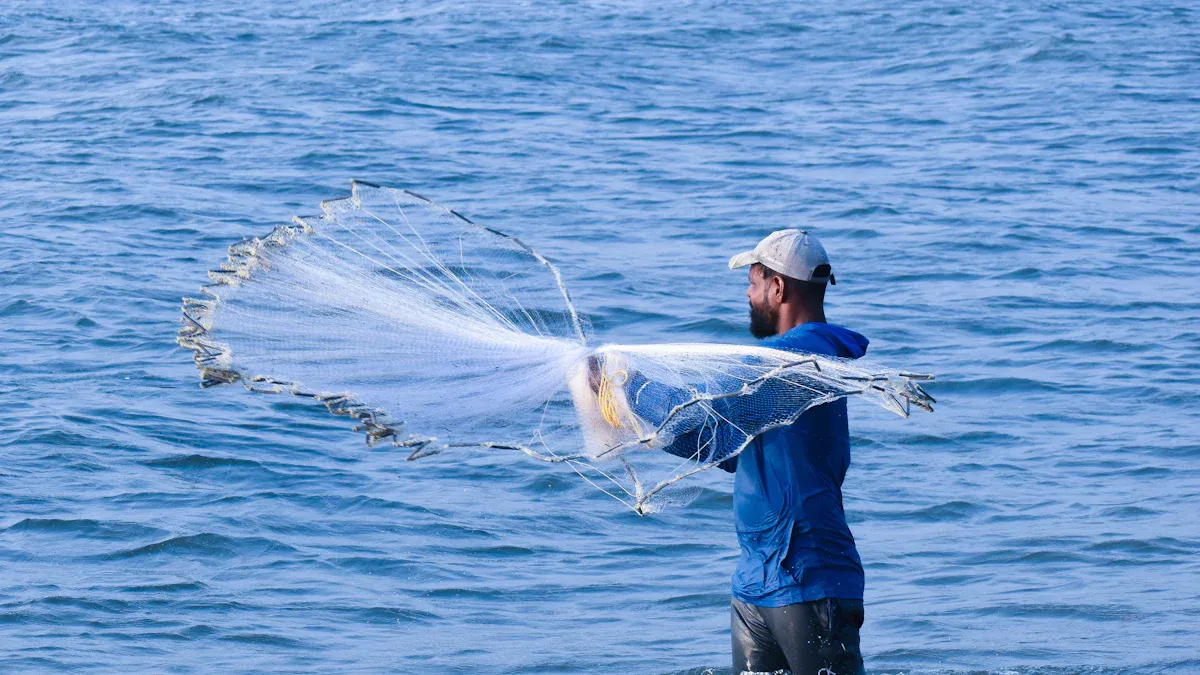
To improve your casting accuracy, focus on a few key techniques. Here are some effective tips to help you cast your line with precision:
Position Your Fly Correctly: For water-loaded casts, keep the fly positioned behind you at about 180° from your target. This setup allows for a smoother transition when you make your cast.
Maintain a Straight Path: When performing overhead casts, ensure the fly travels in a straight line before your final presentation. This helps in achieving better accuracy.
Use False Casts: Practice false casts to adjust the direction of your fly. This technique allows you to refine your aim until the fly moves straight back and forth toward your target.
Start with the Fly Hanging Down: When lobbing the fly, begin with it hanging straight down from the rod tip. This position helps you achieve a more controlled and accurate cast.
Using highly visible baits, like the Livingston Lures Jerkmaster, can also enhance your casting accuracy. Practicing your casts toward known structures builds confidence and precision. Remember to keep your focus on the sonar screen, especially in windy conditions, to maintain your aim.
Distance Techniques
When it comes to casting for distance, you want to maximize your reach without sacrificing accuracy. Here are some techniques to help you achieve that:
Focus on the Rod Tip Path: The path of your rod tip directly affects the trajectory of your fly line. A straight rod tip path results in tighter loops, which are essential for accuracy. Deviations from this path create wider loops, reducing your control over the line’s direction.
Utilize the ‘Double Haul’ Technique: This technique involves a backward motion that loads the rod with kinetic energy, allowing for longer casts. During the backswing, pull the line with your other hand to load the rod, then release smoothly for a powerful forward cast.
Practice Targeted Casting: Set specific targets to aim for during your practice sessions. This not only improves your overall accuracy but also helps you gauge distances better.
By focusing on these casting tips, you can enhance both your casting accuracy and distance. Remember, practice is key. The more you work on these techniques, the more natural they will become, leading to a more enjoyable fishing experience.
Common Casting Mistakes
Overcasting
Overcasting is a common mistake many anglers make. It happens when you throw your line too far, causing your lure to land beyond the target area. This can scare fish away or lead to tangles. To avoid overcasting, focus on your technique. Here are some tips:
Slow Down: Rushing through your cast can lead to faults. Take your time with each part of the cast to ensure accuracy.
Watch Your D-Loop: Make sure your D-Loop is aligned correctly. A well-formed D-Loop helps create a straight cast to your target.
Pull With Your Bottom Hand: Use your bottom hand to apply power. This prevents wide arcs in your cast and keeps your line on target.
By being mindful of these aspects, you can improve your casting and increase your chances of a successful fishing trip.
Poor Timing
Timing plays a crucial role in casting. Poor timing can lead to missed opportunities and ineffective casts. Many new casters struggle with when to drop the rod tip, which affects the presentation of their lure. Here are some strategies to improve your timing:
Focus on the Stroke: Pay attention to the stroke aspects of your cast. This helps avoid wide loops that can hinder accuracy.
Adjust Rod Tip Position: During the pause phase, ensure your rod tip is in the right position. This prevents tailing loops that can ruin your cast.
Practice Timing: Work on your timing in both the back and forward casts. This is especially important when using heavier lines.
By practicing these techniques, you can refine your casting skills and enhance your overall fishing experience. Remember, even experienced anglers make mistakes, so be patient with yourself as you learn.
In summary, mastering casting techniques is essential for improving your fishing experience. Remember to focus on the right equipment, grip, and stance. Practice different casting methods like the overhead and sidearm casts to find what works best for you.
To truly excel, engage in structured practice sessions. Here are some tips to keep in mind:
Set specific goals for each practice session.
Challenge yourself to improve your accuracy and distance.
Seek feedback from experienced anglers to refine your skills.
Patience is key. Just like fishing, progress takes time. So, get out there, practice regularly, and enjoy the journey of becoming a pro at casting!
FAQ
What is the best way to practice casting?
To practice casting, find an open area with minimal obstacles. Use a target to aim for, and focus on your grip and stance. Regular practice helps improve your technique and confidence.
How do I know if my gear is suitable for my fishing style?
Check the specifications of your rod, reel, and line. Match them to the type of fish you want to catch. If you’re unsure, consult with local fishing experts or your local tackle shop.
What should I do if I catch a fish?
Once you catch a fish, keep it calm. Use proper techniques on how to reel in a fish to avoid losing it. If you plan to release it, handle it gently and return it to the water quickly.
How can I improve my casting distance?
To improve casting distance, focus on your rod tip path and use the double haul technique. Practice smooth, controlled movements instead of forceful throws for better results.
What are some common mistakes to avoid while casting?
Common mistakes include overcasting, poor timing, and incorrect grip. Pay attention to your technique and practice regularly to minimize these errors and enhance your casting skills.