Book Appointment Now

How to Cast a Fly Rod for Effective Fly Fishing
ByIMRAN
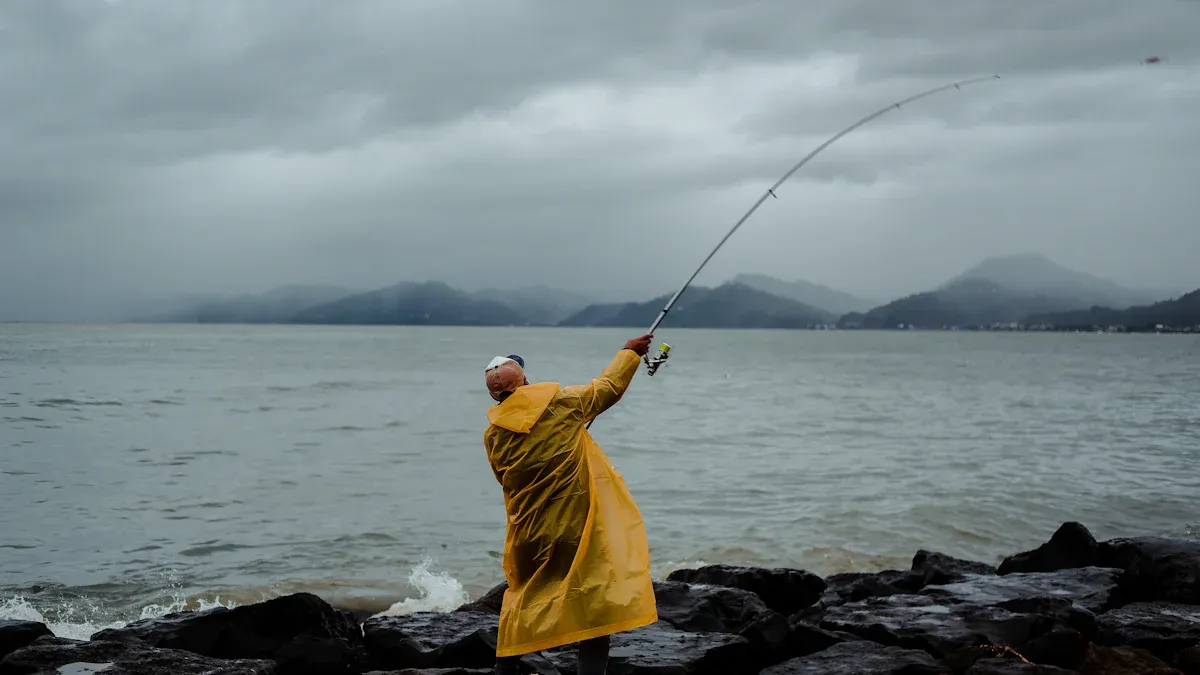
Mastering the cast is crucial for successful fly fishing. When you learn to cast a fly rod effectively, you increase your chances of catching fish and enjoying the experience. However, beginners often face challenges like improper technique and lack of confidence. Don’t worry! This post will help you overcome those hurdles and improve your casting skills.
Key Takeaways
Practice regularly to build confidence and improve your casting skills.
Focus on your grip and stance for better control and stability while casting.
Master the backcast to set up your forward cast for greater distance and accuracy.
Use proper techniques like mending to ensure a natural drift of your fly.
Learn from experienced casters by observing their techniques and timing.
Basics of Fly Casting
When you start fly fishing, understanding the basics of fly casting is essential. It sets the foundation for your success on the water. Let’s dive into the key components that make up your fly casting setup.
Fly Rod and Reel Setup
Your fly rod is the backbone of your setup. It’s crucial to assemble it correctly. Here’s how to do it:
Assemble the Fly Rod: Start with the butt section, align the guides, and connect all sections.
Attach the Fly Reel: Locate the reel seat, slide the reel foot, and secure it.
Attach the Backing: Tie an arbor knot and spool the backing onto the reel.
Attach the Fly Line: Connect the fly line to the backing and spool it onto the reel.
Attach the Leader: Use a loop-to-loop connection or nail knot to attach the leader to the fly line.
Attach the Tippet: Connect the tippet to the leader using a double surgeon’s knot.
Attach the Fly: Choose a fly and tie it to the tippet using an improved clinch knot or non-slip loop knot.
Types of Fly Lines
Choosing the right fly line is vital for effective casting. Different types of fly lines suit various conditions. Here are some key points to consider:
Fly lines come with different core types, such as braided monofilament and multifilament. Monofilament works well in warm waters, while multifilament is better for cold conditions.
The coating of the fly line determines whether it sinks or floats. For instance, tungsten powder makes lines sink, while micro air balloons enhance buoyancy.
The profile of the fly line affects energy transfer during casting. A longer belly allows for better long casts, while a shorter belly is ideal for shorter distances.
Role of the Fly
The fly plays a crucial role in your overall casting process. It’s not just about casting; it’s about presentation too. The down-and-across swing technique is particularly effective. This method allows you to cast at a 30- to 45-degree angle downstream, using the current to swing the fly across the stream. This technique works wonders, especially with longer flies like minnows and leeches.
By mastering these basics, you’ll develop good casting habits that lead to long-term success in fly fishing. Just like a golfer practices before a big game, you should practice your casting to ensure you’re prepared for your fishing trips.
How to Cast a Fly Rod
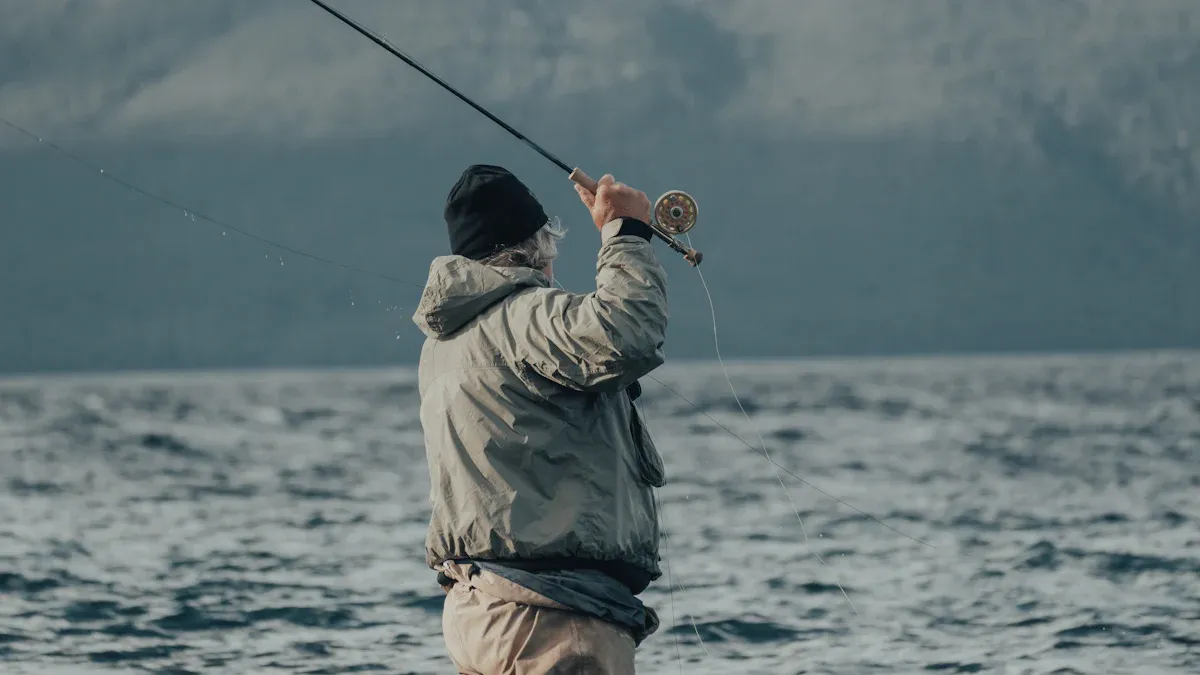
Grip and Stance
Your grip and stance are the foundation of effective casting. A proper grip allows you to control the rod better, while your stance provides stability. Here are some recommended grip techniques to maximize your casting accuracy:
Grip Technique | Description | Benefits |
|---|---|---|
Relax | Hold the rod with a relaxed grip to maintain feel and prevent injury. | Enhances rod responsiveness and reduces risk of injury from tension. |
Thumb on top | Traditional grip with thumb on top for optimal power application. | Provides driving power for overhead and roll cast techniques. |
Finger pointing | Index finger on top to minimize wrist movement. | Helps maintain a high back cast and corrects back cast issues. |
V grip (palm forward) | Hand rotated with palm facing forward for better wrist control. | Allows for crisper movements and higher line speed, improving casting accuracy. |
Borgers 3 point grip | Extended index finger and thumb for natural wrist position. | Offers stability and control, reducing excessive wrist movement during casting. |
Your stance also plays a crucial role in your casting mechanics. Coaches recommend placing your feet shoulder-width apart for balance. If you’re stepping into your cast, use your ipsilateral foot (the same side as your casting arm) to push off. This positioning helps maintain rod tip speed and line speed, which are vital for effective casting.
The Backcast
The backcast is a critical part of your casting technique. It sets up your forward cast and helps you achieve distance and accuracy. Here’s how to execute a proper backcast:
Keep your confidence: Imagine casting downriver and treat the backcast like a normal cast.
Pivot your body in the right position: Align your body with your target by turning left or right as needed.
Draw a straight line: Maintain a 180-degree angle between your intended target and your forward cast.
Stop your backcast: Aim for the normal 2 o’clock position. Avoid adding extra power at the end to maintain line speed and accuracy.
One common mistake during the backcast is known as “creep.” This happens when you start the forward cast too early, before the fly line can straighten. To correct this, slow down and allow the fly line to completely unroll before initiating your forward cast.
The Forward Cast
Now, let’s focus on the forward cast. This is where you apply power and control to send your fly line out. Here are the essential movements for an effective forward cast:
Smoothly apply power while accelerating.
Make an abrupt stop to form a tight loop.
Ensure the rod tip follows a straight line path.
Pause at the end of each stroke based on line length.
Adjust your stroke length to match the line length.
Timing is crucial here. When you time your cast correctly, the rod maintains its acceleration, maximizing power and distance. If you decelerate during the cast, you’ll lose energy, leading to poor presentation and missed opportunities.
Presentation and Drift
Presentation is key to attracting fish. You want your fly to look natural on the water. Here are some techniques to improve your presentation and drift:
Long Tippets: Use tippets that are three to four feet long to create slack and reduce drag.
Slack Line Casts: Techniques like the S cast or reach cast introduce slack into the line, helping maintain a natural drift.
Mending: Adjust the line’s position during the drift to counteract any drag caused by the current.
To execute a mend, start your forward cast smoothly. As the line unrolls, move your rod tip upstream for an upstream mend or downstream for a downstream mend. Hold the position as the line lands to maintain the desired mend. Once the fly lands, lower your rod to follow the drift naturally, ensuring the line remains slack for a drag-free presentation.
By mastering these casting techniques, you’ll enhance your fly fishing experience and increase your chances of landing that big catch!
Common Fly Casting Mistakes
Even experienced anglers make mistakes, but beginners often struggle with a few common issues. Let’s explore these mistakes, how to recognize them, and what you can do to improve your casting.
Overcasting
Overcasting happens when you apply too much power during your cast. This can lead to tangled lines and missed opportunities. Here are some signs you might be overcasting:
Your line lands in a heap instead of a straight line.
You notice excessive splashing as the fly hits the water.
You feel fatigued after casting, indicating you’re using too much effort.
To correct this mistake, focus on a smoother, more controlled motion. Here are some tips:
Start Slow: Begin with shorter casts to build confidence and control.
Use Less Power: Think of casting as a gentle flick rather than a hard throw.
Practice the Pause: Allow your rod tip to stop at the end of your cast. This helps maintain line tension and improves accuracy.
Poor Timing
Timing is crucial in fly casting. If your timing is off, you may struggle with accuracy and distance. Here are some signs of poor timing:
Your line collapses instead of extending fully.
You experience tangles or knots in your line.
You feel like your casts lack power.
To improve your timing, consider these strategies:
Synchronize Movements: Ensure your rod movements match the line’s motion. This prevents the line from collapsing.
Adjust for Conditions: Wind and distance can affect your timing. Be mindful of these factors and adjust your cast accordingly.
Practice the Backcast: A strong backcast generates power for your forward cast. Focus on making a crisp stop during the backcast to maximize energy transfer.
Incorrect Grip
Your grip on the rod can significantly impact your casting performance. An incorrect grip can lead to inconsistent casts and discomfort. Here are some signs you might have an incorrect grip:
You feel tension in your wrist or forearm.
Your casts are erratic or lack precision.
You find it hard to control the rod during the cast.
To correct your grip, try these adjustments:
Relax Your Hand: A relaxed grip allows for better control and reduces fatigue.
Experiment with Styles: Different grips, like the V grip or index finger grip, can help you find what feels best.
Maintain Consistency: Keep your grip consistent throughout your cast to avoid disruptions in your form.
By addressing these common mistakes, you can enhance your fly casting skills and enjoy a more successful fishing experience. Remember, practice makes perfect, so keep casting!
Tips for Improving Fly Casting
Practice Drills
To enhance your casting skills, you should incorporate structured practice drills into your routine. These drills help you focus on specific aspects of your casting mechanics. Here are some effective drills to try:
Drill Type | Focus Areas |
|---|---|
Warm Up | String up, stretch, roll out line 50-60’, mix overhead and roll casts. |
Back Cast Drill | Loop shape, tracking, hauling, line tension, 50’ carry extended with good form. |
Forward Cast Drill | Loop shape, tracking, hauling, line tension, 50’ carry extended with good form. |
Dynamic Roll Drill | 45’ casts slowly extended with good form. |
Accuracy Drills | Targets set at 50’, 60’, 70’, 80’, 90’; aim for 80% accuracy within specified radii. |
Odd Spot | Choose spey, specialty, or off shoulder casting. |
Filming for Feedback | Use a smartphone to record and analyze casting technique for improvement. |
Focus on shorter practice sessions to avoid fatigue. Mix drills quickly to keep things engaging. Using targets for accuracy rather than fixed distances can also help you improve your overall technique.
Watching Experienced Casters
One of the best ways to learn is by observing those who excel in fly casting. Watching experienced casters can provide you with valuable insights. Here’s what you can gain from this practice:
You’ll learn effective casting techniques by watching experienced fly casters.
Observing the nuances of casting motions and timing helps you understand critical aspects of fly fishing.
The importance of maintaining a tight loop becomes clear through visual examples.
Take the time to watch videos or attend local casting demonstrations. You’ll pick up tips that can significantly enhance your casting skills.
Using Casting Aids
Having the right tools can make your practice more effective. A ready-to-go practice kit that includes a rod, reel, leader, and practice aids like yarn or a clipped fly is crucial. This setup allows you to focus on your casting stroke without worrying about snagging. Here are some useful casting aids:
Casting Aid | Description |
|---|---|
Practice Flies | Using yarn or an old fly (hook cut off) helps focus on casting technique without snagging. |
Target Practice | Setting up markers like cones or hula hoops improves accuracy by challenging your casting skills. |
Short and Long Distances | Practicing short casts builds confidence before gradually increasing distance for varied scenarios. |
By incorporating these tips into your routine, you’ll see improvements in your casting skills. Remember, practice makes perfect!
Mastering fly casting takes time and practice, but it’s worth the effort! Here are some key takeaways to remember:
Regular practice builds your confidence and helps you adapt to new skills.
Persistence is crucial; keep trying different techniques and presentations.
Good casting form and line handling are essential for effective fishing.
Remember, patience is key in fly fishing. You won’t catch a fish every time, but each cast brings you closer to success. So, get out there, practice, and enjoy the journey! 🎣
FAQ
What is the best way to practice fly casting?
To practice fly casting effectively, focus on short sessions using drills. Set up targets to improve accuracy. Regularly practice your grip and stance to build muscle memory.
How do I choose the right fly for my fishing conditions?
Consider the water type, fish species, and time of year. Match the fly’s size and color to local insects or baitfish. Experiment with different flies to see what works best.
What should I do if my fly line keeps tangling?
Check your line for twists and kinks. Use proper casting techniques to maintain tension. Practice your backcast to ensure the line unrolls smoothly.
How can I improve my casting distance?
Focus on your timing and rod acceleration. Use a smooth, controlled motion and practice longer strokes. Gradually increase distance as you gain confidence.
What is the importance of mending in fly fishing?
Mending helps control the line’s drift, reducing drag on your fly. It allows for a more natural presentation, increasing your chances of attracting fish.