Book Appointment Now

Fishing Setup Balance: Improve Overall Performance

A balanced fishing setup boosts casting, hookups, and fight control without extra guesswork. Match rod action to target species and lure weight, choose a reel ratio that complements rod feel, and spool appropriate line and leader strength. Tune drag and guides for smooth casts and reliable hooksets. Add quick shore and boat safety checks, knot trials, and simple fixes to keep the day productive and stress-free.
Quick Balance Checklist for Fishing Setups
As you’re gearing up for a day on the water, balance matters more than you could envision, and a simple checklist keeps you calm and confident.
You’ll start with safety checks like life jacket fit, sharp hook covers, and a quick knot trial so you feel secure.
Next you’ll focus on ergonomic adjustments to your rod seat, handle length, and reel position so your shoulders and hands stay relaxed.
Then you’ll verify line-assessment versus rod rating and spool depth to avoid surprises.
Add lure choice, knot strength, and leader length to one list so you don’t miss steps.
Finally you’ll do a trial cast and tweak drag and grip.
You’ll belong to a calm crew once you follow this routine.
Match Rod Action to Species & Presentation
You’ll want to match rod action to the species you’re targeting so your hooksets and presentations feel natural and confident.
For smaller fish like trout or perch pick lighter, fast-action rods that give sensitivity and gentle play, while bigger or harder-fighting species need medium to heavy fast-tip rods for power and control.
Then tailor the action to the lure and presentation you’ll use so your casts, retrieves, and hooksets work together and you catch more fish with less frustration.
Match Rod Action To Species
Balance matters whenever you pick a rod for a trip, and matching rod action to the species you want makes the whole outing more fun and effective.
You’ll notice rod sensitivity helps you feel subtle strikes from picky panfish and trout, so pick lighter fast-action rods for those species habits. For bass and larger predators, you’ll want medium to medium-heavy fast-action rods to control hook sets and handle runs. Match power to size and action to how the fish bite.
You belong in this group learning together, so try varied rods on practice casts and share observations. Shift from light to heavier actions as you move from open water to cover, keeping confidence and consistent performance on every cast.
Tailor Action To Presentation
As you select a rod for a day on the water, consider how you’ll present the lure as much as which species you’re after, because the way a bait moves and how fish strike it changes what action you need. You want a rod that matches presentation timing and tip stiffness so your lure reads true and your hook sets land.
In case you twitch jigs or softbaits slowly, a softer tip and moderate action keeps bites hooked and feels subtle strikes. Should you rip lipless cranks or need quick hookup, pick faster tip stiffness and a quicker action to drive hooks.
Reflect about cover, casting distance, and the species you share the bank with. You belong to anglers who fine tune gear to feel confident and catch more.
Pick Reel and Gear Ratio for Your Rod
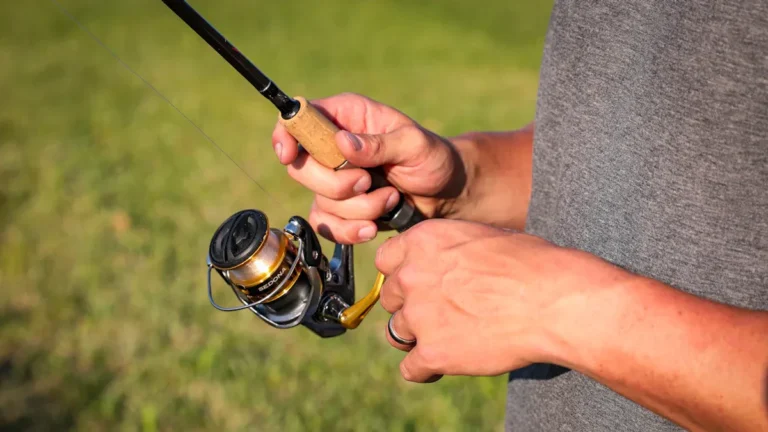
You’ll want a reel that matches the technique you fish most, so pair a 2000–3000 spinning reel with light mono for finesse work and pick a higher-capacity reel like a 5000 for heavier lines and bigger lures.
Choose a gear ratio that fits your presentation: moderate 6.1:1 to 6.4:1 for spinnerbaits and cover work, and fast 7.1:1 to 8.5:1 for lipless cranking and quick retrieves.
As you read on, we’ll link each reel size and ratio to rod choices and line setups so you can build balanced, confidence-boosting combos.
Match Reel To Technique
Pick a reel that works with your rod and fishing style, and you’ll notice casts and hook sets feel easier and more confident.
You want comfort and belonging on the water, so match reel type to technique. High speed reels fit fast retrieves and bitey lures, giving you cadence control whenever you need quick snaps. For steady presentations pick a smooth moderate speed reel to keep pace and feel. Consider drag capacity and line capacity so your reel supports the rod and line you trust.
- Use a size 2000 to 3000 spinning reel for light rods and finesse techniques.
- Choose high speed reels for lipless crankbaits and active retrieves.
- Pick a smooth moderate reel for spinnerbaits near cover.
- Confirm spool capacity matches your line and planned casts.
Choose Optimal Gear Ratio
Once you’re matching a reel to your rod, gear ratio decides how your setup feels on every cast and retrieve, so it’s worth getting right. You’ll pick ratios that match lures and pace. High speed retrieves work for lipless crankbaits and fast jigs. Moderate ratios suit spinnerbaits and controlled presentations. Don’t buy into gear ratio myths that say higher is always better. Listen to others, but choose what fits your rod, line, and lures so you feel confident and included.
| Ratio | Use | Feeling |
|---|---|---|
| 8.0 7.1:1 | Lipless crankbaits | Fast and aggressive |
| 6.1 6.4:1 | Spinnerbaits | Steady and controlled |
| 5.2 5.7:1 | Big lures | Power over speed |
Trust your crew and trial reels together to find balance.
Choose Line Type and Test Pound-Strength
Choosing the right line type and trial pound strength matters more than you might believe, and getting it right will save you frustration and lost fish. You want a line that feels like part of the team. Consider braid vs. monofilament based on cover and cast distance, and check knot strength every time you tie on a new lure or leader. Assess pound strength through pulling steadily and noting stretch and break point.
- Match fish and cover to line choice so you trust hookups.
- Use braid for sensitivity and thin diameter, mono for stretch and shock absorption.
- Tie strong knots, evaluate them, and trim tags neatly.
- Run a fluorocarbon leader when clarity or abrasion resistance matters to keep bites.
Match Lure Weight for a Balanced Setup
Get your lure weight right and you’ll feel the difference the moment you cast. You want balance that connects rod, reel, line, and lure so each cast feels smooth and confident.
Start by matching lure weight to your rod’s rated range and your line rating. That keeps weight distribution balanced along the setup and prevents tip flop or heavy pulls.
Pay attention to lure harmonics too. Lure harmonics affect vibration and bite detection, so a mismatched weight hides subtle taps. Try slightly heavier or lighter lures until you hear and feel clear, rhythmic vibration through the blank.
Practice on shore with several lures. You’ll learn what each combination sounds like and which weight gives solid casts, true action, and shared trust with your gear.
Tune Drag, Reel Seat, and Guides for Smooth Line Flow
At the point you fine tune drag, reel seat, and guides, you’ll observe your casts become smoother and your hookups far cleaner. You’re part of a crew that cares about small details. Start with drag tuning so your line stops fish without surprise. Next, snug the reel seat so the reel won’t shift under load. Then check guide alignment for true line flow and less friction. These steps work together and build confidence.
- Inspect drag clicks and set gradual tension for common species you target.
- Tighten reel seat by hand then a slight turn with a cloth.
- Align guides visually from butt to tip, correct any offset.
- Trial casts, listen, feel, and adjust until the system sings.
Shore & Boat Checks Plus Troubleshooting Common Imbalances
Once you step onto the bank or climb into the boat, take a calm, methodical sweep of your gear and surroundings so small imbalances don’t spoil the day. Use a shore checklist to scan rod alignment, reel seat tightness, spool fill, knot integrity, and tackle placement. Check footprints, wind, and casting room.
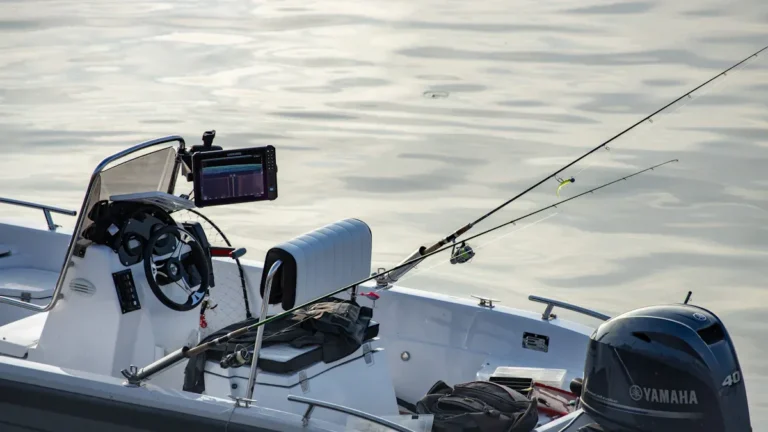
In a boat, run boat troubleshooting: secure rods, trial anchor or drift, confirm battery for electronics, and balance weight fore to aft. Should your casts pull left, tweak reel handle or guide alignment. Were lures to sink unevenly, inspect split rings, swivel wear, and rigging knots. Talk with mates, share fixes, and trade quick checks. You’ll fish safer, feel supported, and enjoy steadier performance together.
Frequently Asked Questions
How Often Should I Re-Spool Line for Peak Performance?
You should re-spool line every season or sooner; replace annually is a good baseline, but you’ll monitor abrasion after heavy use, long casts, or foul encounters so your gear stays reliable and your group trusts you.
Can Rod Grip Materials Affect Bite Sensitivity?
Yes - cork vs. EVA changes tactile feedback: cork’s warmth and texture enhances sensitivity and connection, while EVA’s grip and cushioning reduce fatigue and noise; you’ll choose comfort, feel, and shared confidence with fellow anglers.
Should I Match Lure Color to Line Type or Water Clarity?
You should match lure color to water clarity initially, and line type second; favor color contrast in stained or clear water, do visibility trials in conditions together, and trust communal feedback whenever adjusting choices.
Do Handle Length and Reel Seat Position Change Casting Balance?
Yes - you’ll feel butt weight shift as reel seat position moves, changing the rod’s balance point and casting comfort; you’ll prefer setups that center weight for longer sessions so you’re confidently connected and included.
Is Backing Necessary on Ultralight Freshwater Setups?
No-you don’t need backing on ultralight freshwater setups, but should you crave security, adding a slim double braid or using spool adapters gives extra capacity and confidence, making your small-team fishing feel unified and ready.