Book Appointment Now

Fishing Reel Drag System: Control Big Fish Better

The reel drag lets you control big fish without losing gear or confidence. Stacked washers create smooth resistance, and carbon fiber handles long runs while felt suits lighter freshwater. Set drag around 25 percent of line strength and trial it on casts to fine-tune tension. Regular adjustment and maintenance keep fights calm and controlled, making each trip worth picking up the rod again.
Who This Guide Is For and What to Expect
Should you’re new to fishing gear or you’ve tangled with a stubborn fish more than once, this guide is for you; it’ll walk you through drag systems in a clear, friendly way so you can feel confident at the water. You’re part of a crew that includes beginner anglers and shore fishermen who want to learn without judgment.
You’ll get practical, steady explanation that respects your progress and answers common worries about gear and line. Expect plain steps, everyday examples, and tips you can try next time you cast.
You’ll learn how drag helps protect your line, once to start with light settings, and how practice builds feel. You won’t get overloaded, just solid guidance that fits your pace.
How Reel Drag Systems Work
Once a fish takes line, the drag system steps in like a smart, forgiving brake so your line doesn’t snap; it does this through using friction between stacked disks or washers that press together as you tighten the drag.
You feel the tension change as compression increases, slowing line release and protecting your knot and leader. Tighten for more resistance, loosen for easier spool out.
Modern materials and material evolution mean pads last longer and feel smoother, but watch for thermal degradation during long runs since heat can soften washers and change drag feel.
You’ll learn to trust the drag like a teammate. Adjusting on the fly keeps you in control, builds confidence, and helps you land the fish without panic.
Drag Types and Best Fish Targets
Because choosing the right drag type can make or break your day on the water, you’ll want to match the drag system to the fish you’re hunting and the line you trust.
You’ll find carbon fiber and felt drag materials on many reels. Carbon fiber feels smooth and resists heat for long runs, great for pelagic saltwater and larger boat fishing trips. Felt drags give a softer stop that can suit some freshwater techniques whenever you want gentle give for panfish or trout.
Lever drag and star drag each serve specific target species. Lever drag shines for tuna and heavy bottom fish whenever you need instant, repeatable pressure. Star and front drags work well for bass, walleye, and inshore species.
Drag Settings for Different Line Types and Pound-Tests
You’ll want to match your drag to the line type and pound-test so you don’t lose fish or snap your gear. Start around 25% of the line’s breaking strength and adjust via hand-pulling the line or using a scale to fine-tune for braid, fluorocarbon, or monofilament.
Recall braid needs a slightly lighter feel because it has less stretch, while mono and fluoro let you set the drag a bit higher for shock absorption.
Matching Drag To Line
Match your drag to the line so you don’t lose fish or snap your gear. You want drag settings that honor your line type and preserve knot security while reducing line memory problems.
For braided line, set a gentler bite because braid has low stretch and high shock transfer. For monofilament, allow a bit more give since stretch absorbs surges. Fluorocarbon needs careful balance because it hides abrasion yet can be stiff.
try settings manually pulling and by using your rod to simulate runs. Check knots before each cast and retest after heavy fights. Share tips with your crew so everyone knows the feel you trust. This keeps you connected, confident, and more likely to land fish together.
Pound-Test Drag Guidelines
After checking knots and feeling how your drag responds to practice pulls, it helps to set specific drag values based on line pound-grade so you don’t guess during a fight.
You’ll usually start near 25 percent of the line’s breaking strength, so a 12 pound gauge gets about 3 pounds of drag.
For lighter gauges you’ll scale down, for heavier gauges you’ll scale up, and you’ll check via hand pulling or with a scale.
In ice fishing you might go slightly lighter to protect thin tippets while still keeping pressure.
In tournament strategy you’ll set consistent repeatable drag so every cast feels the same.
Trust your feel, mark your settings, and practice so teammates and you share the same reliable setup.
Adjusting For Line Type
Once you change line type or pound-test, you’ll need to rethink your drag so fights stay fair and your gear survives. You’ll notice braided line lets you set lighter drag because it has low stretch and high sensitivity. Coated monofilament feels springier and needs a bit more give because of line memory and stretch. Should you switch pound-tests, scale drag to about 25 percent of the break strength, then fine tune using hand pull.
| Line Type | Drag Tip |
|---|---|
| Braid | Lower initial drag, watch sudden runs |
| Coated monofilament | Add modest extra drag for stretch |
| Fluorocarbon | Similar to mono, less memory |
| Heavy mono | Higher drag, protect knots |
You belong here. Trust your feel, practice, and adjust alongside friends.
How to Set Drag Before You Cast
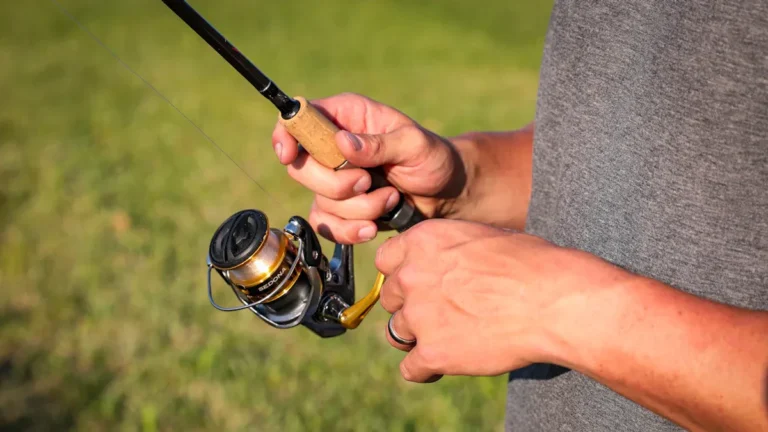
Start with feeling the drag with your fingers and a calm, confident touch. As part of your pre cast ritual, you’ll check that hand pull gives steady resistance about a quarter of line strength. Set the knob or star so line resists but still pulls smoothly. Should you possess a scale, clip it and confirm the target poundage for your line.
Consider weather adjustments next since cold can stiffen line and heat loosens it. Tighten a bit in cold or loosen in heat, examining by hand after each small change.
You’ll want predictable, even drag so the fish gets fair pressure without shock. Trust your touch, share tips with buddies, and practice until it feels right.
How to Adjust Drag During a Fight
You’ll feel your heart race as a rod starts to bend and the fish runs, so adjust the drag calmly and deliberately to keep control without breaking the line.
You’ll want real time communication with your reel, so listen to the sound of the spool and feel line flow through your fingers. Use steady pressure, easing drag when the fish screams and tightening slightly when it tires. Practice hand repositioning on the rod to shift leverage without jerking the line. If you need to change settings, make small clicks and trial by hand pulling. Stay connected to your crewmates, share cues, and trust your feel. You’ll land more fish when you act deliberate, calm, and together.
Common Drag Problems and Quick Fixes
After calming your nerves and feeling the reel sing during a fight, you’ll also notice whenever something’s off with the drag. You want fixes that are quick, clear, and that help you stay connected to your crew on the water. Check these common issues and simple remedies.
- Sticky drag: try freeing the spool by lightly pulling line while you wiggle the drag knob calibration to restore smoothness.
- Slipping drag: tighten cautiously and trial hand pulling line to avoid overdoing it.
- Noisy drag: inspect for grit, gently rinse and dry, then recheck tension.
- Jerky braking: look for uneven drag pads or misaligned washers and adjust.
- Snagged line remedies: clear tangles and retie poor knots before fighting a fish.
Maintenance Tips to Keep Your Drag Smooth and Reliable
Regularly caring for your reel’s drag keeps it smooth, reliable, and ready once a big fish hits, and you’ll thank yourself on long days whenever everything needs to perform.
Keep a simple lubrication schedule so you wipe salt and dirt after each trip, do light oiling monthly, and deeper service every few seasons.
Inspect drag washers for glazing or wear and plan washer replacement whenever friction feels uneven.
Clean plates gently with a soft cloth and approved cleaner, then reassemble carefully, checking drag with hand pulls.
Store reels dry in a padded case and avoid sand exposure.
Share chores with your crew and swap tips so everyone keeps gear ready.
You’ll fish longer and worry less whenever you maintain your drag.
Upgrading Reels: Choosing a Stronger Drag for Bigger Fish
Considering about stepping up to bigger fish means upgrading your reel’s drag so it won’t let you down once a powerful run starts. You want gear that feels reliable and like it belongs in your hands. Look for carbon fiber drag washers for consistent, smooth pressure and less fading during long fights. Combine that with custom gearing whenever available to match your rod power and line strength. You’ll feel more confident landing bigger fish and sharing stories with your crew.
- Choose carbon fiber washers for heat resistance and smooth feel
- Match drag max to about 25% of your line breaking strength
- Opt for custom gearing to tune engagement and gear ratio
- trial drag under load with a scale before heading out
- Prioritize user friendly controls you trust during a fight
Frequently Asked Questions
Can Drag Be Adjusted Remotely From the Rod While Fighting a Fish?
Yes - you can. Like a telegraph operator in a steamship cabin, you’ll use a remote lever or bluetooth adjustment to tweak drag from the rod, and you’ll feel supported via your fellow anglers’ confidence.
Will Drag Performance Change With Temperature or Water Exposure?
Yes - you’ll notice temperature effects and water intrusion can alter drag performance; cold stiffens washers and saltwater corrodes or swells pads. You’ll want regular cleaning, drying, and greasing so your crew’s gear stays reliable.
Can I Mix Different Drag Washer Materials for Custom Feel?
Yes-you can mix carbon fiber pairing with felt combination washers to tweak feel; you’ll find smoother starts and increased bite, and you’ll belong to anglers crafting personalized drags, so trial carefully to avoid uneven wear.
Does Backing Material Affect Drag Effectiveness on the Spool?
Yes - you’ll notice braid backing sits thin and slips differently under drag, while nylon backing adds cushion and grip; you’ll want consistent backing choice so your reel’s drag performs smoothly and your fishing crew trusts your setup.
Are Electronic Drag Systems Worth the Investment for Casual Anglers?
They’re usually not worth it for casual anglers: cost vs benefit rarely favors you, and battery concerns add hassle; stick with smooth mechanical drags unless you crave tech, social bragging rights, or frequent precision tuning.