Book Appointment Now

7 Best Yakima Kayak Racks for 2026 (Paddle Ready)
ByIMRAN
A concise overview compares seven top Yakima kayak racks for 2026, emphasizing paddle-ready features, secure transport, and corrosion-resistant materials. Each entry highlights loading style-J-cradle, SweetRoll, or keel support-capacity, and install ease, with remarks on lock compatibility and fold-flat profiles. Practical trade-offs and mounting compatibility are outlined next, offering guidance on matching a rack to kayak type and roof system.
YAKIMA SweetRoll Rooftop Boat Loader Rack (1 Boat)
--
Should you frequently load a single kayak or small boat unaided and want a fast, low-effort solution, the YAKIMA SweetRoll Rooftop Boat Loader Rack is a great pick: it carries one boat up to 80 lbs., uses rear saddles with integrated rollers for effortless loading, and installs tool-free in about 10 minutes. You’ll appreciate the spring-loaded base that auto-adjusts to your hull while integrated rollers let you slide the boat on without strain. Smooth molded pads protect against dings, and the tilting paddles fit most boats. It fits Yakima and factory crossbars (min 24″ spread), includes straps, and ships fully assembled.
Best For: Solo paddlers who frequently load a single kayak or small boat and want a fast, low-effort rooftop loading solution.
Pros:
- Spring-loaded base and integrated rollers let one person load up to an 80 lb boat with minimal effort.
- Smooth molded pads protect the hull from scratches and dings during transport.
- Tool-free installation, ships fully assembled, and compatible with most Yakima and factory crossbars (min 24″ spread).
Cons:
- Holds only one boat, so not suitable for carrying multiple boats without additional racks or pads.
- Maximum capacity of 80 lbs may be insufficient for heavier kayaks or small boats.
- Requires a minimum 24″ crossbar spread and compatible crossbars, which may not fit all vehicles.
Thule Hull-a-Port XTR Kayak J-Style Roof Rack

Should you frequently haul one or two kayaks and want fast, low-profile loading, the Thule Hull-a-Port XTR is a strong choice-its dual-position J-cradle lets you carry a single boat upright or stack two securely, and the upright folds flat whenever not in use to cut wind drag. You’ll get a pre-assembled J-style rack that clamps to universal load bars up to 80.5 mm wide, with quick shifts between single and double configurations. Integrated StrapCatch keeps straps manageable during loading, and it accepts Thule One Key System lock cylinders (sold separately) for security. Installation and use are straightforward.
Best For: Outdoor enthusiasts who frequently transport one or two kayaks and want a quick, low-profile, and secure J-cradle roof rack that’s ready to use out of the box.
Pros:
- Dual-position J-cradle supports upright single-boat carry or stacked two-boat transport for versatility.
- Folds flat when not in use to reduce wind drag and for low-profile storage.
- Pre-assembled with Integrated StrapCatch for easier loading and fits universal load bars up to 80.5 mm.
Cons:
- Locks require purchase of Thule One Key System cylinders separately for integrated security.
- Limited to roof bars no wider than 80.5 mm, which may not fit some aftermarket bars.
- May be bulkier or heavier than simpler single-purpose kayak carriers.
FORWODE J-Bar Kayak Roof Rack (2 Pair)
--
Should you need a heavy-duty, low-profile roof solution for hauling two kayaks, the FORWODE J-Bar (2-pair) delivers-its widened, 25 mm carbon-steel frame and 1.2 mm wall thickness support up to 160 lb while resisting rust for long-term outdoor use. You’ll appreciate the folding J-bar that adjusts 0°–180° for different hulls and folds flat for storage. Thickened rubber protectors and 1 cm foam padding guard kayaks and crossbars. Adjustment parts use carbon steel, not plastic. Included are four ratchet belts, four 10 ft S-hook pulley straps, and four anchor belts. Don’t exceed manufacturer load limits; customer service handles after-sales questions.
Best For: Outdoor enthusiasts and small-group kayakers who need a durable, low-profile roof rack capable of safely transporting two heavy kayaks while offering adjustable, foldable J-bar support and on-rack paddle storage.
Pros:
- Heavy-duty carbon-steel frame (25 mm diameter, 1.2 mm wall) and widened design support up to 160 lb for two kayaks.
- Adjustable 0°–180° folding J-bar and fold-flat storage make it versatile for various hull shapes and convenient when not in use.
- Protective features (thickened rubber protectors and 1 cm foam padding) plus carbon-steel adjustment parts enhance durability and reduce risk of scratches.
Cons:
- Load limit (160 lb) may be insufficient for very heavy tandem kayaks or gear-heavy trips-must follow vehicle and accessory weight limits.
- Steel construction, while rust-resistant, is heavier than aluminum alternatives and may add more roof weight.
- Installation and handling of two-pair J-bar sets and multiple straps can be more complex and time-consuming than simpler mounts.
YAKIMA DeckHand Roof-Mount Boat Rack Mounts
May 10, 2026 4:33 am
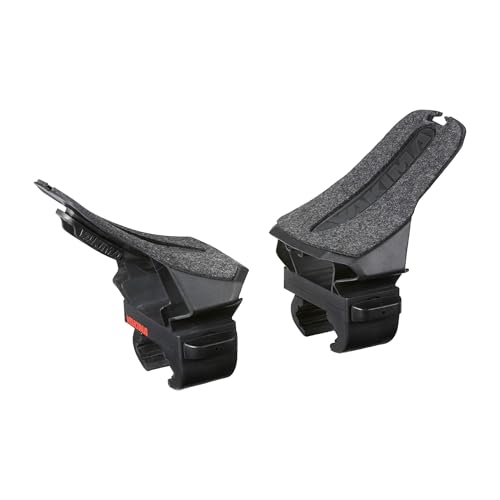
Should you haul different boats or need a quick, tool-free setup, the YAKIMA DeckHand roof-mount boat rack is a smart choice for outdoor enthusiasts who want a versatile, protective carry solution. You get a single set of mounts with heavy-duty straps, bow and stern tie-downs, and all necessary hardware; recall you’ll need two sets to carry gear. The universal mounts fit round, square, and factory crossbars with a minimum 24-inch spread-check Yakima’s Fit My Car Tool for compatibility. Soft felt padding and an oversized cradle protect varied hull shapes. It installs without tools and accepts SKS lock cores.
Best For: Outdoor enthusiasts and casual boaters who need a quick, tool-free, versatile roof-mount solution for transporting kayaks, canoes, or small boats on a variety of crossbars.
Pros:
- Universal mounting hardware fits round, square, and factory crossbars with a minimum 24″ spread for broad compatibility.
- Soft felt padding and an oversized cradle protect different hull shapes from scratches and dings.
- Tool-free installation with included straps and tie-downs makes setup fast and convenient; accepts SKS lock cores for added security.
Cons:
- One set carries only a single hull position; you need two sets (sold separately) to carry most boats, increasing cost.
- Compatibility still depends on crossbar spread and vehicle fit-must verify with Yakima’s Fit My Car Tool.
- SKS lock cores are sold separately, so additional expense is required for keyed security.
Yakima – JayHook Rooftop Mounted Kayak Rack for Vehicles, Carries 1 Kayak
May 10, 2026 12:05 am

Should you often paddle solo and need a fast, secure rooftop solution, the Yakima JayHook is a smart pick because its J-shaped padded cradle makes loading and unloading a single kayak simple while protecting your hull. You can carry one kayak up to 80 lbs; the cradle fits any kayak type and frees roof space for other gear. Universal mounting hardware attaches to most crossbars (minimum 24-inch spread) and installs tool-free in about 10 minutes. Yakima supplies heavy-duty straps and bow/stern tie-downs so you’ll have all necessary hardware to secure the boat. Check YAKIMA Fit My Car Tool for vehicle fit.
Best For: Solo paddlers who need a quick, secure rooftop solution to carry one kayak while preserving roof space for additional gear.
Pros:
- Tool-free, ~10-minute installation with universal hardware that fits most crossbars (min. 24″ spread).
- J-shaped padded cradle simplifies loading/unloading and protects the kayak hull.
- Includes heavy-duty straps and bow/stern tie-downs so you have all necessary security hardware.
Cons:
- Carries only one kayak (up to 80 lbs), so not suitable for transporting multiple boats.
- Universal fit may still require checking YAKIMA Fit My Car Tool for vehicle compatibility.
- Requires adequate crossbar spread (minimum 24″), which some roofs or rack setups may lack.
Yakima Showdown Roof Mount for 1 Kayak/2 SUP

Should you often switch between kayaking and paddleboarding, the Yakima Showdown is ideal - its slide mechanism tilts 26 inches for easy side loading so you won’t struggle lifting heavy boats overhead. You’ll carry one kayak or two SUPs on a lightweight, 23-pound rack that folds flat to cut drag and noise whenever not in use. Felt-covered cradles flex to match hull shapes and support up to 80 pounds. The 42 x 9 x 9-inch unit mounts to your roof with the SpeedClamp tool-free system and includes heavy-duty straps plus bow and stern tie-downs for secure transport.
Best For: Outdoor enthusiasts who frequently alternate between kayaking and paddleboarding and want an easy, lightweight roof rack for side loading and secure transport.
Pros:
- Slide mechanism tilts 26 inches for effortless side loading and unloading.
- Folds flat to reduce drag and noise when not in use.
- Felt-covered cradles that flex to conform to hulls and support up to 80 pounds.
Cons:
- Carries only one kayak (or two SUPs), which may be limiting for some users.
- At 23 pounds, not the lightest option for frequent installation/removal.
- Requires strap and tie-down securement rather than an integrated locking system.
YAKIMA – KeelOver Rooftop Mounted Canoe Rack for Vehicles, Carries 1 Canoe
--
In case you regularly haul a single canoe and want a secure, roof-mounted solution that installs in minutes, the Yakima KeelOver is a smart choice-its universal design fits round, square, factory, and aerodynamic crossbars and includes straps, bow/stern tie-downs, and over-molded rubber cushioning to protect your canoe and bars. You’ll carry one canoe on a rooftop rack that bolts to your crossbars; minimum spread is 24 inches for boats under 14 feet and 30 inches for longer boats. It ships with all hardware, dual bolts, and padding to protect gunwales and bars. Use Yakima’s Fit My Car tool to confirm fit.
Best For: anyone who regularly transports a single canoe and needs a quick, secure rooftop mounting solution compatible with most crossbars.
Pros:
- Universal fit for round, square, factory, and aerodynamic crossbars with simple, tool-free installation.
- Includes straps, bow/stern tie-downs, dual bolts, and all necessary hardware for immediate use.
- Over-molded rubber cushioning and padding protect canoe gunwales and crossbars from damage.
Cons:
- Designed to carry only one canoe, so not suitable for multi-boat hauling without additional racks.
- Requires sufficient crossbar spread (minimum 24″ for <14' boats, 30" for >14′), which may not fit all vehicles.
- May require checking Yakima’s Fit My Car tool to confirm compatibility, adding an extra step before purchase.
Factors to Consider When Choosing a Yakima Kayak Rack
Upon choosing a Yakima kayak rack, attention should be paid to weight capacity limits and whether the rack mounts compatibly with the vehicle’s roof or existing crossbars. Practical loading and unloading design, along with hull protection features, affect both ease of use and boat longevity. Security and locking options complete the assessment to guarantee the kayak stays safe during transport.
Weight Capacity Limits
For safe transport, the rack’s published load rating must meet or exceed the combined weight of the kayak plus any accessories and mounting hardware. Prospective buyers should match per-boat capacity to actual hull weight; many roof-mounted racks are around 80 lb per hull, so heavier kayaks or SUPs require higher-capacity models. The rack rating must also respect crossbar and vehicle roof load limits to prevent overloading. Allow a safety margin (typically 10–20%) beneath the listed capacity to accommodate dynamic forces from bumps, braking, and wind. Finally, confirm that adjustment and attachment hardware-bolts, straps, and bases-are rated to the same load class as the rack to guarantee the entire system performs to the published specification.
Mounting Compatibility Options
Considering vehicle and crossbar compatibility is the initial step in selecting a Yakima kayak rack, since mismatched bars, spreads, or load ratings will prevent proper installation or unsafe operation. Confirm crossbar type and dimensions-round, square, factory/aero-and maximum width requirements, as many mounts demand specific shapes to clamp securely. Check minimum crossbar spread (often ~24 inches) and adjust for longer boats needing wider spacing to maintain stability. Verify both vehicle roof and crossbar load capacities so rack plus kayak remain within safe limits. Prefer mounts with tool-free attachment or adjustable clamps whenever frequent installation and removal are expected. Finally, make certain mounting hardware is compatible with any integrated locking system or lock cores intended for theft deterrence and security.
Loading And Unloading
With attention to ease and safety, loading and unloading performance should be a primary criterion when selecting a Yakima kayak rack. Buyers should prioritize built-in rollers or tilting mechanisms that reduce lifting height by about 20–26 inches, enabling easier side loading. J-style or cradle designs that accept a kayak on its side or at an angle minimize overhead lifts and strain. Spring-loaded or adjustable bases that conform to the hull stabilize the boat during placement and prevent sudden shifts. Integrated pads and non‑marring contact surfaces facilitate sliding or rocking the kayak into position without damage. Finally, strap‑management features-guides, catches, or integrated tie‑offs-keep straps organized and allow one person to secure the kayak reliably after loading.
Hull Protection Features
Upon evaluating hull protection features, buyers should prioritize substantial, well‑secured padding and smooth contact points that distribute load and prevent abrasive wear. Thick molded or felt‑covered cradle padding-around 1 cm foam or equivalent-cushions and spreads pressure to avoid scratches and localized stress on gelcoat or composite hulls. Smooth, contoured pads or over‑molded rubber contact points further reduce point loads and dings. Integrated rollers or spring‑loaded bases that permit sliding the kayak onto the rack minimize dragging and loading abrasions. Confirm padding covers primary contact areas such as gunwales and hull seams and is fastened to resist shifting or rubbing under load. Prefer corrosion‑ and UV‑resistant materials that retain cushioning and shape through repeated exposure and long‑term use.
Security And Locking
After confirming adequate hull protection, attention should shift to how the rack and its accessories secure both the kayak and the system to the vehicle. A lockable mounting system or integrated lock cylinders that fasten the rack to crossbars reduces easy removal by thieves. Kayaks should be secured with bow and stern tie-downs plus a secondary transom or hull strap, routing webbing to eliminate slack and minimize rubbing. Select racks and straps rated for the kayak’s weight including gear, and inspect webbing and buckles for UV or abrasion damage before each trip. Consider a hull‑lock cable or bow‑loop lock threaded through the kayak and around crossbars for added deterrence while parked. Always follow manufacturer torque and installation guidelines and recheck locks after 10–20 miles and periodically on long trips.
Storage And Foldability
At the time of evaluating storage and foldability, buyers should prioritize whether the rack collapses to a low profile or folds flat for reduced wind drag and easier garage or on‑wall storage. Measure folded height and width to confirm fit in a garage, carport, or on‑wall location. Prefer folding mechanisms that lock securely in both deployed and stowed positions to prevent accidental movement during transport or handling. Tool‑free folding parts simplify on‑vehicle shifts and allow compact storage without partial disassembly. Verify hinge durability and corrosion resistance so repeated folding does not accelerate wear; reinforced pivots maintain alignment and function. Clear specifications on folded dimensions and locking features help compare models and avoid storage or safety compromises.
Material Durability Factors
Considering longevity and real-world exposure is essential while evaluating a Yakima kayak rack’s materials and construction. Preference should be given to corrosion-resistant metals-powder-coated steel or aluminum-with specified wall thicknesses and tube diameters, since thicker walls and larger diameters increase load strength and service life. Contact points require UV-resistant, closed-cell foam or thick molded rubber padding (≈1 cm or greater) to prevent hull abrasion and resist sun and salt degradation. Adjustment and hinge components must use metal hardware rather than plastic so pivots and locks resist fatigue under repeated loading. Corrosion protection-galvanization, stainless fasteners, or durable powder coats-is critical for marine or salted-road exposure. Finally, confirm rated capacity and that reinforced frames, welded joints, and materials match expected static and variable transport loads.
Included Straps Accessories
Material choices and sturdy hardware set the foundation for rack longevity, but proper straps and accessories determine whether a kayak remains secure and damage-free on the road. Included straps should be rated for marine use with a clearly marked working load limit or breaking strength-nylon cam or ratchet straps rated roughly 500–1,000 lb are recommended for tie-downs. The package ideally contains bow and stern tie-downs plus longer roof-to-vehicle straps or cradles to avoid separate purchases. Corrosion-resistant hardware (stainless or zinc-plated hooks/buckles) and UV-resistant webbing extend service life in sun and salt. Ratchet or cam-buckle designs with 1–1.5 inch webbing and quick-release features provide adjustable, reliable tension. Padding or protective sleeves where straps contact hulls and crossbars prevents scratching and spreads pressure evenly.
Frequently Asked Questions
Can Yakima Racks Be Used on Non-Yakima Crossbars?
Like a key fitting a different lock, yes-Yakima racks often work on non‑Yakima crossbars provided compatible with bar shape, width, and load specs. The installer verifies adapter fit, torque, and weight limits before touring.
Do These Racks Accommodate Sit-On-Top Kayaks With Gear?
Yes. They accommodate sit-on-top kayaks with gear, provided straps and tie-downs secure wider hulls and protruding items; weight limits and cradle spacing must be observed. The installer verifies load distribution and legal tie-downs before travel.
Are Any Models Compatible With Factory Roof Rails Without Crossbars?
Some models can, though they prefer discreet adapters; Yakima’s rail-specific mounts might accept finished factory rails without crossbars using rail-mount hardware, but compatibility depends on rail profile and often requires vehicle-specific adapters for secure fitment.
Can I Install These Racks Without Drilling Into My Vehicle?
Yes. They can be installed without drilling: most Yakima kayak racks use clamp, strap, or tower pad systems compatible with factory rails or raised gutters, avoiding permanent modification while still providing secure, tool-assisted mounting.
Do Any Yakima Racks Include Theft-Deterrent Locks?
Yes. Yakima includes theft‑deterrent locks on many of its racks and accessories-LockNLoad, SKS (Same Key System) and integrated cable locks-providing keyed security for towers, cradles and tie‑downs to deter opportunistic theft.