Book Appointment Now

6 Best Warm Water Aquarium Plants for 2026
ByIMRAN
You’re picking plants that’ll make your warm water tank look alive without constant fuss. Start with hardy Amazon Swords for structure, add Java fern and Anubias on driftwood for texture, tuck crypts and Vallisneria into mid and back areas for depth, and float Salvinia minima for surface cover. Choose mixed beginner packs or a California bundle for variety and pest-free stems, match light and substrate to each species, and you’ll be set to upgrade your aquarium vibe.
Amazon Sword – Echinodorus Bleheri x3 Plants – Live Aquarium Plant
May 9, 2026 10:07 am

Should you want an easygoing centerpiece that thrives in warm, low-light tanks, the Amazon Sword Echinodorus bleheri is a perfect pick for both new and seasoned hobbyists. You’ll get three sturdy plants that form solitary rosettes and reach 20 to 50 cm, so plan for a large aquarium. They grow toward available light and might need pruning to stop shading lower plants. Use a nutritious substrate to enhance growth and root health. These hardy plants tolerate poor illumination, suit beginners, and also reward experienced keepers. With gentle care and timely trimming, you’ll enjoy a reliable, lush focal species.
Best For: hobbyists seeking a hardy, low-maintenance centerpiece plant for medium to large warm aquariums that tolerates low light.
Pros:
- Attractive, robust focal plant that grows 20–50 cm and forms solitary rosettes.
- Tolerates poor illumination and is suitable for beginners.
- Responds well to nutritious substrate and rewards pruning for size control.
Cons:
- Mature size may overwhelm small tanks-best in larger aquaria.
- Grows toward available light and can shade lower plants, requiring regular trimming.
- May need richer substrate to reach full potential, adding setup cost.
Live Freshwater Aquarium Plants 5-Pack (Grower’s Choice)

In case you want an easy, low-stress way to green up your warm water tank, this Live Freshwater Aquarium Plants 5-Pack (Grower’s Choice) is perfect for beginners and busy hobbyists who want healthy, rooted plants delivered and ready to plant. You’ll get five assorted rooted plants chosen for the grower, so variety can surprise you. These easy species fit most freshwater tanks and create natural hiding and resting spots for fish and invertebrates. They convert carbon dioxide into oxygen and enhance water quality. You’ll appreciate low maintenance, simple planting, and steady benefits for your aquarium inhabitants.
Best For: Beginners and busy freshwater aquarium owners who want low-maintenance, healthy rooted plants delivered ready to plant.
Pros:
- Easy-to-care-for species ideal for novice aquarists.
- Provides natural hiding and resting spots for fish and invertebrates.
- Improves water quality by converting CO2 to oxygen.
Cons:
- Assortment is Grower’s Choice, so specific species may vary and can’t be selected.
- May include plants that require different lighting or substrate preferences.
- Live plants require acclimation and basic care to avoid transplant shock.
MyLifeUNIT 20-Pack Artificial Aquarium Plants (Green)
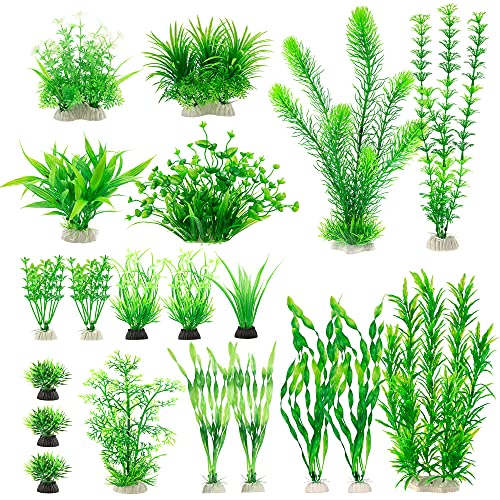
Should you want low-maintenance greenery that still gives your fish a cozy, natural-feeling home, the MyLifeUNIT 20-Pack Artificial Aquarium Plants are an ideal choice for hobbyists who value safety and variety. You get twenty green plants in assorted styles, heights from 2 to 12 inches, and bases sturdy enough for 10 to 50 gallon tanks and larger. The soft plastic resists fading and won’t contaminate water, so your tank stays clean. Fish can hide and shuttle through soft leaves without injury. Each plant has a heavy ceramic base to prevent floating, and the set works in freshwater and saltwater.
Best For: Aquarists seeking low-maintenance, safe, and varied decorative plants for 10–50+ gallon freshwater or saltwater tanks.
Pros:
- Provides 20 assorted green plants (2–12 in.) for varied aquascaping and ample hiding spaces.
- Soft, color-resistant plastic and non-contaminating materials keep water clean and prevent fish injury.
- Heavy-duty ceramic bases prevent floating and ensure stability in different tank setups.
Cons:
- Artificial plastic plants lack the biological benefits of live plants (e.g., oxygenation, nutrient uptake).
- Ceramic bases add weight and may limit placement adjustments or snag substrate during cleaning.
- Over time plastic may accumulate algae and require regular scrubbing to maintain appearance.
Live Aquarium Plants Variety 6-Pack Starter Kit
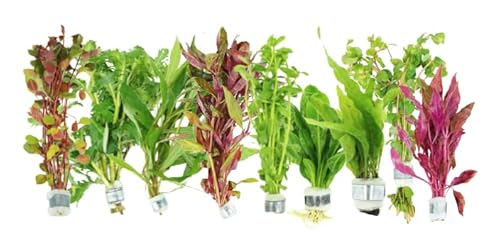
You’ll love the Live Aquarium Plants Variety 6-Pack Starter Kit should you want an easy, low-stress way to green up a warm water tank fast. You get six nursery-picked bundles of hardy aquatic plants that grow fast and enhance oxygen. They arrive pest free and snail free, so you can add them straight away. They do well under low to medium light, need no CO2, and don’t demand fancy substrate. They suit bettas, community tanks, shrimp, and snails. These sustainably grown, nursery quality plants improve water quality and cut algae naturally while staying low maintenance.
Best For: aquarium hobbyists seeking an easy, low-maintenance way to quickly add healthy, nursery-quality live plants to betta, community, or shrimp tanks.
Pros:
- Fast-growing, hardy plants that improve oxygen and water quality while reducing algae naturally.
- Thrive under low to medium light with no CO₂ or special substrate required.
- Arrive pest-free and snail-free, sustainably grown with a nursery quality guarantee.
Cons:
- Plant selection is nursery’s choice, so exact species are not guaranteed.
- May not satisfy advanced aquascapers seeking rare or specialized plants.
- Some tanks may still require trimming or upkeep as plants grow quickly.
California Bundle – 25+ Stems / 6 Species Live Aquarium Plants Package
May 9, 2026 12:23 pm
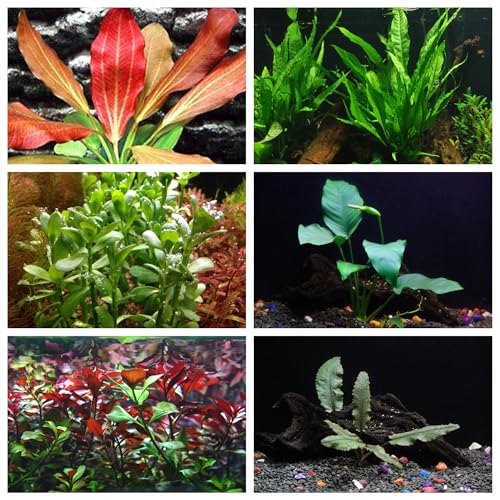
Provided you want a ready-made, low-fuss plant mix that instantly gives small tanks a natural feel, the California Bundle is a smart pick for hobbyists who care about shelter and easy care. You get 25 plus stems across six species, with one grown bunch of each plant. Place them in tanks 10 gallons and up to create hiding and resting spots for fish and invertebrates. You’ll like that the species are easy to keep, so maintenance stays light. Ship timing matters; don’t order unless forecasts drop below 20°F or climb above 100°F, as extreme heat or cold can harm live plants.
Best For: hobbyists with 10+ gallon freshwater aquariums seeking an easy-care, ready-made plant mix to provide natural hiding and resting spots for fish and invertebrates.
Pros:
- Provides 25+ stems across 6 easy-care species for instant natural aquascaping.
- One grown bunch of each species simplifies planting and arrangement.
- Suitable for fish/invertebrates that use plants for shelter, reducing maintenance effort.
Cons:
- Live plants are vulnerable to extreme shipping temperatures (avoid <20°F or >100°F).
- Exact stem count may vary and some vendors count stems differently.
- Not ideal for tanks smaller than 10 gallons or for hobbyists seeking specific single-species selections.
Salvinia Minima Floating Aquarium Plant (12 Plants)

When you want an easy, low-maintenance floating plant that quickly softens the look of your tank, Salvinia minima is a great pick for beginners and busy aquarists alike. You get 12 live Water Spangle plants with 60 plus leaves, enough to cover about a 4 inch circle. They thrive in low to medium light, and you can use a grow light indoors. They handle ponds, paludariums, and planted tanks, and they grow fast to offer shade and surface texture. Orders might be canceled should temperatures rise above 85°F or fall below 38°F within seven days. A 100% alive on arrival guarantee protects you.
Best For: beginners and busy aquarists seeking a low-maintenance, fast-growing floating plant to provide surface cover and softening texture in aquariums, ponds, or paludariums.
Pros:
- Fast-growing and provides quick surface coverage (12 plants, 60+ leaves cover ~4″ diameter).
- Low light requirements; suitable for low-to-medium light setups and indoor use with a grow light.
- Versatile for aquariums, ponds, paludariums, and planted tanks; 100% Alive on Arrival guarantee.
Cons:
- May be subject to order cancellation if temperatures exceed 85°F or drop below 38°F within seven days.
- Can grow quickly and potentially require frequent thinning or removal to prevent blocking light to lower plants.
- Floating nature may not suit tanks where surface movement or complete submersion is desired.
Factors to Consider When Choosing Warm Water Aquarium Plants
Upon selecting warm water aquarium plants, consider the light levels they need and whether your tank can provide that brightness without stressing your fish. Also check each plant’s temperature tolerance, substrate and nutrient needs, and how big the plant will grow so it fits your tank size and stays safe with your fish and invertebrates. Reflecting on these factors together helps you choose plants that thrive and keep your aquatic pets happy.
Light Levels Needed
You’ll usually find that light level is one of the initial things to ponder about whenever choosing warm water aquarium plants, because it directly shapes growth, appearance, and care needs. You’ll want to match PAR and placement to each species. Low-light plants like many swords and crypts do fine at about 10–20 µmol·m⁻²·s⁻¹ or 0.25–0.5 watts per liter, so they work well in shaded areas. Medium-light plants need roughly 20–50 µmol·m⁻²·s⁻¹ or 0.5–1 watt per liter for denser, faster growth, but expect more pruning and nutrient attention. High-light tropicals need over 50 µmol·m⁻²·s⁻¹ or more than 1 watt per liter and usually benefit from added CO₂ and richer substrate to avoid algae. Keep photoperiod to 6–10 hours and place plants alongside light zones to prevent legginess.
Temperature Tolerance Range
Because temperature sets the pace of everything in your tank, you’ll want to pick plants that match the stable warmth you can provide. Warm water plants generally tolerate about 72°F to 82°F (22°C to 28°C), with many happiest near 75 to 80°F (24 to 27°C). Some tropical species handle brief swings of 2 to 3°F but long stays below 70°F or above 86°F stress them and invite disease. Warmer tanks speed metabolism, so plants grow faster and need more nutrients and CO2. Avoid daily swings greater than 2 to 3°F because they cause melting and leaf loss. Whenever mixing species, choose ones with overlapping preferred ranges so sensitive plants don’t suffer while others thrive.
Substrate And Nutrients
Substrate matters a lot for warm water aquarium plants, and picking the right mix will make your tank healthier and easier to care for. You want a nutrient-rich substrate with 6–8 mm granules in case you grow root feeders. Those granules hold macro and micronutrients that many stem and rosette plants take up through roots. Use root tab fertilizers every 4 to 12 weeks for heavy feeders like swords and crypts to supply nitrogen, phosphorus, potassium, iron, and trace elements. Fine sand or enriched aquarium soil helps bulbs and rhizomes anchor and grow. Very coarse gravel can block root uptake. Top-dress 2 to 4 cm of inert gravel over enriched substrate and add slow-release fertilizer. Maintain the bed, avoid deep anaerobic layers, and vacuum detritus carefully without disturbing roots.
Tank Size Compatibility
While planning your warm water planted tank, consider how plant size, spacing, and fish needs will share the same space. Match mature plant height to your tank dimensions so tall stem or rosette species that reach 20 to 50 cm don’t crowd the tank. Reflect on lateral space and planting density, since foreground species only need a few centimeters while background or bunch plants might need several square inches. In a 20 gallon or larger tank you can add large leaves and fast growers without reducing swimming room. Smaller tanks make pruning, substrate fertilization, and detritus removal harder, so pick compact or slow growers. Also plan lighting and flow gradients; larger tanks often have light and nutrient differences, so place species in foreground, midground, and background accordingly.
Fish And Invertebrate Safety
As you pick plants for a warm water tank, consider how each stem, leaf, and root will affect the fish and invertebrates you ponder about. Choose soft, flexible leaves to protect fins and bodies, especially for shrimp, snails, and long-finned fish. Avoid plants treated with copper and always rinse or quarantine new plants since copper kills many invertebrates at tiny levels. Reflect on plant size and growth habit because tall dense growth gives hiding and breeding areas yet can trap detritus and stress bottom dwellers. Match plants to grazers and diggers like goldfish, cichlids, and loaches to prevent uprooting. Use invertebrate safe fertilizers and root tabs free of copper and harsh chelators, and dose carefully to avoid ammonia or nitrate spikes.
Frequently Asked Questions
Do Warm Water Plants Require Supplemental CO2 Injection?
Like a gentle breeze through leaves, no - most warm-water plants don’t need supplemental CO2; you’ll see faster, fuller growth with injection, but healthy, low-light species thrive without it provided you manage light, nutrients, and pruning.
Can Any Warm Water Plant Tolerate Brackish Aquariums?
Yes - a few warm‑water plants tolerate brackish tanks. You’ll find species like Java fern, Anubias, Vallisneria and some mangrove types handle low salinity, but you’ll need gradual adjustment and monitor plant health closely.
How Quickly Do These Plants Spread or Propagate?
Propagation rates vary: some spread fast through runners or cuttings (days–weeks), others grow moderately (weeks–months), and a few propagate slowly via seed or rhizome (months–year). You’ll need to trim or replant regularly to control them.
Are These Plants Safe for Sensitive Fish Species?
Yes - most are safe for sensitive fish provided you acclimate plants, rinse and quarantine them, avoid pesticides, and monitor water parameters; you’ll reduce stress, disease risk, and chemical shocks while providing gentle shelter and improved habitat stability.
What Lighting Spectrum Is Best for Plant Coloration?
You’ll want a full-spectrum light emphasizing 6500K-7500K with amplified red (600–700nm) and blue (430–460nm) bands; that combo improves pigments, promotes growth, and brings out vivid reds and deep greens in aquarium plants.