Book Appointment Now

7 Best Value Fishing Kayaks for 2026 (Affordable Picks)
ByIMRAN
In 2026, affordable fishing kayaks deliver more capability than ever, blending stability, storage and angler-focused features at accessible price points. This roundup compares pedal systems, compact roto and thermoformed hulls, raised seats, rod mounts and transportability to help value-minded anglers find the best fit. Practical trade-offs and standout models emerge, offering clear choices depending on preferred fishing style and budget-here are the options worth considering next.
Pelican Catch Mode 110 Kayak

Should you want a budget-friendly fishing kayak that still handles like a pro, the Pelican Catch Mode 110 delivers-its Ergoboost seat raises your eye line for better sight-casting while the stable hull and sound-dampening traction pads let you stand and fish without spooking wary fish. You’ll appreciate the adjustable higher seat, EVA pad comfort, and under-seat storage for quick access. Three flush rod holders, dual 4″ gear rails, and multiple mounts keep tackle organized and within reach. The stern transom accepts a 2.5 HP outboard or supports manual propulsion, making this a versatile, durable choice for anglers on a budget.
Best For: budget-conscious anglers who want a stable, well-equipped sit-on-top kayak that supports standing fishing, accessory mounting, and optional small outboard power.
Pros:
- Ergoboost elevated seat with EVA pad improves comfort and sight-casting for long days on the water.
- Stable hull and sound-dampening traction pads allow confident standing and stealthy approaches to fish.
- Multiple rod holders, dual 4″ gear rails, and stern transom (2.5 HP-rated) offer strong accessory and motor versatility.
Cons:
- As a budget-friendly kayak, materials and fittings may not be as premium or long-lasting as higher-end models.
- Limited to small outboard power (2.5 HP), so not suitable for high-speed or long-distance motorized use.
- Storage capacity is modest (under-seat storage) compared with larger fishing kayaks with more dedicated gear bays.
Reel Yaks Recon 10ft Modular Fishing Kayak

Should you need a fishing kayak that breaks down for easy transport and storage without sacrificing performance, the Reel Yaks Recon 10ft modular kayak is built for you. You’ll appreciate the propeller pedal drive for smooth, hands-free propulsion with precise control and reverse for tight spots like docks and mangroves. Four-step snap-together assembly disassembles into sections tipping the scales at 44 lb each, with built-in handles so you can carry without roof racks or trailers. The compact HDPE sit-on-top W-hull delivers stability in rough water and a customizable fishing platform. It’s US Coast Guard–registered and ideal in case storage or back issues limit your options.
Best For: anglers and apartment-dwelling paddlers who need a stable, high-performance fishing kayak that disassembles for easy transport and storage and offers hands-free propeller pedal propulsion.
Pros:
- Propeller pedal drive with precise control and reverse for hands-free maneuvering in tight spots.
- Modular four-step snap-together design disassembles into 44 lb sections with built-in handles-no roof rack or trailer needed.
- Stable HDPE sit-on-top W-hull from a USCG-registered manufacturer, with a customizable fishing platform.
Cons:
- Each section still weighs 44 lb, which may be heavy for some users to lift or manage alone.
- Multi-piece assembly adds setup time and potential points of wear or misalignment over long-term use.
- Modular design may limit certain hull shapes or features compared with single-piece kayaks.
Lifetime Tamarack Pro 103 Sit-On-Top Kayak, Lightning Fusion, 10 ft. 3 in.
May 9, 2026 5:56 am
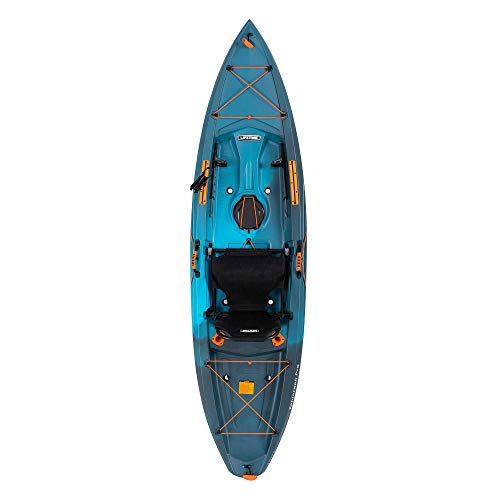
Should you want a stable, no-nonsense fishing platform that’s packed with angler-friendly features, the Lifetime Tamarack Pro 103 delivers-its molded rod holders, tackle storage, and a deeper tank well make it easy to gear up and stay organized on short trips. You’ll appreciate the adjustable framed seat and footrests for comfort, plus a paddle keeper to keep gear in place. Built-in rod holders (one adjustable, two flush), accessory mounts, and a ruler for measuring catch make fishing simple. Deep hull channels and chine rails improve tracking and stability. Storage includes a center hatch with bucket, front and rear bungees, and 10 ft. 3 in. length.
Best For: Anglers seeking a compact, stable, and feature-packed sit-on-top kayak for short fishing trips and easy transport.
Pros:
- Molded fishing features (one adjustable and two flush rod holders, accessory mounts, tackle storage, and ruler) make it highly angler-friendly.
- Comfortable and customizable fit with an adjustable framed seat and adjustable footrests plus a paddle keeper.
- Good stability and tracking from deep hull channels and chine rails, with ample storage (center hatch with bucket, deeper tank well, front/rear bungees).
Cons:
- At 10 ft. 3 in., may be less suitable for long-distance paddling or open-water touring.
- Sit-on-top design can expose paddlers to spray and cooler conditions compared with a sit-in kayak.
- Limited storage capacity compared with larger fishing kayaks for extended trips or heavier gear.
Wilderness Systems Recon 120 Sit-on-Top Fishing Kayak

Should you want a stable, feature-packed sit-on-top that keeps gear organized for long days on the water, the Wilderness Systems Recon 120 delivers with its roomy StowPro storage system and ultra-comfortable AirPro ACES seat. You’ll appreciate the 360° swivel and one-handed mechanical lever for quick trim adjustments while paddling, pedaling, or casting. Dual rod troughs store up to three 7’6″ rods per side, secured via cross-lashing bungee, and silent traction pads keep your approach stealthy. The S.M.A.R.T. hull balances stability, maneuverability, acceleration, responsiveness, and tracking, giving confident performance in varied conditions. It’s a 12-ft premium sit-on-top.
Best For: anglers and recreational paddlers seeking a stable, feature-rich 12-ft sit-on-top kayak that prioritizes comfort, gear organization, and all-day fishing performance.
Pros:
- Roomy StowPro gasketed hatch and configured bin keep gear organized and protected for long trips.
- AirPro ACES seat with 360° swivel and one-handed mechanical trim provides exceptional comfort and on-the-fly adjustment.
- S.M.A.R.T. hull plus silent traction pads deliver balanced stability, tracking, and a stealthy fishing approach.
Cons:
- At 12 ft, may trade some top-end speed and expedition range for stability and fishing features.
- Sit-on-top design can expose paddler to more spray and cooler conditions than an enclosed cockpit.
- Premium features and materials likely come with a higher price compared with basic fishing kayaks.
Pelican Catch HDII Premium Sit-On-Top Fishing Kayak

Should you want a stable, hands-free fishing platform for shallow water and weed-choked areas, the Pelican Catch HDII delivers with its HyDryve II pedal system and fingertip rudder controls-so you can maneuver and fish without constantly reaching for a paddle. You’ll appreciate the Ergocast G2 seat for long sessions and the rudder’s dual role as a skeg for better tracking. Three flush-mount rod holders keep tackle organized while four accessory rails let you customize mounts for electronics, cameras, or extra gear. Its sit-on-top stability and pedal propulsion make it ideal for anglers working shallow flats and vegetation-rich waters.
Best For: anglers who need a stable, hands-free sit-on-top kayak for fishing in shallow, vegetation-choked waters and want customizable accessory mounting and comfortable seating for long sessions.
Pros:
- Efficient HyDryve II pedal system enables hands-free propulsion and maneuvering in shallow water and through aquatic vegetation.
- Ergocast G2 seat provides ergonomic comfort for extended fishing or filming sessions.
- Four accessory rails and three flush-mount rod holders allow extensive customization and organized gear storage.
Cons:
- Sit-on-top design and added pedal/rudder systems may increase weight and reduce portability compared with simpler kayaks.
- Complex pedal and rudder mechanisms could require more maintenance and occasional troubleshooting.
- Limited enclosed storage compared with sit-in kayaks, potentially reducing dry storage capacity for gear.
Pelican Catch Kicker 110 HDII Pedal Fishing Kayak

Should you want a pedal kayak that lets you cover water with less fatigue, the Pelican Catch Kicker 110 HDII delivers with its HyDryve II fin pedal system, which powers smooth, efficient leg-driven travel and handles shallow, plant-filled waters well. You’ll steer with the Catch Kicker rudder, operable from either side, for tidy tracking and easier turns. The ErgoBoost seat raises for better sightlines and stays comfortable on long trips. Two metal midship handles make carrying and car-topping manageable for this 59‑lb, 11‑ft sit‑on‑top. Built-in in-handle rigging tracks let you mount accessories without drilling.
Best For: Anglers who want a comfortable, low-fatigue pedal kayak for covering distance, fishing in shallow or weeded waters, and easy car-topping.
Pros:
- HyDryve II fin pedal system provides smooth, efficient leg-powered propulsion and works well in shallow and plant-filled water.
- ErgoBoost seat offers enhanced comfort and a raised position for better sightlines on long trips.
- Midship metal handles and in-handle rigging tracks make carrying and accessory mounting easier without drilling.
Cons:
- At 59 lbs, it’s lighter than some but may still be challenging for solo lifting onto higher roof racks.
- 11 ft length may limit tracking and speed compared with longer touring pedal kayaks.
- Sit-on-top design offers less protection from elements and gear exposure than a sit-in or fully enclosed hull.
Brooklyn 12.5 Tandem Sit-On-Top Fishing Kayak

Should you fish with a partner or need room for gear, the Brooklyn 12.5 Tandem Sit-On-Top is built for you: its 34-inch beam and 600 lb capacity deliver rock-solid stability for standing casts, rough water, or hauling a cooler, while the rotomolded HDPE hull resists impacts and UV damage for long-term use. You can paddle solo or with two adults plus a child, using padded seats and adjustable footrests for comfort. Six rod holders (four flush, two articulating) and accessory-friendly deck space let you rig it how you like. It comes with two paddles and a motor-ready mount for upgrades.
Best For: anglers who need a stable, roomy tandem kayak for fishing or gear-hauling that can be used solo or with a partner and upgraded with a motor.
Pros:
- Stable 34-inch beam and 600 lb capacity allow standing casts, rough-water confidence, and plenty of cargo room.
- Fishing-ready layout with six rod holders (four flush, two articulating) and accessory-friendly deck for custom rigging.
- Durable rotomolded HDPE hull is impact- and UV-resistant; includes two paddles and motor-ready mount for future upgrades.
Cons:
- At 12.5 ft and designed for tandem use, it may be bulky and heavy to transport or store for some users.
- Seats and features are basic compared with high-end fishing kayaks (limited built-in electronics or advanced comfort options).
- Motor not included despite motor-ready mount, so adding powered propulsion requires extra cost and installation.
Factors to Consider When Choosing a Value Fishing Kayak
Choosing a value fishing kayak requires balancing key design and feature priorities that affect performance and comfort on the water. Consider hull stability and tracking, propulsion type and efficiency, seating comfort and adjustability, fishing features and mounting options, and storage capacity and access. Evaluating these factors together helps identify the best combination of usability and value for intended fishing conditions.
Hull Stability And Tracking
When evaluating hull stability and tracking for a value fishing kayak, anglers should weigh beam width, hull profile, and built-in tracking features to match intended use-wider beams (30–36 in.) and flat or chined midsections improve primary stability for standing and casting, while narrower, longer, or V-shaped hulls offer better secondary stability, smoother behavior in chop, and superior glide per stroke. Wider, shorter designs trade tracking and top-end speed for maneuverability in tight water. Keel-like elements, pronounced channels, or skegs encourage straight-line tracking, reducing corrective strokes. Supplemental aids such as rudders or integrated channeling maintain course in wind or current but can slightly blunt turning responsiveness and add mechanical complexity. Choice depends on balance of stability, tracking, and intended fishing conditions.
Propulsion Type And Efficiency
Consider propulsion as a core trade-off between weight, control, and endurance: pedal drives and electric motors deliver hands-free power and superior sustained speed but add weight, complexity, and cost, while paddle propulsion remains the lightest, simplest, and most maneuverable option for shallow or tight-water fishing. Pedal systems convert leg power into continuous thrust, improving range and vegetation handling but increasing hull load and maintenance points. Electric trolling motors provide the greatest effortless speed and range yet require batteries, mounting considerations, and higher expense. Paddle setups minimize weight, drag, and upkeep but demand constant hand use and limit endurance. Rudders and skegs further influence efficiency: rudders allow active steering, skegs passively boost tracking, both reducing corrective strokes and conserving energy.
Seating Comfort And Adjustability
Upon evaluating seating for a value fishing kayak, comfort and adjustability directly affect endurance, posture, and casting stability; look for seats with adjustable height and recline, high-density foam or EVA cushioning, breathable quick-dry covers, and built-in lumbar support to prevent lower-back strain and hotspots during long trips. Seats should offer firm side supports or adjustable straps to stabilize hips during casts or while standing. Multiple footrest positions and fore-aft seat adjustment accommodate varying leg lengths and improve pedaling or paddling efficiency. Removable or modular seat systems provide upgrade paths and simplify cleaning. Also verify under-seat clearance for access to gear without compromising comfort. Prioritizing these features on a value kayak preserves performance and reduces fatigue on extended outings.
Fishing Features And Mounting
During the evaluation of fishing-specific features on a value kayak, buyers should prioritize versatile mounting options and unobstructed deck layouts that support common angling tasks. Multiple rod-holder types-flush mounts plus adjustable or vertical holders-allow spare-rod stowage, trolling, and quick setup changes without line tangles. Integrated gear rails or rigging tracks provide standardized attachment points for fish finders, camera mounts, rod leashes, and accessory trays, enabling flexible customization. A stable, clear deck with recessed or tethered mounting zones prevents interference with standing casts and secures electronics or crate systems. Built-in storage like sealed hatches, tank wells with bungees, and under-seat compartments organize tackle and protect sensitive gear. Finally, check propulsion- and transom-compatible mounts so accessories won’t conflict with rudders, pedal drives, or motors.
Storage Capacity And Access
On planning trips from day outings to multiday excursions, buyers should prioritize total onboard storage-combining sealed hatch liters with tank-well capacity-so the kayak can carry tackle, a cooler, and spare gear without exceeding the manufacturer’s payload rating. Evaluate combined volume (50+ liters is handy for multiday gear) and balance sealed, gasketed hatches with open tank wells so possessions remain dry while bulky items stay accessible. Deck access matters: forward/rear bungees, center hatch placement, and under-seat compartments enable quick retrieval of rods, pliers, and tackle without unloading. Look for molded tackle trays, gear tracks, and accessory mounts to organize frequently used items within reach. Always check payload and load distribution to preserve stability and tracking as fully loaded.
Portability And Transport Ease
Considering transport before purchase helps guarantee a fishing kayak will be practical for regular use, since weight, length, and modular design directly affect solo loading, vehicle compatibility, and storage options. Buyers should check total weight and any modular section weights-models around 40–60 lb or multi-piece boats that break into ~40 lb sections are far easier to lift, car-top, or carry alone. Inspect carry handles, molded grips, and lifting-point placement; midship handles reduce leverage and back strain during tandem carries. Account for total length and beam for roof-rack fit and trunk access-shorter (~10–11 ft), narrower kayaks suit most crossbars. Determine whether the kayak disassembles or collapses for trunk or closet storage. Finally, consider whether a cart or dolly is needed for long launches.
Build Material And Durability
Upon selecting a value fishing kayak, material and construction determine how well the boat withstands impacts, UV exposure, and everyday wear without excessive maintenance. High-density polyethylene (HDPE) is the common choice for affordable kayaks, offering strong impact resistance, good UV tolerance, and low cost. Rotomolded HDPE yields seamless, thick-walled hulls that resist punctures and abrasions but add weight. Thermoformed or injection-molded polycarbonate/ABS produces thinner, lighter hulls with a finer finish; these can be more expensive and less impact-tolerant. Inspect reinforced features-thicker keel areas, chine rails, internal ribbing-that enhance tracking, stiffness, and wear resistance in stress zones. Balance longevity trade-offs: heavier, harder materials reduce repairs, while lighter composites improve portability but demand more careful handling and maintenance.
Frequently Asked Questions
Can I Transport These Kayaks on a Car Roof Rack Without Special Equipment?
“Measure twice, cut once.” He observes that most sit-on-top fishing kayaks can be roof-racked without special gear, though foam blocks, straps, and bow/stern lines are advisable for safety and legality; check vehicle load limits and local rules.
Do Any Models Qualify for Kayak Fishing Competitions or Tournaments?
Yes, many models meet tournament eligibility; organizers typically require stable, unspecialized sit-on-top or sit-in kayaks with basic safety gear. Competitors should verify specific event rules, dimensions, and allowed modifications before entering.
Are There Aftermarket Warranties or Extended Plans Available?
Yes - third-party retailers and specialized insurers commonly offer aftermarket warranties and extended plans; the buyer inspects coverage terms, duration, transferability, and exclusions, then selects a provider aligning with kayak model compatibility and desired protection level.
Which Kayaks Are Easiest to Repair After Hull Punctures?
Inflation-defying, virtually self-healing roto-molded polyethylene kayaks are easiest to repair after punctures; scratches and small holes accept plastic-welding, epoxy, or patch kits readily, while thermoformed and composite hulls demand more specialized repair skills.
Can I Attach Electric Trolling Motors to These Kayaks?
Yes. He can mount electric trolling motors on many fishing kayaks using transducer-friendly hulls, motor mounts, or stern brackets; battery placement, weight, and legal/regulatory limits must be considered to guarantee safe, efficient installation and operation.