Book Appointment Now

4 Best Ice Fishing Fishfinders for 2026 (Cut Through Ice Cold Waters)
ByIMRAN
Picture you’re on a frozen lake and a buddy’s Elite FS 10 pins a big walleye right under your hole. You’ll want gear that tells you what’s below with the same confidence. This roundup compares four top units-portable flasher kits to console-ready touchscreens-so you can pick the one that matches your style, budget, and bite strategy. Keep going to see which model fits your next hardwater trip.
| Lowrance Elite FS Fishfinder & Chartplotter (w/wo Transducer) |
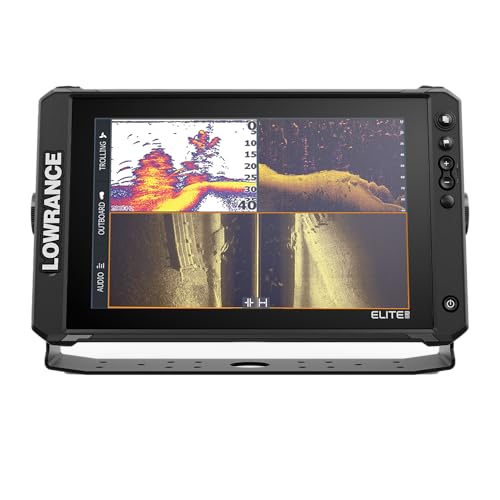
| Best Feature-Rich | Sonar Technology: Active Imaging 3-in-1 (CHIRP, SideScan, DownScan) + FishReveal; Live Sonar ready | Portability / Ice Use: Portable-compatible (10″ unit; transducer included) - usable for ice with mounting/accessories | Display / View Options: 10″ high-res IPS multi-touch display | CHECK LATEST PRICE | Read Our Analysis |
| Garmin Striker Vivid 5cv,Portable Ice Fishing Bundle w/GT8HW-IF |

| Best for Ice Portability | Sonar Technology: CHIRP traditional sonar (portable ice-optimized) | Portability / Ice Use: Designed for ice fishing; portable bundle for on-ice deployment | Display / View Options: 5″ Striker Vivid display (ice-optimized visuals) | CHECK LATEST PRICE | Read Our Analysis |
| Garmin Striker 4 with Portable Kit |

| Best Beginner-Friendly | Sonar Technology: CHIRP sonar + built-in flasher (classic flasher for ice) | Portability / Ice Use: Portable kit included (flashers, kayak/portable mounting) - suitable for ice fishing | Display / View Options: Available displays (3.5″, 5″, 7″); keyed interface with dedicated buttons | CHECK LATEST PRICE | Read Our Analysis |
| Humminbird ICE Helix 5 G3 GPS Fish Finder |

| Best for Ice Fishing | Sonar Technology: Dual Spectrum CHIRP (ICE mode, flasher/A‑Scope options) | Portability / Ice Use: Portable shuttle design with battery space for hole-hopping | Display / View Options: 5″ Helix display with custom ICE views (flasher, A‑Scope, zoom) | CHECK LATEST PRICE | Read Our Analysis |
More Details on Our Top Picks
Lowrance Elite FS Fishfinder & Chartplotter (w/wo Transducer)
The Lowrance Elite FS 10 Fishfinder & Chartplotter is best suited for anglers who need a high-resolution, multifunction display with advanced imaging-its Active Imaging 3-in-1 sonar (CHIRP, SideScan, DownScan) and FishReveal make it ideal for ice anglers prioritizing clear target separation and detailed structure identification. The 10-inch IPS touchscreen offers crisp, sun-readable detail and preloaded C-MAP Explore charts with 1-foot contours for thousands of lakes. Included Active Imaging transducer, mounting hardware, and power accessories simplify setup; optional ActiveTarget Live and S3100 Module augment capability. Wireless, Ethernet, NMEA 2000 and Bluetooth allow system integration. Two-year warranty; highly rated by users.
- Sonar Technology:Active Imaging 3-in-1 (CHIRP, SideScan, DownScan) + FishReveal; Live Sonar ready
- Portability / Ice Use:Portable-compatible (10″ unit; transducer included) - usable for ice with mounting/accessories
- Display / View Options:10″ high-res IPS multi-touch display
- Waypoint / Navigation Capability:Chartplotter with preloaded C-MAP Discover charts; navigation features and waypointing
- Transducer Included / Compatible:Active Imaging 3-in-1 transducer included (supports ActiveTarget modules)
- Ice-Fishing Specific Modes / Tools:Live sonar readiness and FishReveal for target ID - useful for jig/lure watching on ice
- Additional Feature:ActiveTarget 2 ready
- Additional Feature:Built‑in Wi‑Fi/Bluetooth
- Additional Feature:Preloaded C‑MAP Discover
Garmin Striker Vivid 5cv,Portable Ice Fishing Bundle w/GT8HW-IF
Anglers seeking a compact, high-resolution sonar customized for on-ice mobility will find the Garmin Striker Vivid 5cv Portable Ice Fishing Bundle with GT8HW-IF ideal. The bundle pairs the STRIKER Vivid 5cv fishfinder with a GT8HW-IF transducer and necessary ice-fishing accessories for rapid deployment. Garmin CHIRP traditional sonar provides adjustable beam angles, crystal-clear images and exceptional target separation. Users can detect jigs or weighted baits, view depth as fish enter the beam, observe lift/drop jig action, and discern fish movement toward or away from the lure. Designed for portability, the system offers real-time visualization to refine bait presentation and locate fish efficiently.
- Sonar Technology:CHIRP traditional sonar (portable ice-optimized)
- Portability / Ice Use:Designed for ice fishing; portable bundle for on-ice deployment
- Display / View Options:5″ Striker Vivid display (ice-optimized visuals)
- Waypoint / Navigation Capability:Basic location marking/navigation features for ice (portable unit)
- Transducer Included / Compatible:GT8HW-IF transducer included (ice-specific)
- Ice-Fishing Specific Modes / Tools:Features to detect jig movement, show depth and direction of fish relative to jig
- Additional Feature:Portable ice bundle
- Additional Feature:GT8HW‑IF transducer included
- Additional Feature:Adjustable beam angles
Garmin Striker 4 with Portable Kit
Garmin Striker 4 with Portable Kit suits ice anglers who want a compact, user-friendly unit that pairs CHIRP sonar with a classic flasher for reliable vertical jigging and spot-finding. The keyed interface and dedicated buttons make operation straightforward; installation is quick for on-ice portability. CHIRP provides crisper fish arches and improved target separation, while the built-in flasher retains a familiar view for jigging. Available in 3.5, 5, and 7-inch displays, it includes waypoint mapping for marking brush piles, stumps, and productive holes. A kayak in-hull transducer mount is included, transmit power is 200 W RMS, and depth ranges reach 1,600 ft freshwater.
- Sonar Technology:CHIRP sonar + built-in flasher (classic flasher for ice)
- Portability / Ice Use:Portable kit included (flashers, kayak/portable mounting) - suitable for ice fishing
- Display / View Options:Available displays (3.5″, 5″, 7″); keyed interface with dedicated buttons
- Waypoint / Navigation Capability:Waypoint map support to mark and navigate to spots (brush piles, stumps)
- Transducer Included / Compatible:Transducer and portable mounting included (kayak/portable mount)
- Ice-Fishing Specific Modes / Tools:Built-in flasher format ideal for ice fishing and vertical jigging
- Additional Feature:Built‑in flasher
- Additional Feature:Kayak in‑hull mount
- Additional Feature:200 W RMS power
Humminbird ICE Helix 5 G3 GPS Fish Finder
Humminbird’s ICE Helix 5 G3 GPS suits ice anglers who prioritize compact portability and reliable sonar performance, especially those hopping multiple holes in a day. The unit uses Dual Spectrum CHIRP in ICE mode to produce crisp fish arches and detailed bottom returns, while interference rejection modes cut sonar clutter for clearer readings. Custom ICE views-flasher, A‑Scope, and zoom-offer bespoke viewpoints for precise strike detection. A portable shuttle design with battery space simplifies hole‑to‑hole movement. Select models include built‑in GPS for marking waypoints and finding routes to productive spots, and bundle options add open‑water transducers for year‑round use.
- Sonar Technology:Dual Spectrum CHIRP (ICE mode, flasher/A‑Scope options)
- Portability / Ice Use:Portable shuttle design with battery space for hole-hopping
- Display / View Options:5″ Helix display with custom ICE views (flasher, A‑Scope, zoom)
- Waypoint / Navigation Capability:Built-in GPS (select models) to mark waypoints and navigate
- Transducer Included / Compatible:Bundle options include open-water transducer and mounts (ice/open-season compatibility)
- Ice-Fishing Specific Modes / Tools:Custom ICE views (flasher, A‑Scope, zoom) and interference rejection for clear ice readings
- Additional Feature:Dual Spectrum CHIRP
- Additional Feature:Portable shuttle battery space
- Additional Feature:Interference rejection modes
Factors to Consider When Choosing an Ice Fishing Fishfinder
Whenever you’re picking an ice fishing fishfinder, focus on sonar type and clarity plus how well the transducer performs in shallow, cold water. Check display size and visibility for bright, snowy conditions, and make sure the unit is portable with reliable power options. You’ll also want mapping, GPS, and waypoint features in case you plan to mark spots and steer on the ice.
Sonar Type & Clarity
Because sonar type and clarity determine what you actually see beneath the ice, choose a fishfinder that matches the water depth, target detail, and how you jig. CHIRP sonar’s continuous frequency sweep gives crisper arches and better target separation, letting you pick out individual fish instead of blobs. For shallow ice fishing, favor high-frequency beams (200–800 kHz) for fine detail; use lower frequencies whenever you need deeper penetration but accept less resolution. Pick the display style to match your technique: down-looking imaging for structure and fish shapes, flasher/A‑Scope for immediate jig feedback. Check beam width-narrow beams improve separation and depth, wide beams cover more area; adjustable or multi-beam units are most versatile. Finally, make sure tight transducer coupling and correct orientation to minimize noise and sharpen returns.
Transducer Performance
While choosing a fishfinder, focus initially on transducer performance because it dictates the detail, depth, and responsiveness you’ll get through the hole. You should match frequency to your fishing: use higher frequencies (200–800 kHz) for crisp, near‑ice imaging and finer target separation, and lower frequencies (50–200 kHz) whenever you need deeper penetration. Check beam angle: narrow beams (8–20°) concentrate detail beneath the hole, wider beams (40–60°) cover more area but blur targets. Prioritize adequate power and adjustable sensitivity to reach deeper returns and reject ice clutter or thermoclines. Mind mounting and orientation-centered or angled transducers deliver stronger jig and bottom returns. Finally, pick the sonar mode you need: CHIRP for separation, flashers or vertical modes for real‑time jig tracking.
Display Size & Visibility
Often you’ll rely on the screen more than any other interface, so pick a size and display tech that match how and where you fish. Should you want to read fine sonar returns or run split-screen flasher plus traditional sonar, choose 5 inches or larger-5–7+ inch displays show more detail and multitasking without constant zooming. High-resolution IPS or equivalent panels deliver better clarity, contrast, and wider viewing angles in both bright sun and low light common on the ice. Keep in mind touchscreens can be sluggish with thick gloves; seek models with physical buttons or glove-friendly touch sensitivity. Compact 3.5–4 inch units enhance portability but trade off detail and multitasking.
Portability And Power
Consider how far you’ll carry your gear and how long you’ll need it to run-pick a fishfinder that’s lightweight (under 5 lb) or compact and that accepts common 12V SLA or lithium packs for straightforward power swaps. You’ll want units with dedicated battery compartments or portable shuttles so swapping batteries on the ice is quick and tidy. Check runtime specs: expect 8–12+ hours from a 7–10 Ah 12V lithium under moderate use, or plan spares for full days. Favor low‑power modes and adjustable brightness to stretch cold‑reduced capacity. Make sure the transducer, cable, and connectors are rugged, short enough for ice holes, and use quick‑disconnect mounts to speed setup and reduce exposure of electronics to freezing temps.
Mapping And GPS
As you’re chasing consistent bites through the season, reliable mapping and GPS turn guesswork into repeatable results: built‑in GPS lets you mark productive holes and return precisely, high‑resolution contour maps (1‑ft or finer) reveal the subtle humps and drop-offs fish key on, and the ability to preload or upload lake charts for offline use keeps you productive where there’s no cell signal. Choose units that store plenty of waypoints and routes, export coordinates easily, and let you organize spots per trip or species. Prioritize high-resolution bathymetry with frequent map updates so shallow structure and seasonal changes stay accurate. That combination - precise marking, detailed contours, offline charts, and simple data transfer - turns good days into dependable ones.
Connectivity And Networking
At the point you want real-time control and flexible setups on the ice, connectivity and networking turn a standalone fishfinder into a linked system. Choose units with built-in wireless or Bluetooth so you can stream sonar to your phone or tablet for remote viewing and control while you roam the shelter. Prefer models with Wi‑Fi and app support to download charts and apply firmware updates on the spot. Should you’ll run multiple displays or switch between portable and console units, pick fishfinders that support node networking or data sharing so transducer and sonar feeds appear on more than one screen. Look for NMEA 2000 or Ethernet compatibility to integrate GPS, radar, or autopilot, and verify ports for live sonar modules, CHIRP transducers, and auxiliary imaging upgrades.