Book Appointment Now

8 Best Fishing Poles for Deep Sea Fishing for 2026
ByBEGUM
Deep-sea fishing puts a rod under loads that feel very different from trout fishing: long drops, heavy tackle, line abrasion, and fish that can pull hard enough to challenge the blank. I’ve selected eight compact travel rods, heavy conventional rods, spinning options, and a landing net based on construction, intended water type, portability, and practical handling.
Several picks deserve an honest category warning. The Tenkara USA models are freshwater-oriented, while the KastKing Pontus is a landing net rather than a fishing pole, so I’ve included them as specialist alternatives and clarified where they belong.
A Snapshot Of The Selections
PickWhy We Picked ItBest ForAction
Travel Ready
Tenkara USA Amago Tenkara Rod 13.5 ft
Exceptionally compact freshwater design
Backpacking and remote streams

Heavy Duty Pick
Topline Tackle Heavy Duty Bent Butt Trolling Rod
Reinforced fiberglass with roller guides
Deep drops and heavy line

Compact Choice
Tenkara USA Ukiyo Fly Fishing Rod 9 ft 10 in
Ultralight packability for small streams
Hiking and travel fishing

Flexible Favorite
Tenkara USA SATOKI Adjustable 3-Length Fly Rod
Three working lengths in one rod
Changing rivers and fish sizes

Offshore Ready
Fiblink One-Piece Deep Drop Conventional Trolling Rod
Composite power for offshore fish
Boat trolling and big game

Balanced Choice
Fiblink 7-Foot Two-Piece Saltwater Spinning Rod
Portable graphite for spinning tackle
Shore fishing and smaller boats
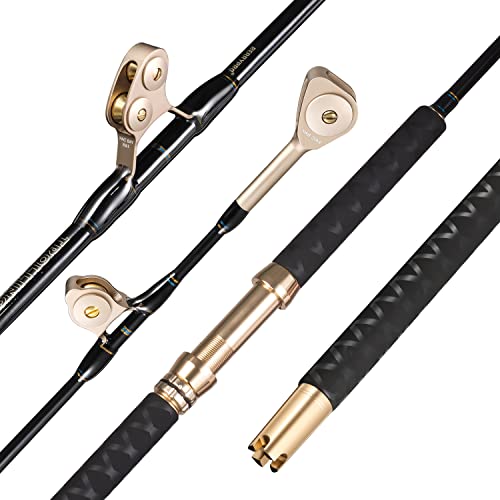
Professional Pick
BERRYPRO Bent Butt Conventional Offshore Trolling Rod
Marine aluminum roller guide system
Heavy offshore conventional tackle

Utility Pick
KastKing Pontus Floating Landing Net
Floating foam and extended handle
Boat-side fish handling
What Each Pick Brings To The Table
The Amago packs to 21.124 inches across ten segments, yet reaches 13.5 feet when extended. That makes it genuinely useful for backpackers, anglers moving between remote waters, and anyone dealing with limited transport space. Its medium action favors controlled casting rather than the heavy loads associated with offshore trolling.
Unlike the conventional choices later in the list, the Amago is designed around lightweight freshwater tenkara use. I wouldn’t treat its compactness as evidence of deep-sea capability. The matte finish can reduce visual glare, which matters around fish that notice movement.
Features That Help
- Ten-section construction creates a 21.124-inch packed length.
- The 13.5-foot extension provides reach for streams and open banks.
- Medium action balances casting control with a lightweight feel.
- The matte finish helps limit reflected light near sensitive fish.
- The handle works as a grip and counterbalance during casting.
Practical Considerations
- Its light construction is not aligned with heavy saltwater fishing.
- Many jointed sections require careful alignment and dry storage.
Key Specs
Made For
This model best suits backpackers, traveling anglers, and experienced tenkara users fishing freshwater streams.
Look Elsewhere When
Topline Tackle’s fiberglass conventional rod is the more relevant choice for deep drops, heavy line, and strong offshore fish.
Conventional tackle angling places substantial strain on the blank, line, and guides, especially during a deep drop. The Topline Tackle rod responds with a reinforced fiberglass construction that combines flexibility with pulling power. I see that balance as more useful for sustained offshore pressure than the very light approach of the Amago.
A bent butt seats the rod against a chair or rail, creating leverage for pulling heavy line upward. That is a practical advantage on a working boat, although the familiar ergonomics may feel awkward for an angler accustomed to standing with a spinning setup.
The Upside
- Reinforced fiberglass supports heavy conventional applications.
- Flexible construction helps absorb movement from strong fish.
- Roller guides reduce line abrasion during deep deployment.
- The bent butt improves leverage from a boat chair or rail.
Worth Noting
- Specific length, power, and material details are not supplied.
- Saltwater rinse and guide inspection remain important after use.
Quick Facts
Built With In Mind
This rod fits dedicated offshore anglers using conventional tackle for deep drops and powerful saltwater fish.
Reach For A Different Pick When
Fiblink’s 7-foot spinning rod offers a better fit for shore-based anglers who prefer reel-under setups.
The Ukiyo is built around a travel problem: carrying a full-length rod into small streams and remote mountain water. It collapses to 14.5 inches and weighs two ounces, so it takes up very little pack space. Extended, it reaches 9 feet 10 inches, enough for the reach associated with tenkara fishing without the footprint of a long conventional rod.
The included case adds useful organization for anglers changing locations between sessions. In my view, portability is its defining benefit, but the intended fishing category is clear: this is a freshwater travel fly rod, not a deep-sea option.
Points In Its Favor
- Two-ounce weight keeps pack loads exceptionally low.
- A 14.5-inch packed size fits into small luggage spaces.
- The included case protects and organizes the collapsed rod.
- The extended length remains practical for small streams.
Small Caveats
- Its intended water type is freshwater, not offshore use.
- A lightweight blank isn’t suited to heavy deep-drop tackle.
- Joint alignment deserves attention after repeated transport.
Who It Suits Best
This model fits backpacking anglers, traveling fly fishermen, and tenkara users working confined mountain streams.
A Better Fit Elsewhere
The SATOKI offers greater length adjustment for anglers moving between varied rivers and larger freshwater fish.
Three working lengths give the SATOKI more range than a fixed-length travel rod. It operates at 10 feet 8 inches, 12 feet 2 inches, or 13 feet 7 inches, allowing the angler to trade maneuverability for line control and reach. That makes it attractive on rivers where water depth, bankside vegetation, and fish size change from one pool to the next.
Compared with the Ukiyo, the SATOKI is less about minimizing pack weight and more about adapting during a session. In deeper water, the longer setting may provide better control, while the shortest setting is easier to move through tight cover. The light construction still places it outside conventional offshore duties.
Where It Helps
- Three lengths cover maneuvering and extended-casting needs.
- Longer settings can improve control in deeper freshwater.
- The compact shorter setting helps around trees and rocks.
- One rod covers varied water without carrying several.
Points To Keep In Mind
- It remains a lightweight fly-fishing design.
- Extension changes require care at each locking joint.
- Large saltwater fish are outside its intended use.
The Right Fit
This rod suits freshwater anglers moving between streams, pools, rivers, and varied fish sizes.
Swap It Out When
Topline Tackle’s conventional fiberglass rod is the stronger match for offshore trolling and heavy terminal tackle.
The Fiblink one-piece setup is much closer to the equipment profile expected offshore. A composite blank combines fiberglass and carbon fiber, balancing power with sensitivity, while heavy-power options are intended for large fish and substantial pulling force. In practical terms, that construction suits marlin, tuna, shark, and other aggressive saltwater targets more closely than any Tenkara option here.
Roller guides help manage line during deep deployment, and the one-piece format removes joint-related weak points from the blank. The trade-off is transport size. A one-piece rod is easier to load on a dedicated boat but less convenient for aircraft, compact vehicles, and shore-based travel.
What Stands Out
- Composite construction targets strength and bite detection.
- Heavy-power options suit demanding offshore fish.
- Roller guides suit heavy line and deep drops.
- The one-piece format avoids multiple locking joints.
- Length options of 5 feet 6 inches and 6 feet suit different boat setups.
Trade-Offs
- Power options extend up to 120 to 200 pounds of listed line class.
- The one-piece design is less convenient to transport.
- Saltwater exposure calls for prompt rinsing and careful storage.
Essential Details
Who Will Love This
This model fits offshore boat anglers targeting large fish with conventional heavy tackle.
Another Choice May Suit
BERRYPRO’s bent-butt model is a stronger alternative for anglers who prioritize marine aluminum roller guide construction.
Seven feet is a common compromise between casting distance and manageable handling, particularly for spinning tackle. The Fiblink uses carbon fiber construction, stainless steel line guides, aluminum reel seats, and EVA foam grips, creating a practical offshore package. I see it as more accessible to general anglers than a one-piece big-game rod.
The two-piece format fits inside travel cases and makes comparison with the Ukiyo’s much smaller packed footprint easy. Unlike conventional deep-drop sticks, however, this rod remains tied to the leverage and line capacity of a spinning reel. Medium-heavy power suits demanding saltwater work without the handling profile of the heaviest options.
The Helpful Details
- Seven-foot length balances reach and maneuverability.
- Two-piece construction improves transport convenience.
- Carbon fiber supports sensitivity and overall strength.
- EVA grips provide a secure, non-slip hold in wet conditions.
- Stainless steel guides suit regular saltwater use.
Less-Than-Ideal Details
- Medium-heavy power is not the same as heavy big-game power.
- Spinning tackle offers less leverage than a conventional reel.
- The joint needs proper alignment during assembly.
Core Details
Right Fit For
This rod suits shore anglers, traveling anglers, and smaller offshore boats using medium-heavy spinning tackle.
Not Your Match When
The one-piece Fiblink conventional rod fits anglers who need greater power and a boat-based trolling setup.
The BERRYPRO design centers on guide performance, a critical point in offshore trolling where line abrasion can ruin a trip. Its roller frames use 6061 marine-grade aluminum, while PTFE-coated stainless bearings help reduce sliding friction. Those are purposeful materials for a saltwater environment, where corrosion and line damage affect both safety and performance.
A bent or straight butt provides two mounting options depending on the selected configuration, allowing the rod to work from a chair or rail. Compared with Topline Tackle’s fiberglass rod, the strongest differentiator here is the detailed aluminum roller assembly rather than any verified length or power rating, which aren’t supplied.
Positive Points
- Aluminum guide frames resist corrosion in saltwater settings.
- Coated bearings reduce roller friction during line movement.
- Large knot clearance supports heavier line and stronger connections.
- Bent and straight butt options offer mounting flexibility.
Details To Watch
- Exact rod length and power ratings aren’t provided.
- Salt residue can damage bearings and fittings without rinsing.
- A conventional reel and matching line remain necessary.
Built For
This model fits offshore boat anglers using conventional tackle and heavy trolling line.
Consider Something Else When
The Fiblink 7-foot spinning rod serves shore anglers who need portability and a reel-under setup.
The Pontus is not a fishing pole, so I wouldn’t group it with the seven rods. It solves the next problem in a deep-water workflow: getting a landed fish aboard. Floating EVA foam improves visibility at the surface, while a built-in scale helps document fish size. Those details turn a landing aid into useful measuring equipment.
A 6063 aluminum handle, FBR frame, and reinforced 61-inch second section support extended reach from a boat. The floating profile is particularly useful after a long drop, where a submerged net can be difficult to locate. I view it as a useful companion to a conventional rod rather than a substitute for one.
Real-World Strengths
- Floating foam keeps the net visible at the surface.
- The built-in scale supports consistent fish measurement.
- A 61-inch extension increases reach from the boat.
- Aluminum reinforcement improves handle and frame durability.
Possible Compromises
- An extended handle is awkward in confined storage.
- The net must be rinsed to remove salt and sand.
- It doesn’t replace a rod, reel, or line.
Quick Facts
Whose Shelf It Belongs On
This net belongs aboard boats owned by anglers who regularly land and measure sizable fish.
Where A Sibling Pick Shines
The Fiblink one-piece conventional rod is the necessary tackle choice for hooking and fighting offshore fish.
Matching Rod Construction To The Intended Catch
A rod’s construction should match the expected load rather than simply its length. Fiberglass offers flexibility and structural strength, carbon fiber can provide greater sensitivity and lower weight, and composite blanks combine attributes from both materials. Deep-water anglers should prioritize bend, recovery, guide quality, and compatible power ratings over an elaborate travel design.
Telescopic or sectional rods make more sense for freshwater streams, travel, and compact storage. A one-piece conventional rod is better suited to a dedicated boat, where the angler can prioritize strength and control over packability. Two-piece saltwater rods offer a middle ground, especially for shore fishing or travel.
Power And Reel Choice
Power describes the rod’s strength category, not a promise about the fish it can catch. Medium-heavy spinning equipment can handle demanding inshore and moderate offshore applications, while heavy conventional tackle offers more leverage for deep drops and large fish. Reel selection, line capacity, drag control, and rod power all need to work together.
Guides And Line Management
Roller guides use moving wheels to redirect line, which can reduce friction and abrasion during heavy deployment. Bearings, frames, and coatings still need protection from salt water. I recommend a freshwater rinse after every trip, followed by a careful check for trapped grit, corrosion, or sticky rollers.
Handle And Transport Fit
A bent butt supports leverage while seated and can be awkward in crowded shore-fishing spaces. Straight handles are often easier to balance against a rod holder, while telescopic designs fit bags and small vehicles. The most practical choice depends on whether the rod lives in a boat locker, a travel case, or a strap on a pack.
Avoiding Mismatched Offshore Gear
Wrong Turns To Avoid
Choosing by rod length alone can produce a poor match for the reel, line, and fish. Deep-sea setups also need corrosion-resistant guides, manageable transport, and enough stopping power for the intended tackle. Each segment of the setup should reinforce the others.
What The Higher Tier Buys
Premium construction often improves sensitivity, bend consistency, guide materials, and hardware durability. The added expense is more defensible for repeated offshore trips, heavy line, and powerful fish than for occasional light-water use.
Frequently Asked Questions
Are Tenkara Rods Suitable For Deep-Sea Fishing?
These Tenkara USA models are designed primarily for freshwater streams, trout, and smaller waters. Conventional offshore rods with suitable power, line ratings, and corrosion-resistant guides are more appropriate for deep-sea fishing.
Which Rod Style Handles Heavy Fish Best?
Heavy conventional rods provide substantial leverage for large fish and deep terminal tackle. Spinning rods remain versatile and portable, but reel selection becomes more important when the line class rises.
Are Roller Guides Necessary Offshore?
They can reduce friction and line abrasion during heavy line movement. Saltwater rinsing and regular inspection remain necessary regardless of the guide material.
Is A One-Piece Rod Better Than A Two-Piece Rod?
A one-piece rod suits a dedicated boat and avoids joint-related concerns. A two-piece rod is easier to transport and may be more practical for shore anglers or travelers.
Why Consider A Floating Landing Net?
Floating foam makes the net easier to find after a deep-water fight, while the built-in scale supports measurement. It improves fish handling rather than casting or line retrieval.
Final Verdict
The most relevant offshore choices are the Fiblink and BERRYPRO conventional rods, with the 7-foot Fiblink offering a more portable spinning setup. The Tenkara USA models excel in freshwater travel, and the KastKing Pontus supports landing and measuring fish. Choosing the right tool starts with the water, fish, reel, and line rather than the longest or most elaborate design.
