Book Appointment Now

Best Chartplotter GPS Fishfinder for 2026 Crappie Anglers Swear By
ByIMRAN
Top crappie anglers favor compact chartplotter‑fishfinders that pair CHIRP sonar with ClearVü/Down and side imaging for tight target separation. Models like Garmin ECHOMAP UHD2 54CV, Striker Plus 9SV (with CV52HW‑TM) and Striker Vivid 7cv (GT20‑TM) deliver high‑res displays, Quickdraw/Genesis contour building and reliable transducers. Lowrance Eagle series offers sunlight‑readable IPS screens and FishReveal with SplitShot/DownScan. The right unit matches screen size, mounting and transducer placement, and further specifics follow below.
| Garmin ECHOMAP UHD2 54CV Chartplotter/Fishfinder |

| Coastal Mapping Pro | Display Size: 5″ | Sonar Type: CHIRP traditional + ClearVü scanning | GPS / Mapping Capability: LakeVü g3 & BlueChart with Navionics (US coastal included) | VIEW LATEST PRICE | Read Our Analysis |
| Lowrance Eagle 4″ 5″ 7″ and 9″ Fish Finders with IPS Screen |

| Daylight-Readable Utility | Display Size: 4″, 5″, 7″, or 9″ (available sizes) | Sonar Type: Enhanced sonar (SplitShot/true-scroll capable) with autotuning CHIRP-like features | GPS / Mapping Capability: Pre-loaded C-MAP inland charts (and optional coastal bundles); Genesis Live support | VIEW LATEST PRICE | Read Our Analysis |
| Garmin Striker Plus 9SV with CV52HW-TM transducer 010-01875-00 |
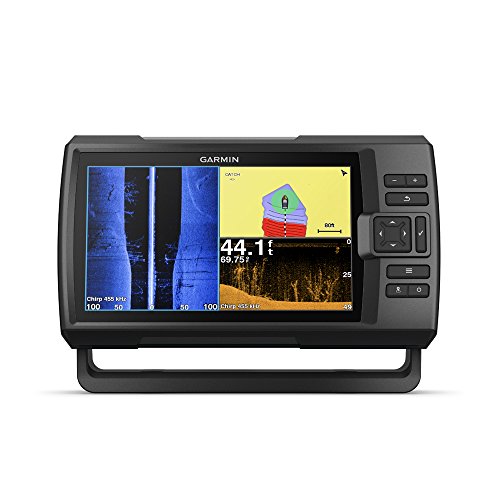
| High-Resolution Explorer | Display Size: 9″ | Sonar Type: CHIRP traditional + CHIRP ClearVü + CHIRP SideVü | GPS / Mapping Capability: Built-in GPS (waypoints/routes) - Quickdraw Contours (no preloaded charts) | VIEW LATEST PRICE | Read Our Analysis |
| Lowrance Eagle 4″ 5″ 7″ and 9″ Fish Finders with IPS Screen |

| All‑Purpose Mapper | Display Size: 4″, 5″, 7″, or 9″ (available sizes) | Sonar Type: SplitShot HD (enhanced DownScan/CHIRP) + FishReveal | GPS / Mapping Capability: Pre-loaded high-resolution C-MAP inland charts; Genesis Live | VIEW LATEST PRICE | Read Our Analysis |
| Garmin Striker Vivid 7cv Fishfinder with GT20-TM |

| Vivid Detail Specialist | Display Size: 7″ | Sonar Type: CHIRP traditional + CHIRP ClearVü (via GT20-TM) | GPS / Mapping Capability: High-sensitivity GPS + Quickdraw Contours (on-device mapping) | VIEW LATEST PRICE | Read Our Analysis |
More Details on Our Top Picks
Garmin ECHOMAP UHD2 54CV Chartplotter/Fishfinder
In case you’re a crappie angler who values clear, compact instrumentation, I’d recommend the Garmin ECHOMAP UHD2 54CV - its bright 5″ keyed display and high‑contrast color palettes make reading sonar and maps easy even in changing light. I rely on CHIRP traditional sonar and ClearVü scanning to spot suspended fish and structure, and the included GT20‑TM transducer delivers crisp returns. LakeVü g3 and BlueChart with Navionics data cover inland and coastal waters, and US coastal charts are onboard. Wi‑Fi lets me share routes with compatible units. Model 010‑02591‑51 balances capability and simplicity for focused crappie trips.
- Display Size:5″
- Sonar Type:CHIRP traditional + ClearVü scanning
- GPS / Mapping Capability:LakeVü g3 & BlueChart with Navionics (US coastal included)
- Connectivity (Wireless):Wi‑Fi for chartplotter-to-chartplotter sharing
- Included Transducer:GT20-TM transducer included
- Mounting / Power:Surface mount; battery powered (12V via boat battery typical)
- Additional Feature:Bright 5″ keyed display
- Additional Feature:LakeVü g3 + BlueChart
- Additional Feature:Wi‑Fi chart sharing
Lowrance Eagle 4″ 5″ 7″ and 9″ Fish Finders with IPS Screen
In case you’re a crappie angler who needs a compact, daylight-readable display, I’d recommend the Lowrance Eagle series with IPS screens-available in 4″, 5″, 7″, and 9″-because the high-vis IPS panel stays crisp in bright sun, works with polarized sunglasses, and stays readable at extreme viewing angles. I like the upgraded sonar with portrait orientation and true-scroll for tracking suspended crappie, and the simple autotuning sonar gets peak returns without fiddling. Installation is quick via the twist-lock connector and plug-and-play design, perfect for boats or kayaks. Note sun cover is sold separately; one-year warranty included.
- Display Size:4″, 5″, 7″, or 9″ (available sizes)
- Sonar Type:Enhanced sonar (SplitShot/true-scroll capable) with autotuning CHIRP-like features
- GPS / Mapping Capability:Pre-loaded C-MAP inland charts (and optional coastal bundles); Genesis Live support
- Connectivity (Wireless):(Implicit) Connectivity for updates and features; plug-and-play installation (note: no explicit Wi‑Fi stated but platform supports data/features)
- Included Transducer:Transducer included (typical package contents list transducer)
- Mounting / Power:Surface/panel/flush mount options; battery powered
- Additional Feature:High‑vis IPS screen
- Additional Feature:Twist‑lock connector system
- Additional Feature:One‑year warranty
Garmin Striker Plus 9SV with CV52HW-TM transducer 010-01875-00
I recommend the Garmin Striker Plus 9SV for crappie anglers who want a bright, 9″ sunlight‑readable display and powerful CHIRP plus ClearVü/SideVü scanning to spot schools and structure quickly. I like its 800×480 WVGA screen, built‑in GPS for waypoints/routes, and Quickdraw Contours that stores up to two million acres with 1′ contours so you can map hotspots on the fly. The CV52HW‑TM transducer covers CHIRP traditional, ClearVü and SideVü. Wi‑Fi links to ActiveCaptain for updates and community contours. It’s fishfinder‑focused (no preloaded charts), light, surface‑mountable, and simple to use.
- Display Size:9″
- Sonar Type:CHIRP traditional + CHIRP ClearVü + CHIRP SideVü
- GPS / Mapping Capability:Built-in GPS (waypoints/routes) - Quickdraw Contours (no preloaded charts)
- Connectivity (Wireless):Built-in Wi‑Fi (ActiveCaptain app support)
- Included Transducer:CV52HW-TM transducer included
- Mounting / Power:Surface mount; battery powered (power/data cable included)
- Additional Feature:Built-in Wi‑Fi (ActiveCaptain)
- Additional Feature:Quickdraw Contours on‑device
- Additional Feature:Includes multiple mounts
Lowrance Eagle 4″ 5″ 7″ and 9″ Fish Finders with IPS Screen
In case you want a compact, daylight-readable fishfinder that won’t wash out on bright afternoons, I recommend the Lowrance Eagle series with IPS screens-available in 4″, 5″, 7″, and 9″ sizes. I like the crisp IPS display-views stay clear with polarized sunglasses and at extreme angles. SplitShot HD sonar, FishReveal with DownScan and CHIRP, and autotuning make target ID and separation simple. Preloaded C-MAP covers 17,000+ lakes, and Genesis Live builds ½-foot contours on the fly. Units are lightweight plastic, battery powered, include transducer and hardware, offer surface/panel/flush mounting, twist-lock install, and a one-year warranty.
- Display Size:4″, 5″, 7″, or 9″ (available sizes)
- Sonar Type:SplitShot HD (enhanced DownScan/CHIRP) + FishReveal
- GPS / Mapping Capability:Pre-loaded high-resolution C-MAP inland charts; Genesis Live
- Connectivity (Wireless):(Implicit) Modern connectivity for maps/updates; platform metadata lists available support (suncover/accessories sold separately)
- Included Transducer:Transducer included (typical package contents list transducer)
- Mounting / Power:Surface/panel/flush mount options; battery powered
- Additional Feature:SplitShot HD sonar
- Additional Feature:Preloaded C‑MAP inland
- Additional Feature:Genesis Live mapping
Garmin Striker Vivid 7cv Fishfinder with GT20-TM
Should you want a compact, easy-to-read unit that nails crappie detection, the Garmin Striker Vivid 7cv with GT20-TM is your best bet - I’d recommend it for anglers who need bright, high-contrast Vivid sonar palettes, CHIRP and ClearVü scanning, and built-in GPS for marking brush piles and routes. I like the 7-inch LCD for readability, and the GT20-TM brings both traditional CHIRP and ClearVü for clean target separation. Quickdraw Contours with 1′ maps and Wi‑Fi/ActiveCaptain make sharing waypoints simple. It’s button-controlled, includes mounts and cabling, and feels solid at roughly 4.7 pounds.
- Display Size:7″
- Sonar Type:CHIRP traditional + CHIRP ClearVü (via GT20-TM)
- GPS / Mapping Capability:High-sensitivity GPS + Quickdraw Contours (on-device mapping)
- Connectivity (Wireless):Wi‑Fi (ActiveCaptain app support)
- Included Transducer:GT20-TM transducer included
- Mounting / Power:Surface mount (tilt/swivel bailmount included); battery powered
- Additional Feature:Vivid color palettes
- Additional Feature:High‑sensitivity GPS
- Additional Feature:Tilt/swivel bailmount bracket
Factors to Consider When Choosing a Chartplotter GPS Fishfinder for Crappie Fishing
At the time selecting a chartplotter GPS fishfinder for crappie fishing, anglers should weigh key factors such as depth range and sensitivity to detect small fish, sonar type options for clarity and target separation, and display size/readability for quick interpretation. Equally crucial are charting and mapping capabilities to locate structure and brush, and the mounting and installation flexibility to suit different boats and rigs. Prioritizing these elements helps match equipment to specific crappie fishing conditions and techniques.
Depth And Sensitivity
For crappie anglers, depth and sensitivity settings determine whether small schooling fish and subtle structure show up clearly on the screen. Units should detect fish in the 5–25 ft range while offering depth capability to at least 100–200 ft for versatility. Higher-frequency returns around 200–400 kHz improve target resolution for small, schooling crappie, whereas lower frequencies reach deeper with less detail. Narrow beam angles (about 9°–20°) or selectable beam widths focus returns on tight schools instead of broad bottom echoes. Tunable gain, contrast and noise-rejection controls help isolate small arches and bait signatures across varying clarity. High-resolution short-range scanning or down-imaging boosts separation of individual crappie and identification of complex cover like brush and logs.
Sonar Type Options
Among sonar options, anglers should weigh CHIRP, down‑imaging, side‑scan and traditional low/high‑frequency returns based on the search pattern and structure being targeted. CHIRP’s wide frequency sweep and superior target separation make it easier to distinguish crappie from bait and nearby structure. Down‑imaging uses high‑frequency, narrow beams to create photo‑like views directly beneath the boat, ideal for brush piles and timber. Side‑scan maps broad areas to the sides, enabling detection of schools without driving over them. Low‑frequency (~50/83 kHz) reaches greater depths and covers more water while searching, while high‑frequency (~200 kHz+) yields finer detail in shallower spots. Autotuning CHIRP, selectable bands and adjustable beamwidths help optimize sensitivity and clutter rejection around vegetation and submerged structure.
Display Size Readability
Display clarity is a critical factor for crappie anglers because a poorly chosen screen can obscure small arches and subtle structure that indicate tight schools. A display of at least 7″ is recommended to show more sonar returns and contour detail without excessive zooming. High brightness and sunlight readability (nits) guarantee contrasty fish arches and subtle bottom features remain visible in direct sun. High resolution and wide viewing angles keep fine details-small crappie arches and vegetation edges-clear from varying positions. Adjustable color palettes and high-contrast modes help separate targets from clutter and weeds at different depths. Finally, consider orientation and physical size for the mounting location: larger screens aid awareness but might not suit tight cockpits or kayak setups.
Charting And Mapping
Clear mapping complements a readable screen through turning visual clarity into actionable wayfinding and structure-finding. Anglers should select chartplotters supporting high-resolution inland charts and on-device map drawing (Quickdraw-style) to produce detailed 1‑foot or 0.5‑foot contour maps of crappie structure. Devices that overlay bathymetric contours, depth shading, and bottom-hardness or structure layers simultaneously make brush piles, drop-offs, and submerged timber easier to locate. Support for preloaded lake/river charts plus Navionics, C‑MAP, or third‑party vector/raster updates guarantees accurate shoreline, channel, and hazard data. Verify zoom scales and chart detail levels (for example 1:1k to 1:50k) to inspect coves and ramps precisely. Finally, prioritize waypoint management, route creation, and Wi‑Fi or SD card sharing to transfer perennial crappie spots between units.
Mounting And Installation
While installing a chartplotter GPS fishfinder, attention to mounting type, power routing, and transducer placement guarantees reliable performance and ease of use. Select surface, flush, or bail/tilt-swivel mounting to suit console space and permit unobstructed viewing whenever seated and standing. Confirm display dimensions and footprint against dash cutout or bracket, leaving several inches behind for cable routing and ventilation. Verify power and grounding locations, run a fused power cable of appropriate gauge (typically 18–12 AWG) and use secure crimped connections to avoid voltage drop. Plan transducer placement clear of turbulence, prop wash, and hull appendages with correct transom or trolling motor height. Use marine-grade connectors, sealed cable glands, and silicone or marine sealant at through-hull penetrations to prevent moisture and corrosion.
Connectivity And Sharing
For crappie anglers, connectivity and sharing capabilities determine how quickly and easily routing data, waypoints, and sonar logs move between devices and crew. Wi‑Fi and Bluetooth simplify transfers to mobile apps or other units without SD cards, speeding setup and collaboration. Local wireless sharing between compatible chartplotters enables real‑time sonar overlays and map viewing so multiple anglers see the same live contours. Cloud/app integration provides automatic backup and sync of Quickdraw maps and waypoint libraries for cross‑device access and safety after firmware updates. Networked NMEA 2000 or Ethernet connections distribute GPS, heading, autopilot, and sensor data across displays for coordinated piloting and trolling. Inspect transfer speeds, supported file types (GPX, sonar logs, waypoints) and simultaneous hotspot plus app support to avoid interruptions.
Power And Battery Life
While preparing a chartplotter GPS fishfinder for crappie trips, power and battery life are critical considerations that determine how long the unit will run and how reliably it performs during sonar peaks and long days on the water. Buyers should target units drawing 1–3 amps at 12 V and match boat battery amp-hours to desired runtime (a 50 Ah battery will run a 2 A unit ~25 hours in ideal conditions). Plan for higher peak draws during sonar zooms and add a second battery or reserve capacity to prevent voltage sag. Favor low-power modes, auto-dim features, and efficient power adapters for portable setups; 10,000–20,000 mAh packs (~12–24 Ah) suit full-day kayak use. Use proper gauge wiring and solid terminals to minimize voltage drop.