Book Appointment Now

How to Set Up a Fishing Pole: Easy Guide

Setting up a fishing pole is simpler than it looks and gets you fishing faster. Choose a rod and reel that balance comfortably and suit the species you want to catch. Pick line, hooks, weights, and bobbers matched to the water and bait, then assemble the pole and secure the reel. Thread the line through the guides, keep gentle tension while winding, tie an arbor knot and your main knot, trim tag ends, check knots and drag, and tweak casting and hookups on the water for smooth performance.
Beginner Fishing: Choose the Right Rod and Reel
Pick a rod and reel that match your goals and feel comfortable in your hands, because the right gear makes learning easier and more fun. You want gear that invites you to join others at the water and keeps you trying.
Start at checking rod weight so the rod lifts easily yet handles your target fish without tiring your arm. Try different rods to trial handle comfort and grip shape, because a good feel keeps you casting longer and smiling.
Match reel size to the rod so balance feels natural. Ask friends or staff for recommendations and hold gear like you’ll whilst fishing. Once you leave with a rod and reel that fit, you’ll feel welcomed into the fishing community.
Choose Fishing Line Type and Test for Your Target Fish
You’ll want to pick a line strength that matches the fish you’re after, so choose the pound rating based on the species and how you plan to fish.
Consider monofilament for stretch and ease or braided line for extra sensitivity and strength, and evaluate whichever you pick to make sure it handles your lure weight and casting style.
Match the line to both your rod rating and target fish to avoid breakoffs and make fishing more enjoyable.
Line Strength (Pound Test)
Often, anglers start at matching line strength to the fish they’re after, and that choice shapes every cast and fight you’ll face. You pick a pound rating that balances confidence and subtlety. Consider fish size, cover, and how you want to feel each bite. Recall line memory and seasonal degradation during spool storage; old line can weaken and coil, and cold months can stiffen it. Check knots and stretch line gently before a trip so you trust your setup.
- Envision a tug from a bass on 8 pound rating and steady pressure through weeds.
- See a trout bite on 4 pound rating and the thrill of light drag.
- Picture a pike on 20 pound rating and the raw pull of a big fish.
You’ll belong to a group that cares for gear and the moment.
Monofilament Vs Braided
Whenever you’re choosing between monofilament and braided line, start considering about how each feels in your hands and how it behaves on the water. You want a line that fits your comfort and the places you fish. Monofilament is softer, hides knots, and has more line memory so it can spring back into loops. Braided line is thin, strong, and casts farther but can cause more casting tangles provided you don’t manage spool tension. You’ll try both to see which helps you belong to your fishing group and feel confident.
| Monofilament | Braided |
|---|---|
| Softer feel and stretch | Thin and high strength |
| More line memory | Less stretch, better sensitivity |
| Fewer knot problems | Needs careful spool setup |
Match Line To Fish
You’ve already felt how monofilament stretches and braided line stays tight, and now it’s time to match those traits to the fish you want to catch. You’ll pick line by pondering about species selection and water clarity so you feel confident with your rod and reel. Choose monofilament for finicky trout in clear streams or braid for heavy cover bass where you need sensitivity. Match pound rating to the fish size and cover you expect. Try your setup before you cast into a crowd of friends so everyone feels included in the process.
- Clear water, spooky fish, soft stretch, finesse presentations.
- Thick cover, heavy braid, tight hooksets, powerful pulls.
- Mixed conditions, fluorocarbon leader, stealthy abrasion resistance.
Choose Hooks, Weights, and Bobbers for Common Setups
Pick the right hooks, weights, and bobbers so your setup feels balanced and fishable from the initial cast. You’ll want color coded bobbers for quick depth changes and weedless hooks whenever you fish tight cover. Choose hook sizes that match bait and target fish. Add split shot or egg sinkers to sit the bait where fish feed. Use sliding bobbers for deep water and fixed ones for shallow spots. Trust your buddies and trial setups together until they feel right.
| Setup Goal | Suggested Parts |
|---|---|
| Panfish, shallow | Small hooks, light split shot |
| Bass, weeds | Weedless hooks, slip bobber |
| Wading, deep pools | Larger hooks, egg sinker |
Change weights to keep the bait natural and stay patient with adjustments.
Assemble Your Rod and Attach the Reel
Start picking a rod that matches the fish you want and the line strength you plan to use so you’re comfortable and effective on the water.
Next, secure the reel firmly to the rod seat, making sure the reel foot sits snug and the locking hood is tightened so nothing shifts while you cast.
Finally, thread the line through the guides from tip to reel, open the bail, tie an arbor knot to the spool, and check that the line feeds smoothly with the spool label facing up.
Choose The Right Rod
Choosing the right rod sets the tone for every fishing trip, so take a moment to match the rod to the fish you want and the reel you’ll use. You’ll pick a rod considering action, power, and how it feels in your hands. Rod aesthetics matter, but comfort matters more, so notice grip materials and balance.
Assemble the two sections aligning guides from tip to butt before you attach the reel. That makes threading line smooth and keeps you confident on the water.
- A sleek graphite rod with cork grip feels light and precise in your hands.
- A sturdy fiberglass rod with rubberized grip gives steady power for bigger fish.
- A medium action rod blends sensitivity and strength for shared outings.
Secure The Reel Properly
You’ve picked a rod that feels right, and now you’ll attach the reel so the whole setup works together.
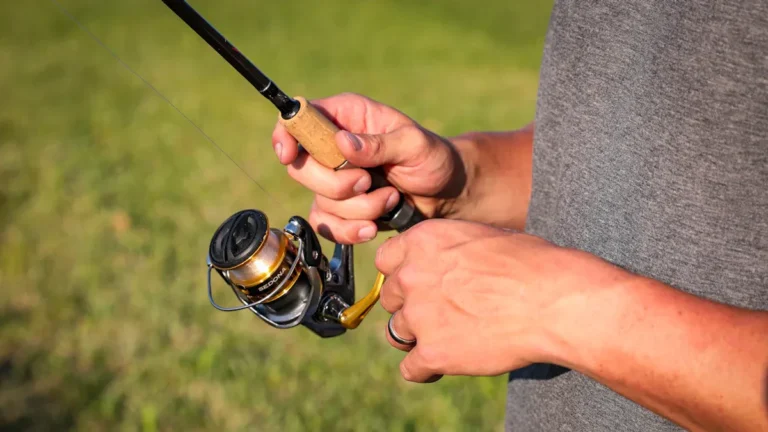
Hold the rod with one hand and place the reel foot into the reel seat. Slide the foot into the hood and tighten the locking rings until the reel sits snugly.
You want the reel to securely mount without wobble but not so tight you strip threads. Check reel alignment by closing the bail and looking down the rod guides to make sure the spool sits centered with the guide line.
In case alignment looks off, loosen, reseat, and retighten.
Once it feels solid, give the reel a gentle twist to confirm it won’t shift.
You’re part of a group that cares about gear that lasts.
Thread The Line Correctly
Now that your reel is snug on the rod, it’s time to thread the line correctly so everything works together on your initial cast. You’ll feel part of the crew once you follow simple steps that respect proper spool orientation and guide ring alignment. Open the bail, feed line from the tip through each guide, and tie an arbor knot to the spool. Keep calm, you’re doing great.
- See the label up on the spool so line rolls off smoothly and reduces twist.
- Thread through tip initially, then each guide so alignment stays true and casting is easy.
- Hold tension as you crank slowly, checking guide ring alignment and reducing slack.
You’ll belong to anglers who trust careful setup and enjoy better casts.
Thread and Spool the Line Through the Guides Correctly
Before you thread the line, take a breath and set up a clean workspace where the rod sits steady and the reel is within easy reach; doing this keeps you calm and prevents tangles.
Now check guide alignment so every ring forms a straight line from tip to reel.
Open the bail and feed the line through each guide, starting at the tip and working down.
Watch spool orientation on the line spool so it unrolls smoothly and avoids twists.
Have a friend hold the spare spool or clip it to your leg should you want extra hands.
Keep gentle tension as you wind, and stop to fix any loops.
You’ll feel confident once the line runs true and the guides stay neat.
Tie a Strong Clinch Knot and an Improved Loop Knot
You’ll want to pick the right line initially so your knots hold under pressure and match your rod and target fish.
Follow clear step-by-step tying instructions for the clinch and improved loop knot, and assess each knot’s strength before you cast.
With a bit of practice you’ll feel confident tying strong, reliable knots on the water.
Choosing The Right Line
Picking the right line makes a big difference whenever you’re rigging up, and it starts with matching line strength to the fish you want and the rod and reel ratings you already have. You’ll choose monofilament, fluorocarbon, or braid based on feel, invisibility, and storage longevity, while watching for color fading that signals old line. You want a line that fits your gear and your fishing friends will approve of.
- Envision clear fluorocarbon sinking neatly around a lure.
- Visualize braided line holding steady under sudden runs.
- See monofilament forgiving beginners and tying neat knots.
You belong in this group of thoughtful anglers. Pick line that fits scenes, skills, and knot choices you learned earlier.
Step-By-Step Tying
Now that you’ve picked the right line for your rod and reel, it’s time to learn two knots you’ll use every time you fish: the strong clinch knot for tying directly to hooks and swivels, and the improved loop knot for giving lures more natural movement. You’ll feel part of the group as you practice knot variations that match different baits and conditions.
For the strong clinch knot, thread line through the eye, wrap five to seven turns, pass the tag through the small loop, then cinch while keeping steady hand positioning.
For the improved loop, make an overhand loop, wrap the tag around the standing line five times, pass back through the original loop, then tighten. Practice slowly and you’ll gain confidence.
Testing Knot Strength
Examine the knots you just tied before you head out so you won’t lose a fish or your favorite lure. You want to test a strong clinch knot and an improved loop knot the same way, feeling for slip, stiffness, and any sign of knot fatigue. Pull steadily, then release, repeating to mimic a fighting fish and seasonal testing after storage. You’ll build trust in your gear and in the friends who taught you.
- Envision the clinch biting into the hook eye as you pull tight.
- Visualize the improved loop giving a lively, free hook action under strain.
- See frayed fibers that warn you to retie before the next cast.
Check knots after impacts, long trips, and temperature shifts to stay confident.
Attach Leaders, Swivels, and Lures the Right Way
Add a swivel between main line and leader to stop twist and let your lure act freely. Use bead stoppers and anti‑foul beads near the swivel to protect knots and keep rigs tidy.
Pick a lure that matches species and water depth, then attach it with a split ring or snap for quick changes. Check all knots, trim excess tag ends, and run a gentle pull trial. You’ll join the group of anglers who prep carefully and fish confidently.
Set Drag, Reel Tension, and Line‑Lay for Casting
Get your drag and reel tension set right before you cast so you won’t lose fish or snap line on the initial run. You and your crew deserve gear that works with you. Start drag calibration by tightening the drag until it resists, then back off until a firm pull lets line slip. Set spool tension so your lure falls smoothly when you test with the rod tip. Check line centering on the spool and guide rings so line winds evenly and reduces coils.
- Envision a steady spool turning as you cast into calm water.
- Visualize the drag clicking softly while a fish runs.
- See neat line layers across the spool keeping casts true.
These steps bond you to reliable gear and confident casts.
First‑Time Rigging Checklist and Basic Casting Tips
Before you cast for the initial time, walk through a clear rigging checklist so you feel calm and ready instead of nervous and rushed. Check rod sections for aligned guide rings, attach the reel after assembly, and thread line from tip to reel.
Tie an arbor or clinch knot, set spool tension and drag about halfway, and make sure spool orientation prevents twist. Include safety prompts like watching your surroundings, keeping hooks covered, and telling a buddy where you are.
Practice basic casting motions slowly, keeping thumb control on spinning spools, managing slack, and maintaining line tension. Learn casting etiquette through spacing casts, warning others, and retrieving tangles promptly. You’ll join others who fish respectfully and confidently.
Common Setup Problems and How to Fix Them Quickly
You’ll run into a few common setup snags the initial few times you rig a rod, and being aware quick fixes will keep frustration low and fun high. You belong here; everyone learns this way. Check guide alignment initially when your casts pull left or right, and realign sections so rings form one straight line.
Watch for line twists during spooling; flip the spool or let line feed off the floor to stop twists from building. Tighten the spool knot and evaluate by pulling line slowly.
- Tangled tip knot: trim tag end, rethread through guides, retie a clean knot.
- Misplaced guides: separate sections, rotate until guides align.
- Twisted line loops: open bail, unspool, rewind neatly.
Practice these fixes and you’ll feel confident fast.
Quick Troubleshooting: What to Adjust on the Water
Often you’ll notice a small problem on the water that just needs a tiny tweak, and staying calm makes fixes quick and painless.
You’ll check wind adjustments initially, turning your body or moving a few feet to cast with the breeze, not into it.
Should drag feels wrong, you’ll ease it a bit until your bait falls naturally.
Whenever line twists or tangles show, you’ll flip the bail, reel slowly, and pin down where the twist lives.
For snags and hook retrieval, you’ll give steady pressure, back off whenever the fish pulls hard, and try short jerks to free a stuck hook.
You’ll talk with others nearby, swap tricks, and feel part of the group while you fix things.
Frequently Asked Questions
Can I Use the Same Setup for Freshwater and Saltwater Fishing?
Yes - but you shouldn’t always. Like swapping shoes for different trails, you’ll avoid rod corrosion in saltwater via choosing corrosion-resistant gear, heavier lines and reels for casting distance, and gear that makes you feel part of the crew.
How Often Should I Replace Fishing Line on the Reel?
You should replace fishing line every season or sooner with heavy use; practicing regular line maintenance builds confidence and community wisdom, so check for nicks, memory and sun damage monthly and swap lines with seasonal replacement as needed.
What Safety Gear Should I Carry When Fishing Alone?
Carry a personal locator, initial aid kit, life jacket, whistle, headlamp, spare clothing, sunscreen, and plenty of water. You’ll also want a multitool and charged phone so you’ll feel secure and connected while fishing alone.
Can I Transport a Multi-Piece Rod on an Airplane?
Yes - you can, and sometimes it’s like fitting a fishing pole into a plane’s overhead like a gentle puzzle; check airline policies, pack sections in padded travel cases, and you’ll feel confident and welcomed aboard.
How Do I Store My Rod and Reel Between Fishing Trips?
Store your rod and reel cleaned, dry, and loosened: wipe with cleaning cloths, back off drag, spool tension relaxed, and keep gear in a padded case with humidity control. You’ll protect it and feel part of the fishing community.