Book Appointment Now

How to Set a Fishing Rod up

Setting up a fishing rod starts with choosing a rod and reel sized for the fish targeted and matching line strength and type to the task. Spool the reel carefully to avoid twists, thread the guides from tip to reel, and secure the reel foot tightly. Learn a few reliable knots and set the drag to suit lure weight before trying a few practice casts. Troubleshoot tangles or casting problems quickly so the morning stays focused on catching fish.
Choose the Right Rod and Reel for Your Target Fish
Considering what you’ll catch initially helps you pick the right rod and reel. You want gear that makes you feel welcome on the water and confident with others who fish.
Start alongside matching rod materials to your fish species and environment. Graphite feels light and sensitive for trout and panfish, while fiberglass gives forgiving strength for bass and larger catches.
Next, choose a reel that balances with the rod so casting feels smooth and natural. Reflect about reel maintenance at the outset so your setup lasts and fellow anglers will respect your care. Size the reel to line weight suitable for your target fish and match handle orientation to your casting hand.
Whenever you try different combos, you’ll fit right in with your fishing group.
Pick Fishing Line Type and Strength
Now you’ll pick the fishing line that fits your rod and the fish you want to catch, choosing among monofilament, fluorocarbon, and braided options.
Check the line’s strength rating so it matches the rod’s recommended pound range and the species you’re targeting.
Make sure the line type and strength work with your reel size and action so casting and fighting fish feel smooth and predictable.
Line Material Choice
Which line will give you the smoothest casts and the best chance at landing fish today? You want to belong to a group that cares about choice and performance, so shall we walk through options together.
Monofilament feels forgiving and stretches to absorb sudden pulls. Fluorocarbon invisibility makes it great for shy fish and clear water because it sinks and hides well. Braided advantages include near zero stretch and high sensitivity so you’ll feel every nibble and cast farther.
Match material to water, prey, and confidence level. Use a fluorocarbon leader in case you like braid mainline for abrasion resistance and stealth. Change line once it frays or memory builds.
Trust your instincts, ask your peers, and pick what helps you cast smoother and land more fish.
Test Strength Ratings
In the event that you want casts that land where you aim and fewer lost fish, pick a line strength that matches your rod, target species, and confidence level; the rating you choose is the one that keeps fights controllable without overloading your gear.
You want a line that feels right during casting and during pulling, so evaluate strength ratings with real feel and simple load checking before you trust a spool.
- Match rod rating to line pounds then assess with steady pulls to learn breaking points.
- Use sample leaders to check knots and notice where slips or frays start.
- Try short bursts and long pulls to simulate runs and set hooks.
- Share evaluations with buddies to compare feel and build confidence together.
Match Rod And Reel
Picking the right line is about balance and confidence, so start through matching your rod and reel’s size and action to the line type and strength you’ll use. You want reel balance so the outfit feels like part of you and grip comfort that invites long casts with friends. Choose mono for stretch and forgiveness, fluoro for stealth, braid for power. Match pound gauge to rod rating and target species. At the time you spool, check reel seating and line lay for smooth casting. Sharing gear tips builds trust and belonging in your group, so ask for hands-on help.
| Line Type | Feel | Best Use |
|---|---|---|
| Monofilament | Softer | Beginners, knots |
| Fluorocarbon | Stealthy | Clear water, leaders |
| Braid | Strong | Heavy cover, long casts |
Spool a Reel Without Twists or Tangles
Once you’re ready to spool a reel without twists or tangles, start calm and move stepwise so you won’t get frustrated; this process is simple after you know the right order and small tricks that prevent line snarls.
You belong here and you can do this. Begin securing the spool to match spool capacity and keep steady line tension with your fingers. Have a friend hold the spare spool or run it through a cloth for resistance.
- Align spool and reel so line comes off the spool the same way it winds onto the reel.
- Tie an arbor knot and trim excess.
- Close bail and reel slowly while keeping slight tension.
- Fill to marked capacity, stop before overfilling.
Thread Line Through Guides and Position the Reel
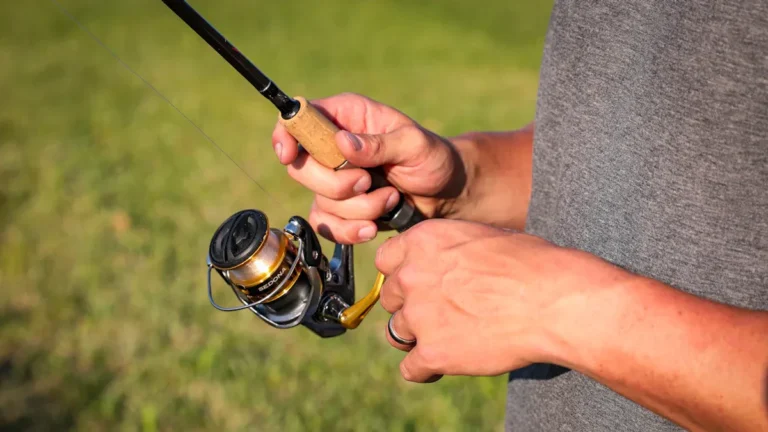
Now that your reel is spooled, you’ll want to slide the reel foot into the seat and make sure it’s aligned securely so nothing shifts as you cast.
Next, thread the line through each guide from the tip down to the reel, keeping steady tension so the line seats neatly and won’t tangle.
Finally, tighten the reel seat firmly and check the reel’s orientation so it feels comfortable for your preferred cast and retrieves smoothly.
Align Reel Foot Securely
As you slide the reel foot into the rod seat, take a breath and make sure it sits flush and centered so the reel won’t wobble or pull your cast off line. You want secure alignment so the reel foot locks in straight with the rod blank. That fit builds confidence and keeps your setup feeling like it belongs to you.
- Tighten the hood evenly until the reel foot contacts both sides and sits snug.
- Check that the foot sits centered along the rod axis to avoid torque.
- Wiggle the reel gently to confirm no play and repeat tightening in case needed.
- Match reel size to seat dimensions so the foot fills the slot for solid stability.
These steps connect reel placement to casting comfort and control.
Thread Line Through Guides
Thread the line through the guides starting at the tip and moving toward the reel, and take your time so the line won’t snag or tangle during your initial cast. You want gentle fingers and calm focus. As you feed line, check guide alignment and the section assembly so every ring lines up. That makes casting smooth and keeps you part of our patient angler group.
| Tip | Action | Why |
|---|---|---|
| Start at tip | Feed slowly | Prevents snags |
| Check rings | Align guides | Smooth cast |
| Hold sections | Support joins | Protect assembly |
| Reel ready | Keep tension | Avoid tangles |
Position the reel so the line meets the spool without twists. You’ll feel confident and connected every time you cast.
Set Reel Seat Tight
Secure the reel seat firmly so your reel won’t wiggle or twist as you cast and retrieve. You want the reel aligned and the line threaded through guides before you tighten reelseat.
Hold the rod with one hand, drop the reel foot into the seat, and turn the locking rings until you feel secure locking. A snug feel tells you it’s ready without over forcing the threads.
- Slide reel foot fully into seat and check alignment with guides.
- Finger tighten locking ring, then use a gentle hand twist to finish.
- Evaluate by tugging lightly on reel to confirm no play.
- Thread line through guides again and spool under light tension.
You’ll feel confident when your setup is solid and ready.
Tie Three Reliable Fishing Knots Every Angler Should Know
Upon you’re getting your gear ready, learning three reliable knots will save you time and keep fish from slipping away; they’re simple, strong, and work in almost every situation.
You’ll start with the improved clinch knot to tie hooks and lures. Wrap the line five to seven times, thread back through, moisten, and snug down.
Next, learn the loop knot for lures that need natural movement. Make a small overhand loop, pass the tag through twice, then tighten so the lure swings freely.
Finally, use the nail knot to join fly line or backing to a leader or at the point you need a slim connection through guides.
Practice each knot until you trust them, then fish with confidence alongside friends.
Select and Rig Terminal Tackle for Your Target Fish
You’ll want to match your terminal tackle to the species you’re after, choosing hook size, weight, and swivel strength that suit the fish and your rod rating.
Then tie secure terminal knots like the clinch or improved clinch for mono and a Palomar for braid, checking each knot for neat wraps and a firm pull trial.
As you rig, consider how the tackle and knots work together so your setup casts cleanly and handles fish without slipping or breaking.
Match Tackle To Species
Picking the right tackle feels a lot like choosing the right shoes for a hike – should you mismatch, you’ll end up uncomfortable and frustrated, perhaps missing the best moments.
You’ll match line strength, hook size, and weight to species through considering fish habitat and seasonal patterns. That helps you feel confident and welcome in any fishing group.
- Match line to fish size and structure so you won’t lose a prize in weeds.
- Pick hooks and sinkers that suit water depth and current for local spots.
- Use leaders and swivels for toothy fish and clear water as fish see more.
- Choose lures and baits that mimic prey in the season you’re fishing.
These steps connect your gear to the fish and your friends out on the water.
Tie Secure Terminal Knots
During the period you’re rigging for a specific fish, secure terminal knots are the small habits that keep your day on the water from falling apart. You’ll learn reliable knots that enhance knot durability and resist sudden pulls.
Start with the improved clinch for mono and fluorocarbon. Tie tidy wraps, moisten, and seat the knot so it slides into place. For braided line use a palomar or double uni for extra strength.
Whenever you need swivel or hook attachment, finish with a surgeon or blood knot variant to keep connections slim and strong. Practice waterproof knots like sealed clinch methods whenever you expect wet casts.
You belong to anglers who care, so evaluate each knot, trim neat, and trust your rig once the strike comes.
Match Rod Action, Lure Weight, and Drag for Casts and Fights
How do you make sure your rod, lure, and drag all work together so casting feels natural and fighting fish stays in control? You want rod sensitivity to tell you subtle bites and your casting technique to feel smooth.
Match rod action to lure weight so casts fly true and the tip loads correctly. Set drag so you can tire fish without losing them.
- Choose rod action that pairs with lure weight for smooth load and distance.
- Evaluate casting technique with the chosen lure to feel balance and tip response.
- Adjust drag to allow steady line release during long runs while holding control.
- Practice on land and water to build confidence and share tips with fellow anglers.
Quick Ready-to-Cast Checklist and On-the-Water Checks
Want to be ready the moment you step to the water? Check rod assembly, reel seating, line path, and drag. Notice weather conditions and adjust line and lure choice. Evaluate reel spool tension so bait falls naturally. Trust your group and share checks; you’ll feel supported.
| Quick Check | What to Do |
|---|---|
| Guides aligned | Run line through each guide top to bottom |
| Reel secure | Tighten reel seat until snug |
| Line and knots | Inspect for frays and proper clinch knots |
| Bait freshness | Replace old bait and scent when necessary |
On the water, cast a short trial, watch line flow, listen for odd sounds, and recheck drag after a catch. Small checks keep everyone confident and included.
Troubleshoot Common Setup Problems and Quick Fixes
You’ve already checked guides, reel seating, line path, and drag, so now let’s handle the everyday problems that can ruin a fishing moment and how to fix them fast.
You’re not alone whenever gear acts up. Be calm, check visually, and fix the small things that keep you fishing with friends.
- Untangle line tangles through opening the bail, letting line feed free, and working knots from the spool outward with fingers or a pencil.
- Fix reel slippage by tightening the reel seat, assessing the handle, and checking spool tension.
- Remove line wraps around guides by rethreading from tip to reel and trimming damaged sections.
- Replace frayed leaders and retie secure knots before casting.
Care and Storage to Keep Your Fishing Rod Setup Ready
A rod-case combo will save you headaches and keep your setup ready to go, so treat storage as part of your fishing routine and not an afterthought. You want your gear to feel like part of the team, so start with gentle rod cleaning after each trip.
Wipe guides, reel seat, and blank with fresh water and a mild soap, then dry completely. Use protective sleeves for multi-piece rods and store vertically or in a padded case to prevent warps. Loosen reel drag and back off tension before storing.
Check guides for nicks and replace or repair as needed. For long term, keep rods in a cool dry place away from direct sun. These storage tips will keep your setup reliable and ready once the group calls.
Frequently Asked Questions
How Do I Transport a Multi-Piece Rod Without Damaging Guides?
Consider your rod like a sleeping roommate-slide each section into a rod sock, cap tips with a guide protector, align guides snugly, secure with velcro or tape, and you’ll travel together, safe and welcome.
Can I Use Freshwater Reels for Saltwater Fishing?
You can, but you shouldn’t unless your freshwater reel has strong corrosion resistance; salt corrodes bearings and lowers reel durability. In case you’re committed to salt use, choose sealed reels, rinse after every trip, and join a supportive angling community.
How Often Should I Replace Braided Line on a Spool?
About every 6–12 months you should replace braided line; studies show UV degradation and abrasion cut strength noticeably within a year. Check for line abrasion, nicks, or loss of cast feel so you’ll stay confident fishing together.
What Warranty Issues Cover Rod Breakage During Shipping?
You’re usually covered in case shipping damage caused breakage and you file warranty claims promptly, providing photos, packing info, and proof of purchase; policies vary, so contact the seller/manufacturer and they’ll guide the replacement or repair.
Is Wax or Oil Safe for Reel Maintenance?
About 70% of anglers report smoother casts after proper care - yes, light oil or reel grease is safe for reel lubrication; you’ll want maintenance frequency of every few trips, and you’ll feel part of a caring community.