Book Appointment Now

What are Fish Finders and How to Use Them
ByIMRAN
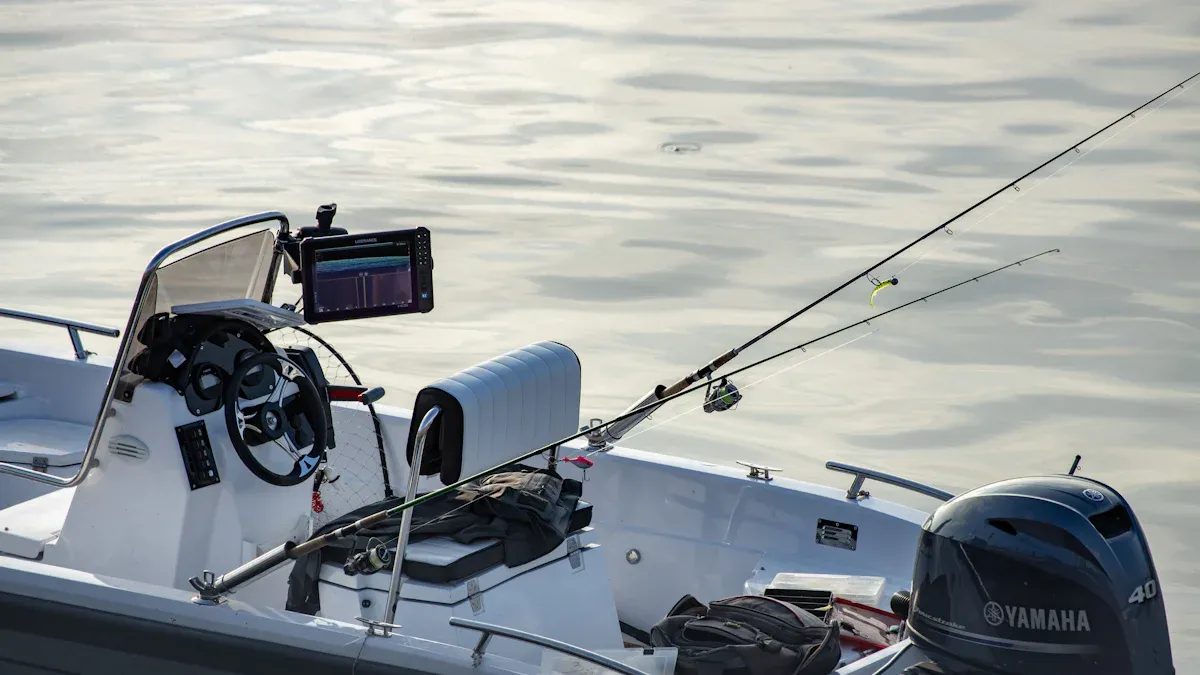
Imagine you’re out on the water, rod in hand, hoping for a big catch. That’s where fish finders come in. These nifty devices help you locate fish beneath the surface, making your fishing trips more successful and enjoyable. With the ability to provide real-time data, fish finders enhance your experience, allowing you to focus on your technique rather than guesswork. They offer insights that traditional fishing methods simply can’t match. For instance, while traditional methods rely on your instincts, fish finders use advanced technology to give you a competitive edge.
Feature | Traditional Methods | Fish Finders |
|---|---|---|
Operation | Manual interaction required | Hands-free operation with voice commands |
Focus | Divided attention, leading to missed strikes | Complete focus on fishing technique |
Underwater Intelligence | Limited, based on experience | Real-time AI-powered insights |
Data Logging | Minimal, often anecdotal | Automatic tracking and logging of fishing data |
Competitive Advantage | Standard techniques | Significant advantage in tournaments |
Learning Curve | Slower, based on trial and error | Instant feedback accelerates learning |
With a fish finder, you can maximize your chances of landing that trophy fish!
Key Takeaways
Fish finders use sonar technology to locate fish and underwater structures, enhancing your fishing success.
Understanding your fish finder’s features and settings is crucial for maximizing its effectiveness on the water.
Adjust settings like depth range and sensitivity based on conditions to improve your chances of catching fish.
Avoid common mistakes, such as incorrect transducer installation and neglecting sensitivity adjustments, to ensure accurate readings.
Share experiences and tips with fellow anglers to enhance your fishing trips and learn from each other.
What Are Fish Finders?

Definition and Purpose
A fish finder is an echo sounder designed specifically to detect fish. It measures the overall depth of the water and uses echo-location to reflect electronic pulses off fish and underwater features. The device then converts this information into a graphic display, often shown on a high-definition screen. This technology allows you to visualize what lies beneath the surface, making your fishing experience more productive and enjoyable.
The primary purposes of fish finders vary between recreational and commercial fishing. Here’s a quick look at how they enhance your fishing adventures:
Purpose | Description |
|---|---|
Recreational Fishing Enhancement | Fish finders help you locate fish quickly, increasing catch rates and enhancing your fishing experiences. |
Commercial Fishing Optimization | Fleets use fish finders to locate large schools of fish, improving efficiency and increasing catch volume. |
Aquaculture Monitoring | These devices monitor fish health and behavior, aiding in stock management and profitability. |
Underwater Research | Researchers use fish finders to study fish populations and ecosystems, supporting conservation efforts. |
Search and Rescue Operations | Specialized fish finders help locate submerged objects or missing persons, improving rescue efficiency. |
Using a fish finder can significantly boost your chances of landing that big catch. It provides real-time data, allowing you to focus on your fishing technique rather than guessing where the fish might be hiding.
Types of Fish Finders
When it comes to the types of fish finders available, you have several options to choose from. Each type serves different needs and preferences. Here’s a breakdown of the main types of fish finders you might encounter:
Product Type | Description |
|---|---|
Standalone | A fish finder that operates independently, perfect for those who want a simple setup. |
Combined | A unit that integrates fish finding with other functionalities, such as GPS and chart plotting. |
Networked System | A system that connects multiple devices for enhanced functionality, ideal for serious anglers. |
Additionally, portable fish finders are designed for high mobility. They allow you to easily transport them across various fishing locations. This feature is especially useful for activities like kayak fishing or using small boats where space is limited. In contrast, fixed-mount models are typically more permanent installations, lacking the convenience and flexibility of portable units.
With modern fish finders, you can enjoy features like real-time sonar imaging, which helps you visualize underwater structures and fish. This technology enhances your understanding of the underwater environment and aids in locating schools of fish near structures like wrecks or debris. Whether you’re an amateur or a professional angler, using a fish finder can give you a significant advantage on the water.
How Does a Fish Finder Work?
Sonar Technology Basics
Fish finders use sonar technology to locate fish and underwater structures. This technology sends sound waves into the water. When these waves hit an object, like a fish or the seafloor, they bounce back to the device. The fish finder measures how long it takes for the sound waves to return. This information helps you determine the depth and location of the objects below.
Here’s a quick overview of how sonar technology works:
Sound waves travel through the water.
They reflect off fish and underwater structures.
The fish finder receives these reflected waves.
The system processes the echoes to create a visual representation of the underwater environment.
Fish finders typically emit sound waves at frequencies between 20-200 kHz. Higher frequencies give you better detail, while lower frequencies can penetrate deeper waters. This allows you to distinguish between individual targets based on the echoes received.
Role of the Transducer
The transducer is a crucial component of a fish finder. It acts as the device’s eyes and ears, emitting and receiving sound waves. Here’s what the transducer does:
It emits ultrasonic waves into the water.
These waves travel until they hit an object or the seafloor.
The transducer receives the reflected signals.
It converts these reflections into electrical signals for processing.
Different types of transducers exist, each suited for various fishing conditions. For example, single frequency transducers work well in shallow waters, while dual frequency transducers provide precise readings in diverse environments. Chirp transducers use a wide frequency range for detailed readings, making them ideal for deep-sea fishing.
Understanding how a fish finder works can significantly enhance your fishing experience. With the right knowledge, you can make the most of this technology and increase your chances of landing that big catch!
How to Use a Fishfinder
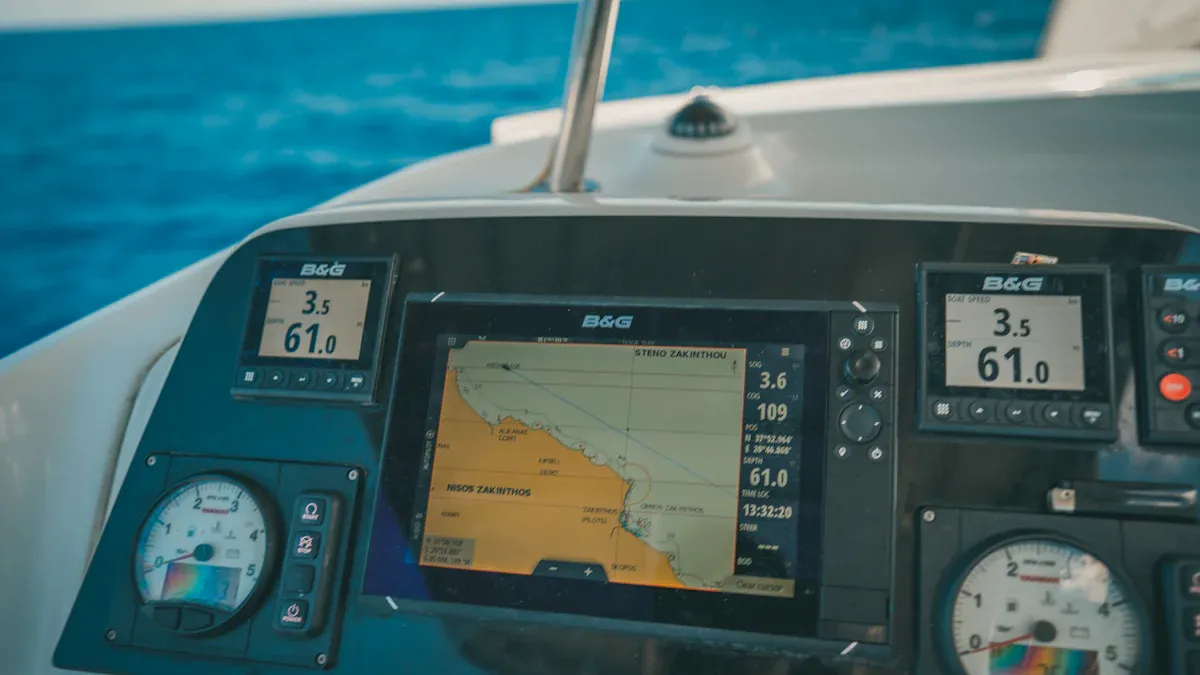
Powering Up the Device
Before you hit the water, you need to power up your fishfinder. Here’s how to do it safely:
Check the connections: Ensure all cables are securely connected. Loose connections can lead to malfunction.
Turn on the power: Locate the power button and press it. Most fish finders will display a welcome screen.
Safety precautions:
Physical safety: Keep everyone on board away from moving parts. Secure long hair and loose clothing to prevent accidents. Handle cables carefully to avoid electrical shocks.
Equipment safety: Use marine-grade accessories. Ensure proper wiring size and fusing. Always disconnect power before servicing your device.
Maintenance: Lubricate the motor after use. Check battery terminals for corrosion. Update software regularly to keep your fishfinder running smoothly.
Navigating the User Interface
Once your fishfinder is powered up, you’ll want to navigate its user interface. Different models may vary, but here are some common features:
Interface Type | Benefits | Usability |
|---|---|---|
Touchscreen | Intuitive, easy to learn | Quick navigation, screen selection |
Button Controls | Reliable in wet conditions | May require more practice to master |
Touchscreen interfaces allow for intuitive navigation, making it easy to select screens and create custom views.
Button controls are beneficial in wet conditions, providing reliable operation when touchscreens may fail.
Selecting Settings
To get the best performance from your fishfinder, you need to adjust some settings. Here’s a quick guide:
Depth Range: Set it to slightly greater than double the actual depth. For example, if you’re fishing in 50 feet of water, set the range to 110 feet.
Sensitivity: Gradually increase until you see a faint second echo. This helps detect smaller fish.
Frequency: Use the right frequency for your fishing depth. Higher frequencies (like 200 kHz) provide better detail for shallow waters, while lower frequencies (like 83 kHz) are effective for deeper areas.
Setting | Recommendation |
|---|---|
Depth Range | Set to slightly greater than double the actual depth (e.g., for 50 ft, set to 110 ft). |
Sensitivity | Gradually increase until a second bottom echo appears, then slightly decrease for clarity. |
Frequency | Use the appropriate frequency for the depth; higher frequencies for shallower depths, lower for deeper. |
Interpreting Display Data
Understanding what your fishfinder displays is crucial for successful fishing. Here are some key indicators to look for:
Indicator Type | Description | Key Characteristics |
|---|---|---|
Fish Arches | Curved shapes on the display indicating the presence of fish. | Width of the arch indicates the size of the fish. |
Baitfish Behavior | Dashes, lines, or dots representing schools of baitfish. | Suspended in water, shown in different colors than vegetation, often clustered. |
Vertical vs. Horizontal | Understanding the orientation of fish arches for size estimation. | Vertical orientation is crucial for determining fish size based on arch width. |
To distinguish between fish and other underwater objects, remember:
Fish appear as arches on the display.
Baitfish show up as dashes, lines, or dots, often in yellow.
Vegetation typically appears in green.
By learning to interpret these signals, you can significantly improve your fishing success. With practice, you’ll become adept at using your fishfinder to locate fish and understand their behavior.
Tips for Effective Fish Finding
Best Practices
Using a fish finder can greatly enhance your fishing experience. Here are some best practices to keep in mind:
Learn Your Device: Spend time getting to know the features and functionalities of your fish finder. This knowledge will help you make the most of your time on the water.
Know Your Needs: Understand what type of fishing you plan to do. This will help you choose the right fish finder that fits your style.
Experiment with Settings: Don’t be afraid to adjust the settings based on the conditions. Try different frequencies and sensitivities to see what works best for you.
Use GPS Features: Mark your favorite fishing spots. This way, you can easily return to productive areas without wasting time searching.
Be Patient: Remember, fishing takes time. Don’t rely solely on technology; sometimes, you just need to wait for the fish to bite.
Common Mistakes
Even experienced anglers can make mistakes when using fish finders. Here are some common pitfalls to avoid:
Incorrect Transducer Installation: If the transducer isn’t installed properly, you might face power cycling issues or unclear images.
Mismatched Chart and Boat Speed: Not matching your chart speed with your boat speed can distort the size of the fish displayed.
Neglecting Sensitivity Adjustments: Failing to adjust sensitivity and contrast settings based on changing water conditions can lead to missed opportunities.
To improve your success, consider these tips:
Be Prepared: Create a checklist of necessary items before heading out. This helps avoid unpreparedness.
Have a Game Plan: Plan your fishing strategy based on the type of fish you want to catch and the water conditions.
Stay Organized: Keep your tackle bag organized for quick access to your gear.
Fish Around Cover: Target areas with cover where fish are likely to hide.
Adapt to Conditions: Adjust your approach based on current conditions instead of relying solely on past experiences.
By following these best practices and avoiding common mistakes, you can maximize your chances of a successful fishing trip!
Using fish finders can transform your fishing experience. These devices help you locate fish and understand underwater structures, making your trips more successful. Remember to familiarize yourself with your fish finder’s features and settings. This knowledge will enhance your fishing strategy.
Don’t forget to share your experiences with fellow anglers! Collaborating and exchanging tips can lead to better fishing trips for everyone. So, get out there, practice using your fish finder, and enjoy the thrill of the catch! 🎣
FAQ
What is the best fish finder for beginners?
For beginners, a standalone fish finder with a simple interface and basic features works best. Look for models with clear displays and easy-to-navigate menus. Brands like Garmin and Humminbird offer great options.
How deep can fish finders detect fish?
Most fish finders can detect fish at depths ranging from 100 to 2,000 feet, depending on the model and technology used. Higher-end models with advanced sonar can reach even greater depths.
Can I use a fish finder from the shore?
Yes, you can use a fish finder from the shore. Portable models or castable fish finders allow you to scan water from the bank, helping you locate fish without a boat.
Do fish finders work in saltwater?
Absolutely! Fish finders work effectively in both freshwater and saltwater. Just ensure your device is rated for saltwater use to prevent corrosion and damage.
How often should I update my fish finder software?
You should check for software updates regularly, ideally before each fishing season. Keeping your fish finder updated ensures you have the latest features and improvements for optimal performance.